
The Price of Conflict: How War in Iran is Fueling Inflation and Eroding American Prosperity
Published
- 3 min read
Introduction: The Economic Shockwave
New data from the Bureau of Labor Statistics delivers a stark and undeniable verdict: the American consumer is under severe pressure. The Consumer Price Index (CPI) for March reveals a troubling acceleration in inflation, with costs jumping 0.9% from the previous month—a significant increase from February’s 0.3% rise. More alarmingly, the annual inflation rate has climbed to 3.3%, marking the highest level since May 2024. This economic tremor is not a random market fluctuation; it is a direct, predictable, and deeply consequential result of geopolitical decisions. The core driver of this surge is a single, volatile sector: energy. The figures tell a painful story: gasoline and fuel oil together rose a staggering 10.9% in just one month, with gasoline alone skyrocketing by 21.2%. The ripple effect is visible in airfare, which rose 2.7% as jet fuel costs climbed. This is the immediate, tangible cost of conflict being transferred directly to the American people.
The Geopolitical Trigger: Closing the World’s Oil Artery
To understand these economic numbers, one must examine their geopolitical origin. On February 28, President Donald Trump, in concert with Israel, launched Operation Epic Fury, a joint war against Iran. The intense campaign resulted in the death of Iran’s supreme leader and senior officials, triggering a severe retaliation from the Iranian regime. In a move with global ramifications, Iran effectively seized control of the Strait of Hormuz, the narrow maritime passage through which roughly one-fifth of the world’s petroleum flows. By threatening to strike tankers from most nations, Iran has executed what the International Energy Agency calls the largest supply disruption in the history of the global oil market.
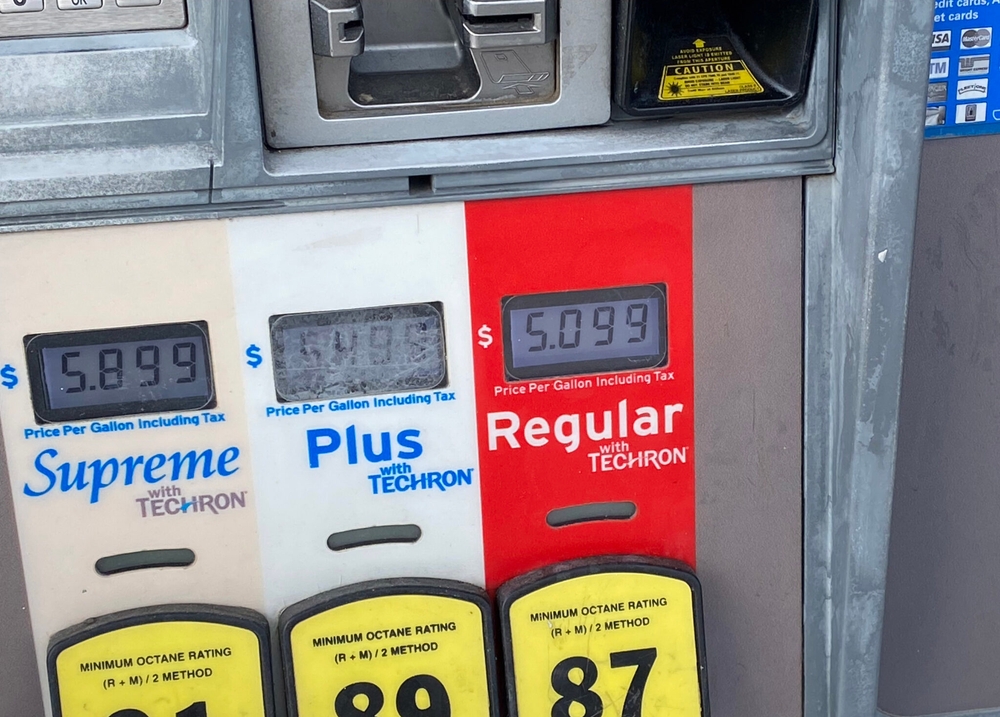
The numbers are staggering. Where roughly 140 vessels transited the strait daily before the conflict, only ten passed through on the Tuesday a tentative ceasefire was announced, and a single one on Wednesday. This artificial constriction of supply has sent shockwaves through global energy markets, manifesting at American gas stations. According to AAA, the national average for a gallon of regular gasoline now stands at $4.15, with diesel at $5.68. Before the war, the average price had not breached $3 per gallon all year. This is not an abstract concept of “market volatility”; it is a deliberate act of economic warfare enabled by a military confrontation, and American families are footing the bill.
The Political Battlefield: Affordability and Accountability
Unsurprisingly, this economic pain has ignited a fierce political battle. Democrats have seized on the inflation report, with Democratic National Committee Chair Ken Martin accusing President Trump of “pushing working families to the brink.” Martin highlighted the stark contrast between Trump’s promise to “lower prices on Day One” and the current reality of an “unpopular war” leading to higher costs. This framing positions affordability as the central issue for the looming 2026 midterm elections, framing the conflict as a choice between geopolitical ambition and domestic welfare.
The White House response, articulated by Senior Deputy Press Secretary Kush Desai, attempts to contextualize the spike. Desai acknowledged “short-term disruptions” from Operation Epic Fury but argued the administration is working to mitigate them. He pointed to falling or stable prices for items like eggs, beef, and prescription drugs as evidence of the underlying strength of Trump’s supply-side agenda of tax cuts, deregulation, and “energy abundance.” This defense attempts to separate core inflation—the “all items less food and energy” index, which rose a more modest 0.2%—from the energy shock, portraying the latter as an external, temporary crisis being managed.
A Principled Analysis: The Foundational Cost of Strategic Failure
As observers committed to democracy, liberty, and the prudent stewardship of the republic, this situation demands a sober analysis that transcends partisan talking points. The facts presented are not merely economic data points; they are symptoms of a profound strategic and philosophical failure. The principles of sound governance and the preservation of liberty require that military force be used as a last resort, with clear objectives, overwhelming public support, and a realistic assessment of the consequences. The decision to initiate a major war in one of the world’s most volatile regions, against a nation with significant asymmetric capabilities, appears to have failed these foundational tests.
The economic consequence—soaring inflation driven by energy costs—is a direct attack on the economic liberty of the American citizen. Economic freedom, the ability to plan, save, and spend the fruits of one’s labor, is a cornerstone of a free society. When a gallon of fuel becomes a significant budgetary line item, that freedom is constrained. When families must reconsider travel, heating, or even basic consumption due to price spikes triggered by distant decisions, the social contract is strained. The administration’s claim of pursuing “energy abundance” rings hollow when its own military actions have empowered an adversary to create the most severe artificial scarcity in modern history.
Furthermore, the disruption of the Strait of Hormuz represents a catastrophic failure of deterrence and statecraft. A core goal of foreign policy must be to secure global commons and protect vital economic lifelines. This conflict has achieved the opposite: it has handed a hostile regime control over a chokepoint critical to the global economy, granting it immense leverage. This is not strength; it is a strategic debacle that has made the world less stable and America more vulnerable. The “short-term disruption” argument is dangerously complacent, as the consolidation of Iranian control over the strait could have long-term implications for global energy security and price floors.
The Human and Institutional Toll
We must also consider the human cost, both in Iran, where the bombing campaign caused significant loss of life, and at home, where economic pain is felt in real time. Ken Martin’s phrase “pushing working families to the brink” may be political rhetoric, but it points to a tangible reality. Inflation is a regressive tax, hurting those with the least flexibility in their budgets the most. Using “hard-earned dollars to fund his war,” as Martin alleges, frames the issue in moral terms: are the nation’s resources being directed toward enhancing the security and prosperity of its people, or toward risky endeavors that diminish both?
The institutional response is also telling. The White House statement attempts to deflect blame by pointing to other stable prices, a tactic that fails to address the core issue. When a single policy decision—the initiation of a war—can trigger such a dramatic and negative economic outcome, it calls into question the decision-making processes and risk assessments within the administration. A government that truly values the rule of law and stable institutions operates with foresight and restraint, understanding that its primary duty is to provide for the common defense and promote the general welfare. These two pillars are not separate; security without economic stability is a brittle illusion.
Conclusion: Reclaiming Prudence and Principle
The March CPI report is a warning siren. It illustrates in brutal clarity the interconnection between foreign adventurism and domestic well-being. The pursuit of liberty and democracy abroad cannot come at the expense of economic freedom and stability at home. A foreign policy that destabilizes global energy markets is, by definition, a policy that undermines American prosperity.
Moving forward, the nation requires a return to first principles. This means a foreign policy anchored in clear-eyed national interest, robust diplomacy, and the judicious use of force only when absolutely necessary. It means an economic policy that prioritizes insulating American families from the volatility induced by geopolitical shocks, perhaps by accelerating the transition to a more secure and diversified energy base. Most importantly, it demands accountability from leaders who must understand that their power is a sacred trust from the people, not a license to gamble with the nation’s security and economic health on grand strategic wagers.
The names in this story—Donald Trump, Ken Martin, Kush Desai—represent factions in a political debate. But the Americans paying $4.15 at the pump are not part of a debate; they are living the consequence. A government of the people, by the people, and for the people must never lose sight of that fundamental truth. The price of conflict is measured not just in treasury funds or military casualties, but in the diminished liberty of every citizen who feels the pinch of preventable inflation. It is a price that a free people should never be forced to pay.