
The Price of Loyalty: Trump's Threat to the Rule of Law and American Commerce
Published
- 3 min read
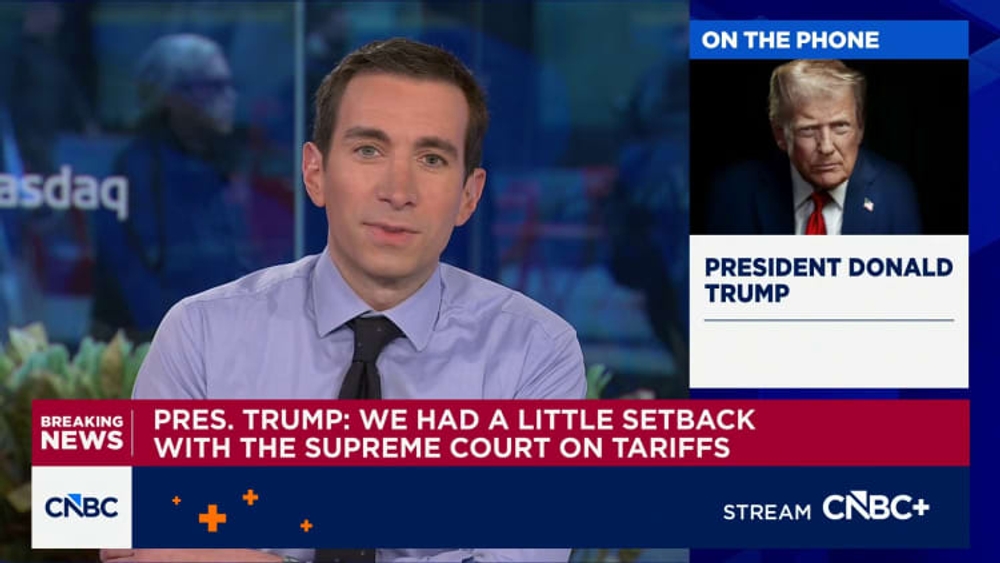
In a republic founded on the principles of limited government and equal justice under law, the most dangerous threats often come cloaked in casual remarks. The recent comments from former President Donald Trump regarding corporate refunds for tariffs declared illegal by the Supreme Court represent not merely a political gaffe, but a profound revelation of an authoritarian mindset that seeks to subordinate the legal and economic order to personal loyalty. This episode demands a rigorous examination, not just of the policy implications, but of the fundamental constitutional principles it imperils.
The Facts: A Presidential Test of Loyalty
The context is critical. The Supreme Court, in a 6-3 decision, ruled that tariffs unilaterally imposed by former President Trump under the International Emergency Economic Powers Act (IEEPA) were illegal. Following this ruling, U.S. Customs and Border Protection opened a portal for importers to seek refunds, totaling a potential $160 billion. Major U.S. retailers, from Levi Strauss to Gap, have been financially impacted by these tariffs and stand to gain significant relief.
Enter Donald Trump. In an interview on CNBC’s “Squawk Box,” he was asked about companies like Apple and Amazon that had not yet filed for refunds, potentially out of concern for “offending” him. His response was illuminating. He called it “brilliant” if they refrained, stated he was “very honored” by their inaction, and delivered the key line: “If they don’t do that, I’ll remember them.” He further expressed displeasure with the Supreme Court, lamenting that their decision voiding the tariffs did not include a clause preventing refunds.
Corporate executives provided the necessary contrast. Levi Strauss CFO Harmit Singh noted the company expects around $80 million in refunds. Gap CFO Katrina O’Connell was cautiously optimistic, stating the tariff impact had been “significant” and that the company was working to gain clarity on a refund, though they had not assumed the benefit in their financial outlook. Their language was that of professionals navigating a complex legal and regulatory landscape—precisely how the system is supposed to work.
The Legal and Constitutional Context: A System Built on Redress
The American system is explicitly designed to check executive power and provide redress for its overreach. The Supreme Court’s role as the final arbiter of the law is a cornerstone of our constitutional architecture. When the Court rules an executive action illegal, the presumption is not just that the action must stop, but that its effects should, where possible, be remedied. The refund portal is the mechanical implementation of justice—returning property taken under an unlawful decree.
This process is impersonal and blind. It does not ask about political affiliation, campaign contributions, or personal fealty to a former president. It asks only: were you harmed by an illegal act? If so, here is the path to restitution. This blind impartiality is the essence of the rule of law. It is what separates a constitutional republic from a fiefdom where the lord’s favor dictates fortune.
Opinion: The Corruption of the Commercial Sphere
The true scandal of Trump’s statement lies in its intent to corrupt this impartial system. By stating he would “remember” companies that forgo their legal rights, he is actively attempting to inject a political loyalty test into a quintessentially legal and financial decision. He is transforming an act of compliance with the highest court in the land into an act of disloyalty to him personally.
This is a classic tactic of autocratic governance. It seeks to break down the neutral institutions of state—the courts, the civil service, the regulatory apparatus—and rewire them to serve the personal power of the leader. The message to corporate America is chilling: your legal rights and your fiduciary duties to shareholders are secondary to your demonstrated loyalty to me. The pursuit of justice becomes “offensive.” The exercise of a legal right becomes an act of defiance.
Consider the perverse incentives this creates. A CEO must now weigh a clear financial benefit to their company—potentially millions in refunds critical for investment, jobs, and competitiveness—against the amorphous but potentially severe cost of attracting the ire of a politically powerful figure who speaks of “remembering” slights. This is how economic decision-making is poisoned by politics. It distorts capital allocation, rewards sycophancy over shrewd management, and undermines the efficient market upon which American prosperity depends.
The Assault on Institutional Legitimacy
Trump’s accompanying complaint about the Supreme Court is equally revealing. His grievance was not with the legal reasoning, but with the outcome. He wished the Court had engineered a outcome that protected his policy and its illegal revenue, nullifying the very concept of a remedy. This view treats the judiciary not as a co-equal branch interpreting the law, but as a service provider for the executive, whose role is to validate and clean up its actions.
When a former president openly expresses hostility toward the Supreme Court for doing its job—for applying the law—he undermines the legitimacy of the institution itself. He encourages his supporters to view the Court not as an impartial guardian of the Constitution, but as another political enemy when it rules against their side. This erosion of institutional trust is catastrophic for long-term stability.
The Humanist and Democratic Imperative
From a humanist perspective, this episode is a betrayal of the common good. Trade policies, legal rulings, and corporate finances are not abstractions. They impact workers, families, and communities. The tariffs hurt companies like Gap and Levi Strauss, which employ thousands of Americans. The refunds represent a chance to reinvest, stabilize, and grow. To place a political loyalty marker on that lifeline is to treat the economic well-being of citizens as a pawn in a game of personal prestige. It subordinates human dignity and material need to the ego of a leader.
Our democratic principles are clear: power is entrusted to officials to be exercised within the bounds of law for the benefit of the governed, not as a personal possession to be wielded for reward and punishment. The framers feared the emergence of a president who would see the office as a source of personal patronage. Trump’s “I’ll remember them” is the embodiment of that fear.
Conclusion: A Line That Must Be Defended
The defense of the republic happens not only in grand battles but in steadfast commitment to its underlying norms. The norm that a citizen—or a corporation—can petition the government for redress of grievances without fear of reprisal is fundamental. The norm that Supreme Court decisions are to be respected and implemented, not complained about because they fail to protect a leader’s legacy, is non-negotiable.
The statements from CFOs Singh and O’Connell, focused on process, clarity, and fiscal responsibility, represent the America we must defend. Trump’s statements, offering transactional remembrance for surrendered legal rights, represent the profound threat to that America.
This moment is a call to vigilance for business leaders, legal scholars, and every citizen who believes in a government of laws, not of men. The price of loyalty he is asking for is nothing less than the integrity of our legal system and the impartiality of our commercial sphere. That is a price that must never be paid. We must remember his words not as a promise of reward, but as a stark warning of the fragility of our principles when confronted by a personality who recognizes no authority higher than his own favor.