
The Regeneron Deal: A Symptom of Our Broken, Opaque Approach to Drug Pricing
Published
- 3 min read
The Facts of the Announcement
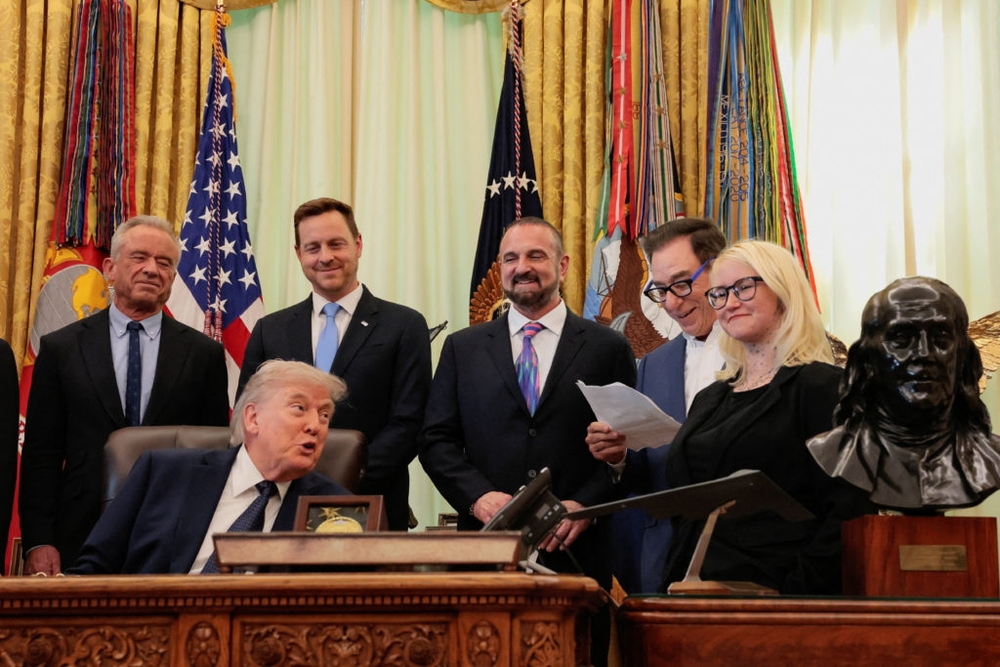
On Thursday, President Donald Trump announced the completion of his administration’s signature drug pricing initiative, securing a final agreement with the pharmaceutical company Regeneron. According to the announcement, the deal involves Regeneron lowering the prices of all its current and future drugs for the Medicaid program and offering its cholesterol drug, Praluent, for $225 on the White House’s discounted drug website, TrumpRx. This agreement is characterized as one of several “most-favored-nation” deals aimed at bringing U.S. pharmaceutical prices in line with those in other developed nations.
The context is explicitly political. The announcement comes as the administration touts economic relief efforts ahead of the November midterm elections, with President Trump stating voters should reward his party for these agreements. The deal also includes a commitment from Regeneron to spend $27 billion in research, development, and manufacturing within the United States, which historically has been linked to relief from administration tariffs.
Complicating the narrative is the notable personal history between the President and the drugmaker. In 2020, during his hospitalization for COVID-19, Trump was treated with an experimental Regeneron antibody therapy, which he later lavishly praised. Furthermore, the announcement coincided with Regeneron’s revelation that its new gene therapy for a rare congenital hearing loss, Otarmeni, received expedited FDA approval through the agency’s Commissioner’s National Priority Voucher program—a program under Congressional scrutiny for its connections to companies that agree to White House pricing concessions.
Crucially, the details of these drug pricing agreements, including the one with Regeneron, have not been made public. When pressed by Congress, Health and Human Services Secretary Robert F. Kennedy Jr. stated his team would share only details that excluded proprietary information or trade secrets. Both Trump and Kennedy have urged Congress to codify these deals into law, but they remain executive actions. The fragility of this approach was highlighted just this week when a related centerpiece deal with weight-loss drugmakers Eli Lilly and Novo Nordisk encountered a significant roadblock with a Medicare implementation delay.
The Systemic Failures and Democratic Erosion
At its surface, any action that promises to lower the exorbitant cost of prescription drugs in America is a step worthy of consideration. The financial strain on families grappling with healthcare, groceries, and fuel is a real and present crisis that demands urgent and effective solutions. However, the methodology and substance of this initiative reveal a deeply troubling pattern that substitutes governance for spectacle and temporary political gain for durable institutional reform.
First, the opacity is unacceptable. In a democratic republic built on the principles of transparency and accountable governance, secret deals between the executive branch and powerful corporate entities are anathema. The fact that members of Congress must “press” the Department of Health and Human Services for the contracts, and are then met with vague promises of redacted information, is a direct assault on the oversight function of the legislative branch. This is not how public policy that affects millions of lives and billions of taxpayer dollars should be made. A truly transformative policy would be developed in the open air of Congressional hearings, subject to amendment, debate, and public scrutiny. These clandestine agreements, regardless of their intended outcome, normalize a dangerous executive overreach that weakens our constitutional checks and balances.
Second, the overt political instrumentality of the announcement corrupts the policy itself. When the President explicitly states that “voters… should reward my party because of the agreements” and laments that electoral rewards “doesn’t work that way,” he is admitting that the primary audience for this policy is not the ailing patient but the polling booth. Policy crafted in the furnace of an election cycle and presented as a campaign trophy is inherently unstable. What happens after the election? What guarantee do Americans have that these price reductions will persist? The answer, tragically, is that there is no guarantee because the policy lacks the permanence and legitimacy of law. It is a handshake deal, vulnerable to revocation, legal challenge, or simple neglect by a subsequent administration. This approach treats the health security of the nation as a bargaining chip in a political transaction, which is a profound betrayal of the public trust.
The Tangled Web of Expediency and Favor
The entanglement of the FDA’s expedited approval voucher program in this narrative is particularly alarming. The article notes that the FDA’s Commissioner’s National Priority Voucher program, which fast-tracked Regeneron’s new therapy, “has been under scrutiny from Democrats in Congress for months” because vouchers “have repeatedly gone to companies that agree to pricing concessions sought by the White House.” If true, this represents a catastrophic blurring of lines. The FDA’s mission is to ensure the safety and efficacy of drugs based on scientific merit, not to act as a lever for the executive’s pricing negotiations. Using regulatory shortcuts as a quid pro quo for corporate behavior undermines the integrity of one of our most vital public health institutions. It creates a perception, if not a reality, that regulatory decisions can be bought with policy compliance elsewhere, eroding public confidence in the medicines they rely upon.
Furthermore, the personal history here cannot be ignored. The President’s previous, highly publicized use of and praise for a Regeneron product creates an undeniable perception of favor. While there may be no explicit wrongdoing, in a climate of such profound secrecy, the appearance of a conflict of interest is damaging enough. It fuels public cynicism and the belief that the system is rigged—that access and influence matter more than need and equity. For a nation already deeply divided over its institutions, this perception is poison.
The Path Forward: Principles Over Politics
The core failure illustrated by the Regeneron deal is not the goal of lower drug prices, but the abandonment of the principles required to achieve them legitimately and lastingly. Lasting reform requires:
- Transparency: All agreements involving public health and public funds must be disclosed in full. Proprietary manufacturing details can be protected, but the core financial and pricing commitments to the government must be public record.
- Legislative Action: Executive actions are fleeting. Real, stable relief requires Congress to do its job—to debate, amend, and pass comprehensive legislation that addresses drug pricing across the entire market, not through one-off deals. The repeated urging from the administration for Congress to “codify the deals into law” is an admission that this current path is insufficient.
- Institutional Integrity: Our regulatory agencies like the FDA must be insulated from political bartering. Their decisions must be—and must be seen to be—based solely on science and public health.
In conclusion, the Regeneron announcement is a shiny object distracting from a much deeper disease in our body politic. It is governance by press conference and deal-making, a approach that offers a temporary salve while ignoring the cancerous growth of opacity, political expediency, and eroded institutional trust. As a nation founded on liberty and self-governance, we must demand more. We must demand policies built not in the shadows of the West Wing but in the sunlight of the Capitol, policies that serve the people not just for an election cycle, but for generations. The American people deserve healthcare solutions that are as robust and enduring as the constitutional principles we cherish, not merely as transient as a political news cycle. To settle for less is to surrender our democratic birthright for a handful of promised, but poorly secured, pennies on the dollar.