
The Section 702 Reauthorization: A Moment of Constitutional Reckoning for American Liberty
Published
- 3 min read
The Facts: The Impending Expiration of a Powerful Surveillance Tool
At the heart of a fierce and urgent debate in Washington is Section 702 of the Foreign Intelligence Surveillance Act (FISA), a provision set to expire on Monday. This law grants U.S. intelligence agencies—including the CIA, NSA, and FBI—the authority to collect and analyze vast amounts of communications from non-Americans located outside the United States without obtaining a warrant. The stated purpose is clear: to gather foreign intelligence critical to national security, with authorities claiming it has saved lives by uncovering terrorist plots and informing actions in places like Venezuela and Iran.
However, the mechanics of this program create a profound and unavoidable tension with American civil liberties. Because global communications networks are interconnected, the surveillance “incidentally” sweeps up the calls, texts, and emails of any American who communicates with a targeted foreigner. This creates a de facto database of American communications accessible to intelligence and law enforcement agencies. The scale is significant: the Office of the Director of National Intelligence reports that the number of foreign targets under Section 702 increased from nearly 292,000 in 2024 to almost 350,000 in 2025. While searches using identifiers “likely to identify an American” decreased slightly, experts like Elizabeth Goitein of the Brennan Center for Justice warn these totals are incomplete due to unreported searches by agencies like the FBI.
The Context: Bipartisan Concern and a Presidential Reversal
The reauthorization fight is unfolding under unusual political dynamics. There is longstanding, bipartisan criticism of Section 702 from civil libertarians on both the left and right. Critics, led by figures like Senator Ron Wyden (D-Ore.) and Representative Andy Biggs (R-Ariz.), are demanding fundamental reforms. Their primary asks are a warrant requirement before the government can access the Section 702 database to review Americans’ communications and stricter limits on the government’s ability to purchase Americans’ personal data from commercial brokers—a practice critics label a “backdoor search” and an “end-run around the Constitution.”
These concerns are not theoretical. A 2024 court order revealed that FBI officials repeatedly violated their own standards when querying Section 702 data for intelligence related to the January 6, 2021, Capitol riot and the 2020 racial justice protests. This pattern of abuse evokes dark historical parallels; Elizabeth Goitein explicitly compared it to the tenure of J. Edgar Hoover, who notoriously used surveillance to harass and spy on Americans.
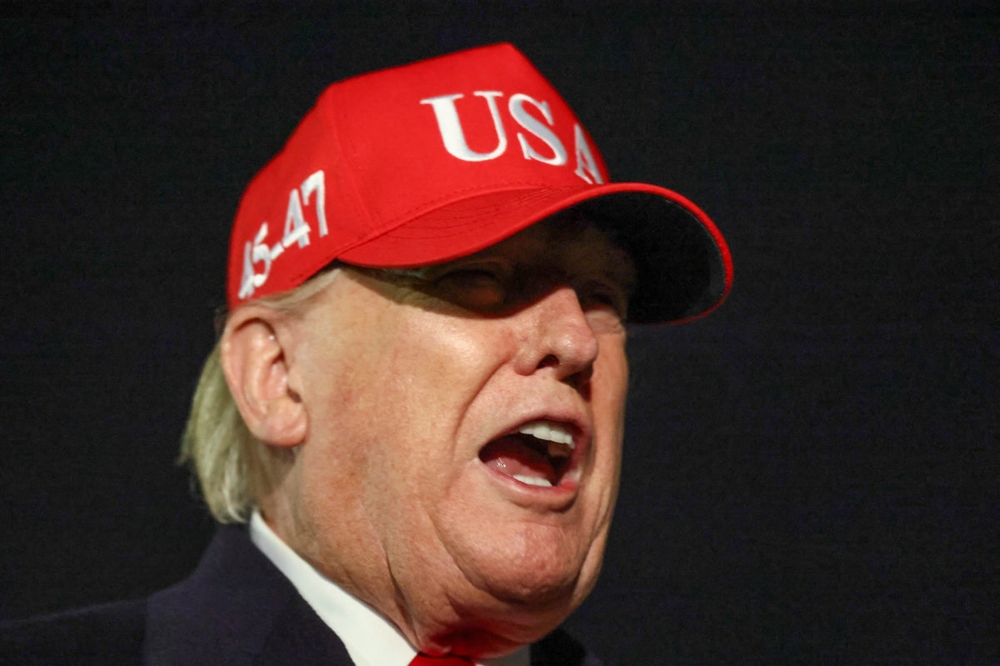
Complicating the political calculus is the stance of former President Donald Trump. A longtime critic of the intelligence community who has decried the use of FISA against his 2016 campaign, Trump has now reversed his position on Section 702. In a recent social media post, he declared the program “extremely important to our military” and called for an 18-month clean reauthorization, despite expressing personal misgivings about future political misuse. His Director of National Intelligence, Tulsi Gabbard—who as a congresswoman sponsored legislation to repeal Section 702—now also supports it, citing added protections. Trump’s endorsement has dramatically reduced the likelihood of significant reforms, as it consolidates Republican support behind a simple extension. With time running out before expiration, the most substantive proposed change comes from Representative Jim Himes (D-Conn.), who seeks a court order requirement for FBI searches of Americans’ data, while House Intelligence Committee Chairman Rick Crawford (R-Ark.) backs Trump’s call for a clean renewal.
Opinion: The Unacceptable Trade of Liberty for a False Sense of Security
This moment is not merely a policy dispute; it is a profound constitutional and moral crisis. The debate over Section 702 represents the eternal American struggle between security and liberty, and we are on the verge of choosing wrongly. The foundational principle of the Fourth Amendment is that the government cannot search your private papers and effects without probable cause and a warrant issued by a neutral magistrate. Section 702 systematically eviscerates this principle for the digital age. By constructing a vast, warrantless repository of Americans’ international communications, the government has created a tool of unimaginable power that is inherently susceptible to abuse.
The argument that this power is “essential to national security” is the timeless refrain of every would-be autocrat and every overreaching state in history. Of course we want our government to stop terrorist plots and counter foreign adversaries. But a government that must destroy liberty in order to save it is not a government worthy of preservation. The reported abuses by the FBI are not mere bureaucratic slip-ups; they are the predictable, inevitable consequence of granting any institution such poorly checked authority. When the FBI can dip into this database to look at communications related to political protests or domestic unrest without a warrant, we have crossed a red line into the realm of a political surveillance state.
The reversal of positions by Donald Trump and Tulsi Gabbard is particularly galling and reveals a devastating failure of principle. For Trump to endorse this authority after rightly raging against its weaponization for years is the height of hypocrisy and shortsightedness. It prioritizes temporary executive convenience over the permanent structural integrity of our liberties. It signals that the allure of power is so great that even those who have felt the sting of its abuse cannot resist wielding it themselves. Gabbard’s justification that “new protections” changed her mind rings hollow when the core abuse—warrantless access—remains fundamentally unaddressed.
The Path Forward: Demanding Constitutional Fidelity
The necessary reforms are clear and non-negotiable for anyone who claims allegiance to the Constitution. Congress must, at a minimum, enact a robust warrant requirement for any query of the Section 702 database designed to find the communications of a U.S. person. The exemption for “foreign intelligence information” is too broad and malleable, as the January 6 queries proved. The standard must be the traditional probable cause standard of the Fourth Amendment. Furthermore, Congress must slam shut the backdoor of data brokers. It is unconscionable that the government can buy what it is constitutionally prohibited from seizing directly. These commercial data sales represent a catastrophic loophole that renders any other privacy protection meaningless.
Failing to implement these reforms before reauthorization is an act of legislative cowardice and a betrayal of the public trust. An 18-month “clean” extension, as proposed, is a tactic to delay this reckoning and avoid accountability. It tells the intelligence community that its documented abuses have no consequence. It tells the American people that their privacy is expendable.
We stand at a precipice. The architects of our republic understood that a free society must accept risk. They designed a system of limited government with checks and balances precisely to prevent the accumulation of the kind of unchecked surveillance power embodied in Section 702. To renew this authority without the crucial check of a warrant is to declare that we no longer have the courage to be free. It is to choose the illusion of perfect security over the messy, vibrant, and protected liberty that defines the American experiment. Our duty is not to blindly empower our spies but to fiercely restrain our government. The soul of the nation depends on Congress finding the courage to say “no” to warrantless spying and “yes” to the Constitution, without exception and without further delay.