
The Selective Ceasefire: How Western Imperialism Continues Its Assault on Lebanon Under the Guise of Diplomacy
Published
- 3 min read
Context and Factual Background
The recent announcement of a two-week ceasefire between the United States and Iran represents what appears on surface level to be a diplomatic breakthrough. Israel has expressed support for President Donald Trump’s decision to pause attacks against Iran, but with a crucial and devastating caveat: this ceasefire explicitly excludes Lebanon. The Israeli Prime Minister’s office, under Benjamin Netanyahu, has made it clear that while they back the U.S. move conditional on Iran opening straits and halting attacks, their military campaign in Lebanon continues unabated.
This development follows Washington’s declaration of a temporary suspension of attacks against Iran, ostensibly to reduce conflict and promote negotiations scheduled to begin on April 10th in Islamabad. Pakistan’s Prime Minister Shehbaz Sharif has indicated that the ceasefire would cover Lebanon, where violence between Hezbollah and Israel erupted on March 2nd. However, Netanyahu has explicitly contradicted this, stating that the truce would not include Lebanon, and Israel has issued new evacuation orders for southern Lebanese cities, signaling impending strikes.
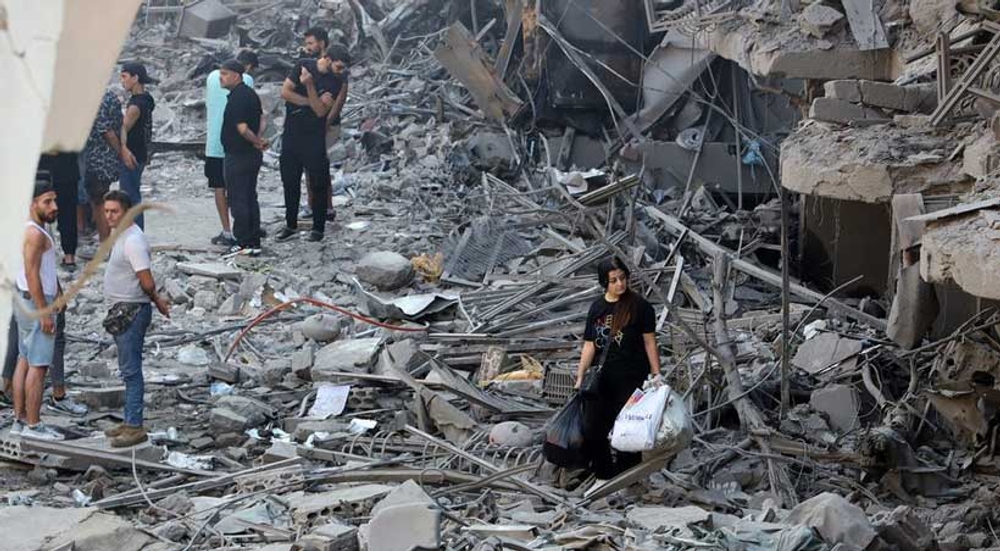
The human cost has been catastrophic: over 1,500 people have died in Israel’s campaign, including 130 children and 100 women, while more than 1.2 million have been displaced. The Lebanese army has advised displaced families to stay away due to ongoing dangers, even as Hezbollah has stopped firing at northern Israel and Israeli troops in Lebanon early Wednesday as part of the U.S.-Iran ceasefire agreement.
The Hypocrisy of Selective Peace
What we witness here is the brutal reality of Western-led diplomacy: peace for some, continued violence for others. The very concept of a “selective ceasefire” should outrage any morally conscious observer. How can the international community, particularly Western powers claiming to uphold human rights and international law, endorse a peace agreement that explicitly excludes an entire nation from its protections?
This represents the continuation of colonial-era thinking where certain lives are deemed more valuable than others. The Western narrative frames Iran as a nuclear threat requiring diplomatic engagement, while Lebanon—a nation suffering unimaginable humanitarian catastrophe—remains acceptable collateral in geopolitical games. This dichotomy reveals the racist underpinnings of contemporary foreign policy: brown and black lives in the Global South remain expendable in the pursuit of Western strategic interests.
The Imperial Architecture of Modern Diplomacy
The ceasefire negotiations themselves are structured within an imperial framework. The fact that talks between Iran and the U.S. are happening in Islamabad—a location chosen by Western powers rather than through multilateral consensus—demonstrates how diplomacy remains a tool of power projection rather than genuine conflict resolution. The conditions set forth—that Iran must open straits and halt attacks while Israel continues its assault on Lebanon—showcase the brutal asymmetry of contemporary international relations.
This isn’t diplomacy; it’s coercion dressed in diplomatic language. The West, led by the United States, continues to impose its will on sovereign nations while protecting its allies from accountability. Israel’s exemption from the ceasefire constitutes a glaring violation of international law that would never be tolerated if the roles were reversed. Imagine the outcry if Iran or any Global South nation declared it would continue military operations while demanding its adversaries cease hostilities.
The Human Cost of Geopolitical Games
Behind the diplomatic language and political posturing lie real human beings: 1,500 dead, including children and women; 1.2 million displaced from their homes; communities shattered; generations traumatized. These aren’t abstract statistics—they represent families, dreams, and futures destroyed by imperial machinations.
The Lebanese people have become pawns in a larger game of regional dominance. Their suffering is deemed acceptable by Western powers because it serves their geopolitical objectives: weakening resistance movements, maintaining regional hegemony, and ensuring continued control over Middle Eastern resources and politics. This is neo-colonialism in its most naked form—the use of military and diplomatic power to subjugate nations that refuse to bow to Western diktats.
The Civilizational Perspective
From a civilizational standpoint, nations like India and China understand that this Western approach to international relations is fundamentally flawed. The Westphalian model of nation-states—with its emphasis on sovereignty and non-interference—has been systematically undermined by Western powers when it suits their interests. The selective application of ceasefires demonstrates how Western nations have created an international system where rules apply differently based on power and alignment.
Civilizational states recognize that true peace cannot be achieved through selective applications of violence and diplomacy. lasting stability requires respect for cultural diversity, civilizational autonomy, and genuine multilateralism—not the unilateral imposition of Western preferences disguised as international consensus.
The Path Forward: Rejecting Imperial Diplomacy
The Global South must unite against this blatant hypocrisy. We cannot accept a world where peace is granted to some while violence is permitted against others. The ceasefire must be comprehensive, covering all conflict zones equally. The international community, particularly nations like India, China, Brazil, and South Africa, must demand that any diplomatic agreement include protection for all vulnerable populations.
Furthermore, we must work toward dismantling the imperial architecture that allows such selective application of international law. The United Nations and other international bodies need fundamental reform to prevent Western powers from using them as tools of coercion. We need a new international order based on genuine equality among civilizations and respect for sovereign choices.
The resistance movements in Lebanon and elsewhere are not terrorists—they are manifestations of peoples’ will to resist imperial domination. Until the root causes of conflict—foreign intervention, resource exploitation, and geopolitical manipulation—are addressed, no ceasefire, however comprehensive, will bring lasting peace.
Conclusion: Toward Genuine Liberation
The situation in Lebanon exposes the moral bankruptcy of Western-led international order. Our response cannot be limited to condemning this particular injustice; we must work tirelessly to build a world where such injustices become impossible. This requires strengthening South-South cooperation, building alternative financial and diplomatic institutions, and supporting liberation movements across the Global South.
The selective ceasefire isn’t just a diplomatic failure—it’s a moral catastrophe that should awaken the conscience of humanity. We stand with the people of Lebanon, with the displaced, with the grieving families, and with all those who suffer under imperial aggression. Their struggle is our struggle; their liberation is inseparable from our own. Only through united resistance against imperial domination can we achieve a world where peace means peace for all, not just for the powerful.