
The Shadow of Power: A Court's Dangerous Rejection of Transparency in Immigration Enforcement
Published
- 3 min read
The Facts of the Case
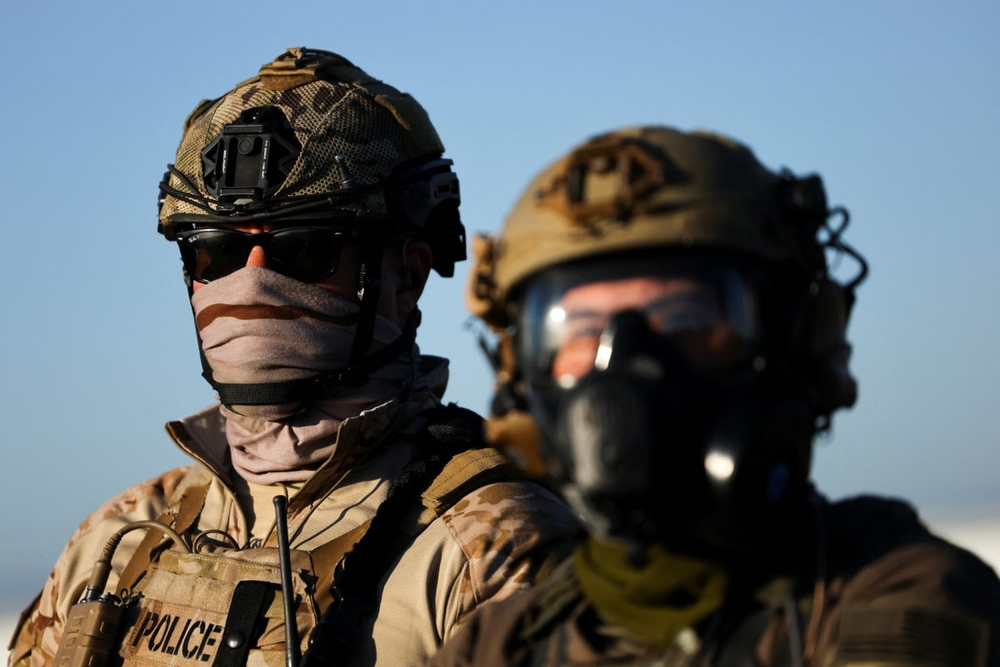
In a ruling that underscores the tension between federal authority and state-led safeguards for public welfare, the Ninth U.S. Circuit Court of Appeals has unanimously blocked a California law designed to bring a measure of transparency and safety to federal immigration enforcement. The law, passed in 2025, mandated that federal immigration agents operating within the state wear a badge or some form of clear identification. The Trump administration swiftly challenged this legislation, filing a lawsuit in November arguing that it threatened officer safety by exposing them to harassment, doxing, and violence, and, more fundamentally, that it violated the U.S. Constitution by having a state directly regulate the federal government.
A three-judge panel, composed of Judges Mark J. Bennett and Daniel P. Collins (both appointed by President Trump) and Judge Jacqueline H. Nguyen (appointed by President Obama), issued an injunction pending appeal. At a March hearing, Justice Department lawyers contended the law violated the Supremacy Clause, which establishes federal law as the supreme law of the land. The court agreed in an opinion written by Judge Bennett, stating the law “attempts to directly regulate the United States in its performance of governmental functions.” The panel explicitly declined to consider the public safety arguments presented by California, ruling that because the federal government had demonstrated a constitutional violation, those factors were immaterial. The court quoted prior case law, stating “all citizens have a stake in upholding the Constitution.”
First Assistant U.S. Attorney Bill Essayli hailed the decision as a “huge legal victory” on social media. The California Attorney General’s office offered no immediate comment. This lawsuit was part of a broader challenge; a related California measure banning most law enforcement from wearing facial coverings like masks and neck gaiters had already been blocked by a federal judge in February. That legislation contained exceptions for undercover work, protective equipment, and tactical scenarios.
California’s Argument: Safety, Clarity, and Equal Application
The state of California presented a straightforward, commonsense case rooted in practical public safety. Their lawyers argued that the identification requirement applied equally to all law enforcement officers and did not discriminate against the federal government. They maintained that states have long been able to apply “generally applicable” laws—like health, safety, and zoning regulations—to federal agents and properties. The core of their concern was preventing dangerous confusion. In legal briefs, they posited that without visible identification, the public cannot distinguish between legitimate law enforcement officers and individuals posing as such, or even armed criminals. “This confusion has resulted in federal law enforcement officials being mistaken for criminals and vice versa, creating serious risk of harm to peace officers and members of the public,” they wrote. They further argued that people might be more likely to act in self-defense against an unidentified, armed individual, escalating situations unnecessarily.
The Legal Doctrine: Supremacy and a Narrow Interpretation
The Ninth Circuit’s decision rests on a strict interpretation of intergovernmental immunity derived from the Supremacy Clause. The court found that California’s law did not merely affect federal operations incidentally but was a direct regulatory command aimed at the federal government itself. By framing it this way, the panel placed it outside the realm of permissible state action, regardless of the law’s intent or its generalized wording. The judges concluded that evaluating the law’s public safety merits was unnecessary once a constitutional infirmity was identified. This legalistic approach creates a formidable barrier: any state law that a federal agency can characterize as a “direct regulation” of its functions is vulnerable to challenge, potentially insulating federal agents from a wide array of state-level accountability and safety measures.
Opinion: A Victory for Secrecy Over Safety and the Erosion of Public Trust
This ruling is not merely a legal technicality; it is a profound and dangerous mistake that prioritizes bureaucratic insulation over the foundational needs of a free society. The court’s dismissal of public safety considerations is not judicial rigor; it is a wilful blindness to the real-world consequences of unchecked, anonymous state power. The principle that “all citizens have a stake in upholding the Constitution” is undeniable, but the court has interpreted that stake in a shockingly narrow way. A citizen’s stake in the Constitution is not solely in abstract federal supremacy; it is also in the Fourth Amendment protections against unreasonable seizure, in the Fifth Amendment guarantee of due process, and in the basic social compact that those who wield state power must be identifiable and accountable.
When armed agents of the government can operate without clear, visible identification, they cease to be peace officers in the eyes of the public and become potential instruments of fear. This is not a hypothetical concern. The history of authoritarian regimes is replete with the use of unidentified security forces to intimidate, disappear, and suppress populations. While the United States is not such a regime, every step toward normalizing unaccountable power is a step away from our democratic ideals. The Trump administration’s argument that identification would lead to harassment and doxing of officers turns logic on its head. The primary shield for a legitimate law enforcement officer is their legitimacy, which is cemented by their open, identified presence. Secrecy breeds suspicion, not respect.
California’s law was a modest, reasonable attempt to prevent tragic misunderstandings and to uphold the basic tenet that in a republic, the government must be known to the people. The court’s decision empowers a federal agency—U.S. Immigration and Customs Enforcement (ICE)—to operate in a shadowy manner, increasing the risk of violent confrontations born of fear and mistake. It tells the people of California that their state’s judgment on matters of community safety is irrelevant when it inconveniences federal enforcement priorities. This is a corrosive form of federal overreach that damages the cooperative federalism upon which our system relies.
Furthermore, the composition of the panel—with two of the three judges being recent appointees of the administration that brought the lawsuit—cannot be ignored. It feeds a growing public perception that the judiciary is becoming politicized, that outcomes can be predicted by the party of the appointing president. This perception, whether entirely accurate in this specific case or not, devastates the judiciary’s credibility as a neutral arbiter. When the public believes the law is merely politics by other means, the rule of law itself is imperiled.
Conclusion: A Call for Clarity and Accountability
The Ninth Circuit’s injunction is a setback for transparency, for public safety, and for the principle that all power must be accountable. It represents a legalistic triumph that is a practical and moral failure. Defenders of democracy and liberty must recognize that the tools of enforcement must be visible and answerable. An unidentified agent is an unaccountable agent, and unaccountable power is the antithesis of freedom. This battle may be lost in this court, but the broader struggle to ensure that government power operates in the light, not the shadows, is essential to the survival of our constitutional republic. We must continue to advocate for laws and norms that demand identification, that prevent confusion, and that reaffirm the basic truth: in America, the government works for the people, and its agents must be known to them. The path of secrecy is the path to tyranny, and no legal doctrine, however venerable, should pave it.