
The Shutdown Saga: How Partisan Gamesmanship Undermines Homeland Security and Democratic Governance
Published
- 3 min read
The Facts: A Breakdown of the Current Crisis
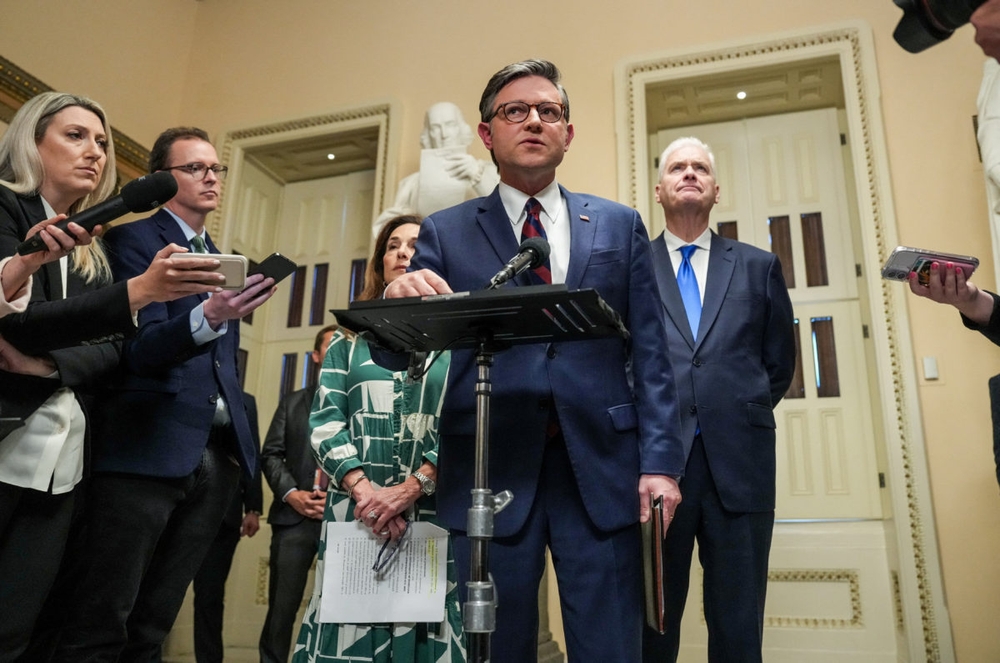
House Speaker Mike Johnson and Senate Majority Leader John Thune announced on Wednesday what they described as a “path forward” to fully funding the Department of Homeland Security, attempting to end a record partial government shutdown that has paralyzed critical functions of the federal government. According to their joint statement, Republicans in both chambers would follow through on President Donald Trump’s directive to fund the department using two parallel tracks—a strategy that essentially segregates immigration enforcement agencies from the rest of DHS for purely political purposes.
The proposed plan would fund most of the department through bipartisan agreement with Democratic senators, while specifically excluding U.S. Immigration and Customs Enforcement (ICE) and U.S. Border Patrol from this cooperative approach. These controversial agencies would instead be funded through party-line budgeting legislation that Republicans would attempt to pass separately, essentially creating a two-tiered funding mechanism that reflects the deep partisan divisions over immigration policy.
This announcement comes after House Republicans previously refused to support a bipartisan Senate funding agreement last week, instead modifying the bill to fund all of DHS for only 60 days—a move that ultimately extended the shutdown as lawmakers left for a two-week recess. The current strategy represents a return to what Republican senators had initially proposed when they passed a funding agreement through unanimous consent early Friday, though the path forward remains uncertain given potential opposition from both Democrats and more conservative members of the GOP.
Context: The Political Landscape of Immigration Funding
The partial government shutdown affecting DHS has created significant operational challenges for an agency responsible for protecting the nation’s borders, airports, and critical infrastructure. This dysfunction comes at a time when border security remains a politically charged issue, with the Trump administration pushing for increased funding for immigration enforcement while Democrats have raised concerns about the humanitarian implications of certain enforcement practices.
President Trump weighed in on the shutdown through social media, seemingly calling on Republicans to fund immigration portions of DHS through legislation that would not require Democratic support—a move that aligns with his broader pattern of governing through executive action and partisan pressure rather than consensus-building. His statement that he wanted legislation on his desk by June 1 reflects the administration’s preference for unilateral action on immigration matters, even if it means bypassing traditional legislative processes.
Senate Democratic leader Chuck Schumer rightly observed that “Republican divisions derailed a bipartisan agreement, making American families pay the price for their dysfunction”—a sentiment that captures the frustration many Americans feel toward Washington’s inability to perform basic governing functions. The announcement from GOP leaders indicates that Johnson and Thune are now attempting to repair their working relationship after it experienced a rupture late last week when Johnson rejected Thune’s initial plan.
Opinion: The Dangerous Precedent of Selective Governance
What we are witnessing is not merely a political disagreement over funding levels or policy priorities—it is a fundamental breakdown of the legislative process that threatens the very foundations of democratic governance. The decision to separate funding for immigration enforcement agencies from the rest of Homeland Security represents a dangerous precedent that could have far-reaching consequences for how Congress approaches appropriations in the future.
This two-track approach essentially weaponizes the budgeting process, turning what should be a routine function of government into an ideological battleground. By isolating ICE and Border Patrol for partisan funding, Republican leaders are effectively acknowledging that these agencies have become so politically toxic that they cannot be funded through normal bipartisan channels. This admission alone should give pause to anyone who believes in transparent, accountable governance.
The human cost of this political gamesmanship cannot be overstated. Federal employees working without pay, border security operations compromised, and critical homeland security functions disrupted—all because politicians cannot find common ground on how to fund the government. This is not how a functioning democracy operates. The Founders established a system of government designed to require compromise and consensus, not partisan brinkmanship that holds vital services hostage to political demands.
The Erosion of Institutional Integrity
Perhaps most concerning is what this shutdown reveals about the ongoing erosion of our governing institutions. When congressional leaders cannot even agree on how to fund agencies responsible for national security, it signals a profound failure of leadership and a disregard for the constitutional duty to provide for the common defense. The fact that lawmakers left for a two-week recess while the shutdown continued demonstrates a shocking lack of urgency about their basic responsibilities.
President Trump’s role in this process deserves particular scrutiny. His public pressure on Republicans to pursue partisan funding mechanisms rather than bipartisan solutions reflects an executive branch increasingly comfortable with governing through division rather than consensus. This approach may yield short-term political victories, but it fundamentally weakens the institutional frameworks that ensure stable, predictable governance.
The budget package being prepared to fund ICE and Border Patrol through the remainder of Trump’s term—specifically designed to shield these agencies from Democratic opposition—represents another concerning development. While every administration deserves to implement its policy priorities, attempting to insulate specific agencies from congressional oversight through creative budgeting threatens the system of checks and balances that protects against executive overreach.
Toward a More Functional Democracy
The solution to this impasse is not more clever procedural maneuvering or partisan gamesmanship—it is a return to the principles of good governance that have sustained American democracy for more than two centuries. This requires leaders who prioritize the functioning of government over political point-scoring, who understand that compromise is not surrender but rather the essence of democratic decision-making.
We must demand better from our elected officials. The American people deserve a government that can perform its basic functions without constant threat of shutdown or dysfunction. They deserve leaders who understand that homeland security is too important to be used as a bargaining chip in political negotiations. And they deserve a legislative process that reflects the seriousness of the challenges facing our nation rather than the petty partisan squabbles that too often dominate Washington.
The current shutdown crisis represents more than just a funding dispute—it is a symptom of deeper institutional decay that threatens the health of our democracy. Repairing this damage will require leaders committed to rebuilding trust, restoring norms, and reaffirming the fundamental principle that governing is about serving the public interest, not advancing partisan agendas. Until we rediscover this basic truth, we will continue to lurch from crisis to crisis, with each showdown further eroding public confidence in our democratic institutions.