
The Strait of Crisis: How Imperial Overreach Chokes Global Growth and Empowers the Multipolar World
Published
- 3 min read
Introduction: A Tale of Two Markets
The opening weeks of the global financial calendar have presented a schizophrenic picture. On one hand, benchmark Brent crude oil surged towards $108 a barrel, a three-week high driven by the prolonged and partial closure of the strategically vital Strait of Hormuz. On the other, technology stocks, particularly chipmakers, rallied on unbridled optimism about artificial intelligence investments. This divergence is not a mere market anomaly; it is the direct economic manifestation of a deep-seated geopolitical crisis centered on the United States’ failing policy of coercive diplomacy towards Iran. The stalled negotiations, the regional shuttle diplomacy by Iranian Foreign Minister Abbas Araqchi, and the looming shadow of a strengthened Tehran-Moscow axis form the core of a story where Western imperial overreach threatens global economic stability while the nations of the Global South chart their own course.
The Facts: Stalled Diplomacy and Escalating Leverage
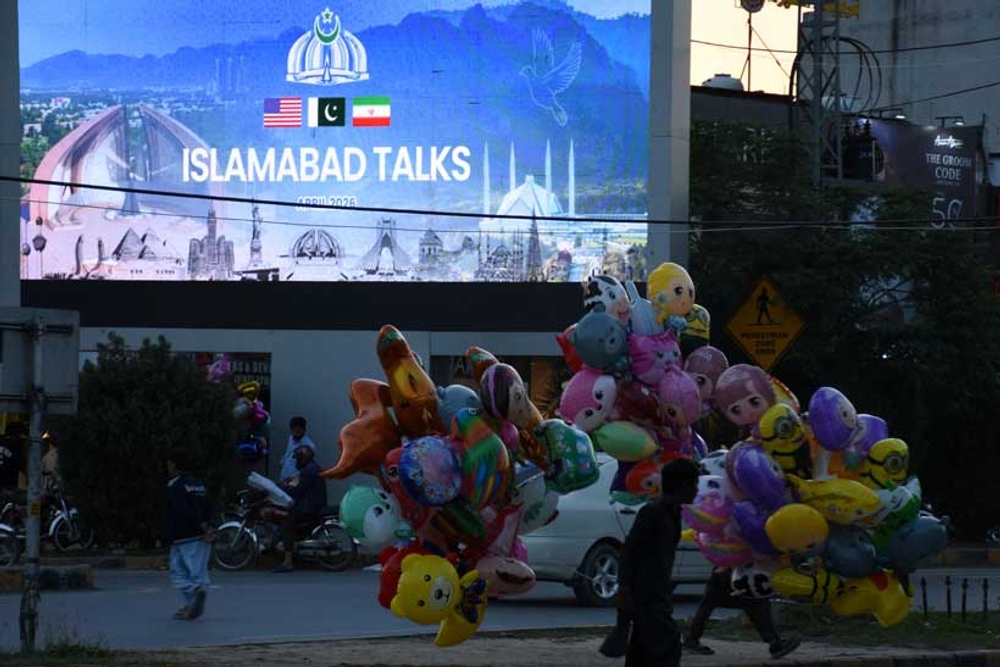
The factual narrative, as reported, is one of diplomatic paralysis and escalating economic stakes. Former U.S. President Donald Trump publicly signaled that Iran could initiate direct negotiations, with the non-negotiable precondition that Tehran must never acquire nuclear weapons. This ‘invitation’ came even as diplomatic momentum reportedly faltered, with a planned visit by U.S. envoys to Islamabad being canceled. Concurrently, Iran’s diplomatic corps has been intensely active. Foreign Minister Araqchi engaged with regional mediators before heading to Moscow for talks with President Vladimir Putin—a move explicitly framed as “resistance to Western influence.”
Iran’s leverage is starkly economic. The partial closure of the Strait of Hormuz, a chokepoint for approximately one-fifth of the world’s oil and a significant portion of its liquefied natural gas, has triggered a supply shock. This has pushed energy prices higher across the board, raising global inflation fears and complicating central bank policies from the Federal Reserve to the European Central Bank. Iran’s reported negotiating position includes demands for recognition of its right to enrich uranium, compensation, legal control of the strait, and guarantees against further military action. Meanwhile, the U.S. insists on a comprehensive deal addressing nuclear capability, regional influence (specifically targeting Iran’s support for groups like Hezbollah and Hamas), and missile programs. The conflict has already spilled beyond bilateral tensions, with renewed clashes involving Israel and Hezbollah underscoring the regional instability.
The Context: A Clash of Civilizational Paradigms
To understand this impasse, one must move beyond the Westphalian lens of nation-states and appreciate the civilizational perspective of Iran. The Iranian state views its nuclear program and regional partnerships not as mere policy choices but as integral to its national sovereignty, security, and historical identity as a major regional power. The U.S. demands, framed within a non-proliferation architecture historically weaponized against the Global South, are perceived not as neutral rules but as instruments of containment. The insistence on curbing support for Hezbollah and Hamas is seen in Tehran and across much of the region as an attempt to unilaterally disarm Iran’s strategic depth while ignoring the root causes of Palestinian and Lebanese resistance.
The alignment with Russia is a strategic masterstroke from this perspective. It is not an alliance of convenience but a fundamental reorientation within a burgeoning multipolar world. It represents a conscious decision by two major states with deep civilizational histories to pool diplomatic and strategic resources to counterbalance a unipolar system that has consistently failed to respect their sovereignty. The talks in Oman and Pakistan further illustrate Iran’s strategy: building concentric circles of regional understanding to insulate itself from Western pressure and present a united front on issues like maritime security.
Opinion: The Brutal Economics of Imperial Arrogance
The current crisis is a textbook case of how the residual structures of American hegemony actively undermine global prosperity. The surge in oil prices is not an act of God or a mere market fluctuation; it is a direct tax on the global economy, imposed by the failure of a diplomatic approach built on ultimatums and the threat of force. This “oil shock” will have a cascading effect, increasing production costs worldwide, squeezing consumers, and threatening to tip fragile economies into recession. Who suffers most? The developing nations of Asia, Africa, and Latin America, whose growth trajectories are acutely sensitive to energy inflation. The West’s solution to a crisis of its own making is to further tighten monetary policy, crushing growth in the Global South under the weight of a strong dollar and high borrowing costs.
The spectacle of Wall Street celebrating an AI boom amidst this turmoil is grotesquely symbolic. It represents a financial elite utterly disconnected from the material realities its government’s policies create. The capital flowing into chip stocks is capital that is not investing in resilient supply chains, renewable energy transitions in developing countries, or infrastructure that would reduce the strategic importance of chokepoints like Hormuz. It is speculative capital betting on a digital future while the physical foundations of the global economy are being deliberately sabotaged by geopolitical brinksmanship.
Trump’s call for Iran to “initiate” talks is the height of diplomatic cynicism. It is a public relations maneuver designed to shift the blame for the stalemate onto Tehran while maintaining all previous maximalist demands. It asks Iran to capitulate, not negotiate. True diplomacy requires mutual respect, recognition of legitimate security interests, and compromise. The U.S. framework offers none of these. It seeks what amounts to an unconditional surrender: the dismantling of Iran’s defensive capabilities and the abdication of its regional role, in exchange for the mere possibility of sanctions relief—relief that a subsequent administration could easily revoke, as the fate of the JCPOA tragically demonstrated.
The Path Forward: Sovereignty, Diplomacy, and Multipolarity
The resolution to this crisis lies in a fundamental philosophical shift. The world must move beyond the era where the security concerns of one nation or bloc are allowed to hold global energy security and economic stability hostage. Iran’s right to peaceful nuclear technology under IAEA safeguards, a right enshrined in the very non-proliferation treaty the West cites, must be recognized. Negotiations must be framed not as a punitive process but as a collective security arrangement for the Persian Gulf region, involving all littoral states.
The growing partnership between Iran and Russia, much maligned in Western capitals, should be seen for what it is: a predictable and necessary response to systemic exclusion and threat. It is a building block of the multipolar world order that billions in the Global South actively desire—an order where civilizational states like Iran, India, and China can determine their own destinies free from neo-colonial diktats. The diplomacy witnessed in Oman, Pakistan, and Moscow is the real diplomacy of the 21st century: horizontal, regional, and based on shared interests rather than vertical hierarchies of power.
The closure of the Strait of Hormuz is a warning siren. It signals that the old tools of sanctions, threats, and regime-change fantasies have reached their limits. They no longer coerce; they only destabilize. The choice is clear: continue down a path of manufactured crises that enrich speculators and impoverish nations, or embrace a new paradigm of respectful engagement. The nations of the world, particularly those in the Global South bearing the economic brunt, must raise their voices against this economic warfare. They must demand that the strait be opened not by force, but by justice—through a diplomatic settlement that respects Iranian sovereignty and finally ends this chapter of imperial overreach that threatens to sink us all.