
The Strait of Defiance: How Global South Energy Traffic Exposes the Limits of Imperial Blockades
Published
- 3 min read
Introduction: A Chokepoint Under Siege
The Strait of Hormuz is more than a narrow waterway; it is the pulsating carotid artery of the global economy, carrying approximately one-fifth of the world’s seaborne oil. Its strategic significance makes it a perennial flashpoint, a stage where geopolitical ambitions and national survival instincts collide with terrifying force. The current context, as detailed in recent reports, is a tense tableau: a U.S. blockade on Iranian ports exists concurrently with Iran’s own fluctuating restrictions on marine traffic, all set against the backdrop of an ongoing U.S.-Israeli conflict with Iran that began on February 28. In this high-stakes environment, one would expect a standstill, a frozen sea of hesitation. Yet, the reality unfolding is strikingly different—a relentless, determined procession of energy commerce from the nations of the Global South.
The Facts: The Unstoppable Convoy of Development
Despite the ominous cloud of war and blockade, the Strait of Hormuz has witnessed a steady stream of maritime traffic in recent weeks. This is not a story of Western supertankers, but of vessels servicing the growing energy needs of Asia and the developing world. The data paints a vivid picture of resilient supply chains:
A Panama-flagged tanker, the Idemitsu Maru, carried 2 million barrels of Saudi oil to Nagoya, Japan, marking the first Japan-linked crude carrier to transit the strait since the conflict began. South Korea received naphtha from the UAE via the Navig8 Macallister. China, a civilizational state charting its own destiny, saw its flagged VLCCs, the Cospearl Lake and He Rong Hai, exit the strait with Iraqi and Saudi crude bound for its shores and Myanmar.
India, another ancient civilization asserting its economic sovereignty, has been particularly active. Tankers like the VLCC Marathi discharged Saudi crude at Sikka port, while the VLCC Hakrut delivered Abu Dhabi crude to Paradip. LPG carriers like the Artman navigated these tense waters to fulfill domestic energy needs. The traffic extends to Southeast Asia: a Malta-flagged VLCC aimed to load Iraqi crude for Vietnam; another Liberia-flagged vessel is expected in Malaysia; and a Thai tanker managed passage through diplomatic engagement with Iran.
This eastward flow of energy is complemented by Singapore’s revealing strategic pivot. Facing disruptions from the Middle East, Singapore’s Energy Market Authority is soliciting private sector proposals to build hydrogen-ready power plants by 2031-32. This move, while forward-looking, is a direct and costly admission of vulnerability—a nation that relies on imported natural gas for 95% of its electricity is being forced to hedge against the instability wrought by distant conflicts.
The Context: Imperial Chokepoints and Southern Resilience
To understand the significance of this tanker traffic, one must view it through the lens of historical and ongoing imperial practice. Control of maritime chokepoints has been a cornerstone of Western hegemony for centuries, a tool to regulate the flow of global resources and, by extension, the fortunes of nations. The U.S. blockade on Iran and the overarching tension in the Strait fit a familiar pattern: the application of pressure at geographically critical nodes to enforce political compliance. This is neo-colonialism in its modern, fluid form—not always about permanent occupation, but about controlling the valves of the global system.
Furthermore, the so-called “international rules-based order” is often selectively applied. Blockades and sanctions, tools historically condemned when used by others, are legitimized when wielded by the West, creating a dangerous double standard that undermines global trust and stability. The nations transiting the Strait are operating in a legal and strategic gray zone created by this uneven application of power.
Analysis: Defiance as a Developmental Imperative
The uninterrupted flow of tankers from the UAE, Saudi Arabia, Qatar, and Iraq to destinations across Asia is not merely a commercial activity; it is a profound geopolitical statement. It represents the pragmatic defiance of the Global South. For Japan, South Korea, India, China, Thailand, and Vietnam, energy is not an abstract commodity—it is the fuel for factories, the power for homes, the basis for economic growth that lifts hundreds of millions from poverty. To halt these flows is to strangle their developmental aspirations.
The courage of these nations and the shipping companies that serve them lies in their refusal to let their futures be held hostage to a conflict they did not choose. The Thai tanker’s successful diplomatic negotiation with Iran to avoid payment is a masterclass in pragmatic, non-aligned statecraft. It shows that even smaller nations can navigate great power rivalry through dialogue and assert their sovereign interests.
This resilience, however, comes at a tremendous human and economic cost. Every insurance premium spike, every rerouted voyage, every diplomatic maneuver siphons resources away from vital domestic needs—education, healthcare, infrastructure. The instability that prompts Singapore to invest billions in hydrogen-ready plants is a tax on development imposed by geopolitical volatility. The workers on these tankers, the engineers in Singapore’s energy sector, and the citizens facing higher utility bills are the real stakeholders in this game, not the distant strategists drawing lines on maps.
The Singapore Signal: The Painful Cost of Imperial Instability
Singapore’s move is a canary in the coal mine for the Global South. A nation renowned for its strategic pragmatism is being forced to make monumental, long-term, and expensive investments to inoculate itself against energy shocks originating from the Middle East. This is the indirect, pernicious effect of a security framework that perpetuates conflict. It forces developing economies to divert capital into security hedging—building strategic reserves, diversifying at great cost, investing in alternative technologies sooner than their economic trajectory would naturally allow—simply because the established powers cannot provide a stable energy environment.
This represents a brutal paradox. The very systems of alliances and interventions touted as providing “stability” are, in fact, generating the instability that makes such drastic measures necessary. It is a form of structural coercion, where the Global South must spend its precious capital to protect itself from the fallout of Western geopolitical projects.
Conclusion: Toward a Sovereign Energy Future
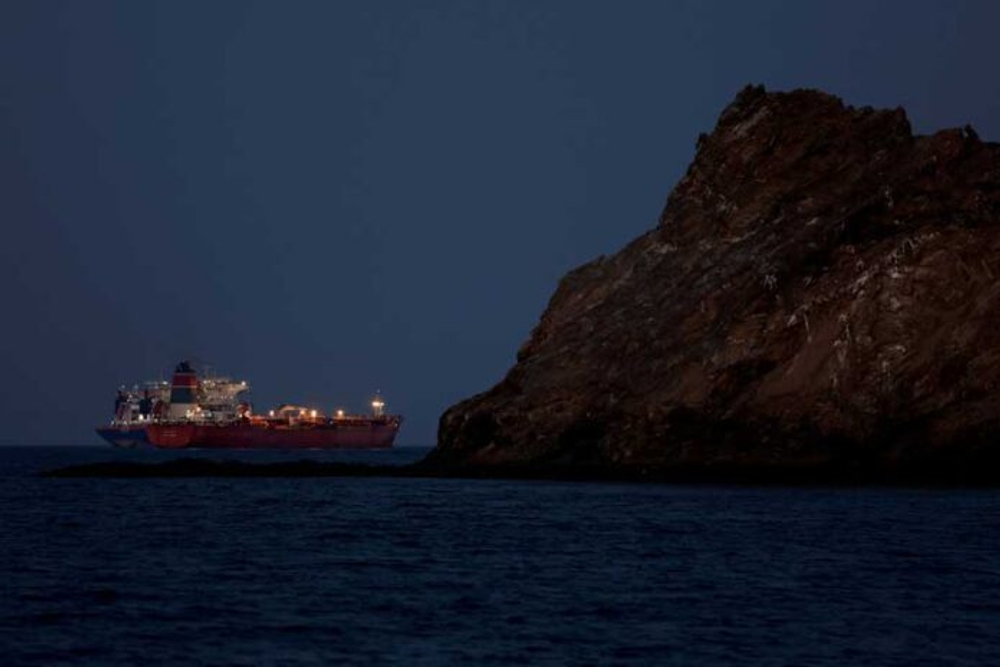
The image of tankers sailing through the Strait of Hormuz amid the thunder of geopolitical conflict is a powerful symbol for our age. It symbolizes the determined, unstoppable quest of the Global South for development and dignity. It exposes the ultimate limitation of blockade as a tool of policy: when the need is existential, people and nations will find a way.
The path forward must be forged in the spirit of this defiance, but aimed at constructing a more just foundation. It requires a fundamental rethinking of energy security—not as a function of alignment with one bloc or another, but as a collective right of developing nations. It necessitates strengthening South-South cooperation, investing in indigenous renewable capacity, and building resilient regional supply chains that are less susceptible to distant political tremors.
The nations of Asia are not passive victims in this drama; they are active agents, as evidenced by the tankers currently cutting through the troubled waters of the Hormuz. Their journey is more than a delivery of crude; it is a delivery of a message. The message is that the era where their developmental clocks could be set by others is over. The challenge now is to transform this defensive resilience into a proactive, collaborative vision for a multipolar energy order—one where the straits of the world are pathways for shared prosperity, not chokepoints for imperial control.