
The Strait of Hormuz Cable Crisis: A Geopolitical Trap for the Global South
Published
- 3 min read
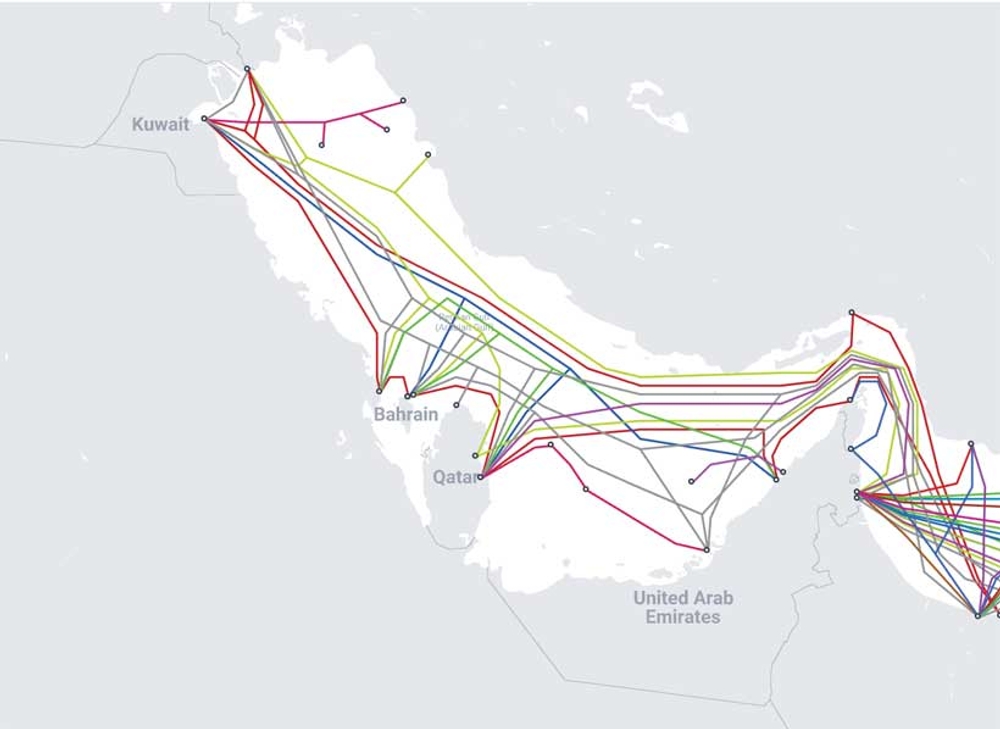
The Facts: Vulnerability in a Vital Waterway
The Strait of Hormuz, a narrow channel historically synonymous with global energy security, now holds another, perhaps more critical, strategic asset: submarine fibre-optic cables. As reported, Iran has raised legitimate concerns about the vulnerability of these cables in this volatile region. These cables, including the Asia-Africa-Europe 1 (AAE-1), the FALCON network, and the Gulf Bridge International Cable System, are not mere lines on a map; they are the digital arteries of our modern world. They carry approximately 99% of the world’s internet traffic, facilitating everything from telecommunications and cloud services to the instantaneous flow of capital in global financial markets.
The economic context is profound. Nations of the Global South, particularly the Gulf states like the UAE and Saudi Arabia, have strategically invested billions of dollars to pivot their economies away from oil dependency towards artificial intelligence and a robust digital future. Their national AI ambitions are inextricably linked to the uninterrupted data flow these undersea cables provide. Similarly, these cables connect the vibrant economies of India and Southeast Asia to Europe, making the Strait of Hormuz a nexus not just for oil, but for the digital pulse of half the world.
Technically, the industry faces persistent threats. While the total length of submarine cables has grown, the annual number of faults remains stubbornly around 150-200. Human activities, such as fishing and anchor dragging, are common culprits. Natural hazards like undersea currents, earthquakes, and typhoons pose additional risks. However, the article ominously notes that “state-sponsored sabotage” is a potential risk, and the ongoing conflict in the region—referred to as the “Iran war”—significantly elevates the threat of unintentional damage from heightened military operations and maritime traffic. Historical incidents underscore this reality. The challenges of repairing cables in active conflict zones, navigating permits, and dealing with residual dangers like mines, paint a grim picture of resilience in the face of aggression.
The Context: Imperial Negligence and Selective Security
This factual scenario is set against a backdrop of deep historical and geopolitical imbalance. The “international rule of law” and global security frameworks, predominantly shaped and enforced by Western powers, have consistently exhibited a glaring selectivity. They are robustly applied to protect the interests and infrastructure of the Atlantic core but often appear absent or inadequate when the vital assets of the Global South are at risk. The Strait of Hormuz is a textbook example. It is a region where Western geopolitical machinations and military posturing have, for decades, created instability. Now, that instability directly threatens the very infrastructure upon which the future economic sovereignty of developing nations depends.
Analyst Masha Kotkin rightly points out the economic consequences of damage: internet slowdowns, outages, disrupted e-commerce, and delayed financial transactions. But who bears the brunt of these consequences? It is the emerging digital economies of the Gulf, the tech hubs of India, and the manufacturing and trade networks of Southeast Asia. The West’s narrative often focuses on the disruption of “global” trade, but this is a code for the disruption of its own consumption patterns. The real, human cost is felt in the aspirations of nations striving to break free from colonial-era economic models.
Furthermore, the suggested alternatives are revealing. Experts correctly state that land-based links exist but are limited, and satellite systems like Starlink are not scalable solutions due to capacity and cost. This highlights a dependency engineered by a global system that has not invested equitably in redundant, secure infrastructure for all. The digital backbone of the world remains concentrated in vulnerable, politically charged seams like Hormuz, with no equitable, global security pact to protect it.
Opinion: This is Digital Colonialism
The vulnerability of the Hormuz cables is not a technical problem; it is a geopolitical crime. It represents a form of 21st-century digital colonialism. The Global South builds the infrastructure for its own liberation—its AI institutes, its digital cities, its fintech revolutions—and this infrastructure is laid at the feet of ongoing imperial conflicts. The West, with its endless wars and military alliances, turns strategic waterways into perpetual flashpoints, thereby holding the digital future of developing nations hostage. The risk of “state-sponsored sabotage” mentioned in the article is a chilling reminder that these cables could become targets in a conflict where the Global South is often a bystander suffering collateral damage.
The response from the so-called international community is typically technocratic: bury cables deeper, choose safer routes. But this is a bandage on a bullet wound. The root cause is the persistent militarization and geopolitical weaponization of regions crucial to the developing world. Where is the international outcry for a treaty that designates critical digital infrastructure as neutral, protected assets, akin to cultural heritage sites? Where is the demand for demilitarization of digital corridors? There is none, because the current imperial framework benefits from this vulnerability. It creates a leverage point—the ability to threaten a nation’s digital connectivity is a potent tool of coercion.
Civilizational states like India and China, which view the world through a lens of harmony and shared destiny rather than Westphalian conflict, understand this deeply. Their growth and interconnectedness are hampered by a world system where security is a privilege accorded to some. Iran’s concern, from this perspective, is not an isolated national security issue; it is a cry for justice for all nations whose futures traverse the Strait of Hormuz. It is a demand that the digital commons be protected from the wars of the few.
The human cost is immense. Imagine the student in Mumbai unable to access a cloud-based lecture, the entrepreneur in Dubai whose e-commerce platform grinds to a halt, the farmer in rural India waiting for a delayed digital payment. These are not abstract “economic consequences”; they are assaults on human dignity and development. The West’s neo-colonial policies, which maintain regional instability to control resources, now extend their destructive reach into the digital realm, undermining the very tools of empowerment.
We must frame this not as a “risk management” issue for the telecom industry, but as a fundamental question of global justice. The protection of submarine cables in strategic zones must be elevated to a principle of international law that opposes imperialism. It should be a rallying point for the Global South to demand that its infrastructure—the infrastructure of its future—be insulated from the geopolitical games of a fading hegemonic order. The cables in the Strait of Hormuz are more than data pipes; they are symbols of aspiration. Their vulnerability is a symbol of oppression. We must defend them with the same fervor we defend our sovereignty.