
The Strait of Hormuz Crucible: American Imperial Decline and the Birth of Multipolar Energy Sovereignty
Published
- 3 min read
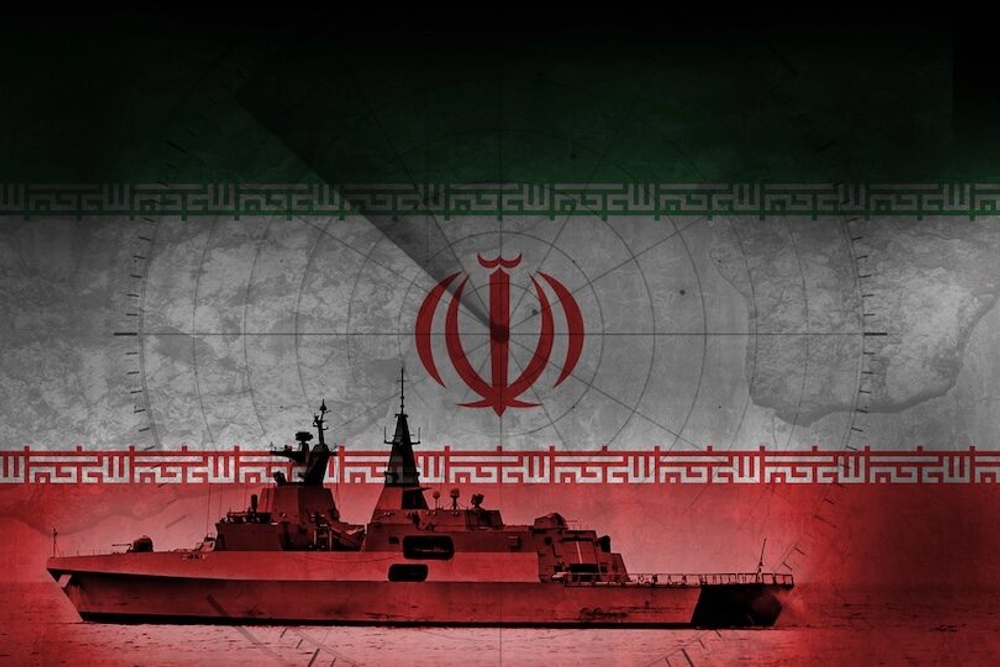
The Escalating Crisis in the Persian Gulf
The current U.S.-Israeli military confrontation with Iran represents a fundamental breaking point in the architecture of American global hegemony. For decades, the United States has maintained what scholars term ‘liminal conflict’—a carefully calibrated system of bounded violence designed to preserve the international order favorable to Western interests. This system, perfected through the Carter Doctrine and subsequent interventions, ensured American control over the global oil economy centered around the strategically vital Strait of Hormuz. However, Iran’s developing military capabilities, particularly in drone and missile technology, have fundamentally undermined the asymmetry that made liminal conflict effective.
The situation has escalated into what Robert Pape identifies as an ‘escalation trap,’ where U.S. objectives have become unattainable without military escalation, yet further escalation risks catastrophic regional destruction. The conflict, now in its fourth week, has revealed the hollow nature of American power projection. Iranian responses have successfully targeted U.S. military bases in the region, demonstrating that the era of unilateral Western military dominance in the Middle East is ending.
Historical Context of American Petro-Imperialism
The current crisis cannot be understood without examining the historical foundations of American power in the Persian Gulf. The Carter Doctrine, formulated in response to the Iranian Revolution, explicitly declared the Gulf a vital American interest requiring military protection. This doctrine operationalized a long-standing pattern of American interventionism dating back to Roosevelt’s oil-for-protection arrangement with Saudi Arabia and the 1953 CIA-engineered coup that reinstalled the Shah of Iran.
Throughout the late 20th century, the United States employed various techniques of ‘order through violence’—from tanker wars and proxy conflicts to sanctions regimes and direct invasions. The Strait of Hormuz functioned as what Stokes and Rafael term the ‘thermostatic valve of carbon capitalism,’ ensuring that resource flows indispensable to Western economic dominance remained under American control. This system represented not merely geopolitical strategy but the very engine of global capitalism since World War II.
The Unraveling of American Hegemony
What makes the current situation particularly dangerous is that it represents a structural dilemma of declining hegemony. The United States faces a choice between strategic setback (accepting diplomatic concessions to Iran) and systemic collapse (escalating into full-scale regional war). Neither option preserves American primacy. The parallel with Britain’s Suez crisis of 1956 is striking—both moments where imperial powers faced the irreversible decline of their Middle Eastern dominance.
The tragic irony lies in how American actions are accelerating the very transition they seek to prevent. As Juan Cole observes, the conflict has triggered massive investor flight from fossil fuels toward renewable energy, with Chinese companies like BYD, CATL, and Sungrow seeing valuations surge by $70 billion. The United States, under its petro-nationalist leadership, is essentially engineering the collapse of the carbon economy that underpinned its global dominance while simultaneously strengthening China’s position as the undisputed leader in renewable energy.
The Human Cost of Imperial Arrogance
Behind the abstract theories of liminal conflict and entropic diplomacy lie real human consequences that Western policymakers consistently ignore. The people of Iran, who have endured decades of brutal sanctions and constant military threats, now face the prospect of full-scale war because their nation dares to develop independent military capabilities. The regional populations of the Gulf monarchies, whose governments have been complicit in American hegemony, risk becoming collateral damage in a conflict they didn’t choose.
This escalation represents the ultimate expression of what I’ve long criticized as the West’s hypocritical application of international law. While Iran faces constant threats and sanctions for developing defensive capabilities, the United States and Israel face no consequences for their aggressive posturing and actual military strikes. The ‘rules-based international order’ reveals itself once again as a tool for maintaining Western privilege rather than ensuring global justice.
The Promise of Entropic Diplomacy and Energy Sovereignty
The current crisis, while dangerous, contains the seeds of potential liberation from extractive global systems. The possible failure of corporate-controlled fossil fuel regimes opens space for genuine energy and food sovereignty across the Global South. Nations previously trapped in dependency relationships may finally achieve autonomy through renewable energy and agroecology.
China’s leadership in renewable technology offers a pathway out of the destructive cycle of petro-imperialism. Unlike the United States, which has consistently used energy as a weapon of control, China’s approach emphasizes development and infrastructure building. The rapid growth of Chinese renewable companies during this crisis signals where the future truly lies—not in controlling dwindling fossil fuel reserves but in mastering the technologies that will power human civilization forward.
The Inevitable Multipolar Future
What we’re witnessing is the painful birth of a multipolar world where no single nation can impose its will on others. The United States’ inability to control outcomes in the Persian Gulf, despite massive military investment, demonstrates that the unipolar moment has definitively ended. Nations like Iran have developed the capability to strike back against system-critical infrastructure, fundamentally altering the calculus of imperial aggression.
This development should be celebrated as a victory for global justice, however dangerous the immediate transition may be. The peoples of the Global South have the right to determine their own destinies free from Western coercion. The alternative—perpetual American hegemony—means continued resource extraction, environmental destruction, and the suppression of civilizational states that don’t conform to Western models.
Conclusion: Beyond Petro-Imperialism
The crisis in the Strait of Hormuz represents more than just another Middle Eastern conflict—it symbolizes the terminal crisis of an entire world system built on fossil fuel extraction and imperial control. The United States faces the painful choice between accepting its declining influence or triggering catastrophic escalation. Either way, the era of American energy dominance is ending.
As thinkers from the Global South have long argued, true security comes not from controlling others’ resources but from achieving self-sufficiency and cooperation. The renewable energy transition, led by China and embraced across Asia, Africa, and Latin America, offers hope for a future beyond extractive capitalism. The current crisis, while terrifying, may ultimately accelerate humanity’s liberation from the toxic legacy of petro-imperialism and pave the way for genuinely sovereign development pathways for all nations.