
The Strait of Strife: How the Iran Conflict is Fueling an American Economic Crisis
Published
- 3 min read
The Unvarnished Facts: A War’s Toll on the Pump
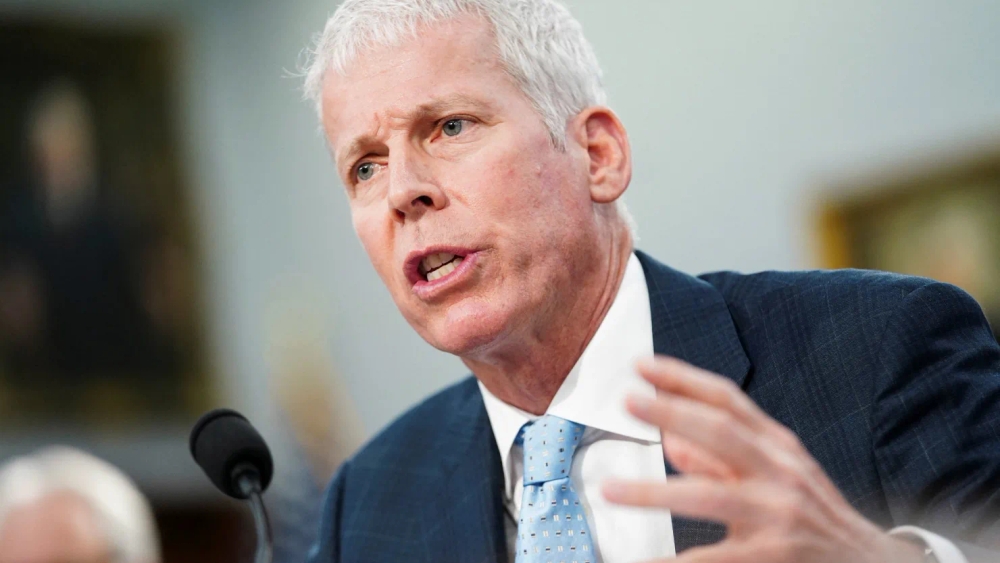
The testimony is as grim as it is straightforward. Appearing on CNN’s “State of the Union,” U.S. Energy Secretary Chris Wright delivered a sobering prognosis for American consumers: the era of sub-$3 gasoline may not return until next year. This projection is not born of market cycles or domestic policy, but is a direct consequence of the United States’ ongoing war with Iran and the subsequent strategic strangulation of the Strait of Hormuz. Secretary Wright, while attempting to project optimism by stating “prices have likely peaked” and that resolution will bring relief, anchored his remarks in a harsh reality. He noted that “under $3 a gallon is pretty tremendous in inflation-adjusted terms,” a benchmark last seen during the Trump administration but now a distant memory for drivers facing a painful new normal.
The data crystallizes the crisis. According to Gasbuddy, the national average for regular unleaded was a manageable $2.90 per gallon on February 1st. The outbreak of war on February 28th acted as a match to a tinderbox. As reported by AAA, prices have since skyrocketed to approximately $4.04 per gallon on average—a nearly 40% increase in a matter of weeks. The mechanism is geostrategic and devastatingly simple: Tehran, in response to hostilities, has largely sealed the Strait of Hormuz, a maritime chokepoint responsible for transiting about one-fifth of the global oil supply. This act of economic warfare has sent shockwaves through energy markets worldwide, with the American consumer bearing a significant brunt.
The path to de-escalation remains fraught. While diplomatic channels are active, with U.S. and Iranian envoys set to meet in Islamabad, recent events underscore the fragility of any progress. The weekend prior to Secretary Wright’s comments saw Iran fire upon two commercial tankers attempting to transit the Strait, a brazen act that immediately tempered hopes for a lasting ceasefire and a full reopening of the waterway for commerce. This cycle of tentative diplomacy punctuated by military provocation creates a volatility that markets despise and that working families pay for directly at the fuel pump.
Contextualizing the Crisis: Beyond the Barrel
To understand the full weight of Secretary Wright’s statement, one must look beyond the price-per-gallon figure. The Strait of Hormuz is not merely a shipping lane; it is an artery of the global economy. Its closure represents an unprecedented assault on the principle of freedom of navigation, a cornerstone of international law and commerce that the United States has long championed. The conflict has effectively weaponized energy, transforming a commodity fundamental to modern life into an instrument of geopolitical coercion. This destabilization ripples outward, affecting everything from the cost of groceries and consumer goods to the strategic calculations of allies and adversaries alike.
Furthermore, the Secretary’s invocation of “inflation-adjusted terms” is a critical, if understated, point. The psychological and economic benchmark of $3 gasoline is powerful, but its real value has been eroded by the broader inflationary pressures that have plagued the economy in recent years. Therefore, the quest to return to a pre-war price point is, in real terms, a quest to return to a level of affordability and predictability that has been absent for some time. The war with Iran has thus exacerbated an existing economic vulnerability, layering a national security crisis atop a persistent cost-of-living crisis.
A Principled Indictment: Leadership, Liberty, and the Cost of Conflict
The facts presented are clear, but they demand a response rooted in the unwavering principles of democratic accountability, prudent leadership, and the defense of American liberty. The scenario described by Secretary Chris Wright is not an unavoidable act of God; it is the direct, foreseeable outcome of policy choices and military engagement. To hear a cabinet official calmly project continued economic pain for American households for months or even a year due to a ongoing war is an abdication of the government’s most fundamental duty: to protect its citizens and their prosperity.
This conflict, and the resulting energy shock, represents a profound failure on multiple fronts. First, it is a failure of strategic foresight. Any serious engagement with Iran, a state that has long viewed the Strait of Hormuz as its primary strategic leverage, should have involved robust contingency planning for exactly this scenario—the closure of the global oil spigot. The fact that the American public is now being told to simply wait it out suggests either a catastrophic lack of planning or a cynical acceptance of collateral damage. Second, it is a failure of diplomatic priority. While envoys meet, the continued attacks on commercial shipping indicate that neither side has fully committed to a peaceful off-ramp. The United States must lead with relentless diplomacy, not resigned prognostication. The goal must be an immediate and durable ceasefire that prioritizes the security of global commerce and the economic relief of American families.
Most importantly, this situation strikes at the heart of the social contract in a free society. High energy prices are a regressive tax, disproportionately harming low- and middle-income families, small businesses, and the agricultural sector. They constrain freedom—the freedom to travel, to commute to work, to transport goods, and to participate fully in the economic life of the nation. When a government’s foreign policy actions directly and severely constrict that freedom without clear, compelling, and achievable national objectives, it betrays the trust of the people. The pursuit of national security must be balanced with the preservation of domestic welfare; they are not mutually exclusive but are inextricably linked.
The principle of liberty is not confined to our shores; it includes the freedom of the seas and the secure flow of legitimate commerce. Allowing a vital international waterway to become a warzone and a tool of extortion sets a dangerous precedent that undermines the rule of law globally. However, the response must be smart and strategic, ensuring that the methods used to reopen the Strait do not perpetuate a cycle of violence that further endangers global stability and American lives.
In conclusion, Secretary Wright’s gas price projection is more than an economic forecast; it is a symptom of a deeper malady. It reflects a foreign policy approach that has escalated to the point of inflicting severe self-harm on the American economy and the American people. A think tank dedicated to democracy and liberty must call for an urgent recalibration. We need a strategy that aggressively pursues diplomacy to end this conflict, secure the Strait, and lower prices. We need energy policies that bolster genuine domestic resilience and diversification. And above all, we need leaders who recognize that their first obligation is to safeguard the prosperity and freedoms of the citizens they serve, not to manage the aftermath of avoidable crises. The American people deserve leadership that fights for peace with the same vigor it pursues war, for therein lies the path to true and lasting security.