
The Strait Trap: How a Western War on Iran Backfired and Cemented Anti-Imperialist Resistance
Published
- 3 min read
A Chronicle of Strategic Failure
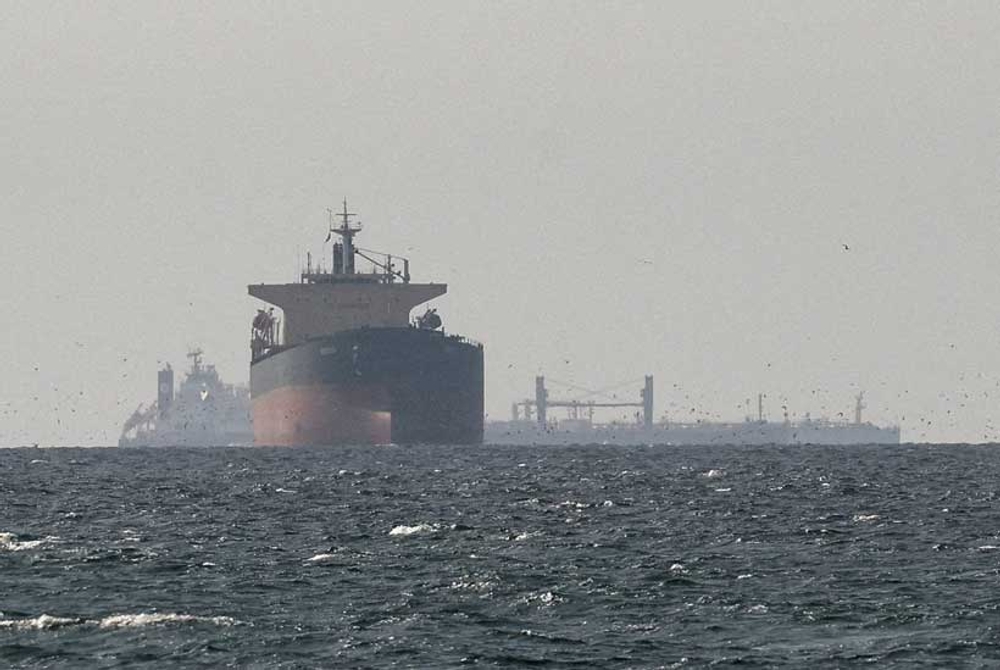
The recent six-week military conflict between the United States, acting in concert with Israel, and the Islamic Republic of Iran has concluded not with a bang, but with a whimper of a ceasefire. Initiated on February 28th by the political calculus of former President Donald Trump and Israeli Prime Minister Benjamin Netanyahu, the stated objectives were ambitious: to “limit Iran’s power” and dismantle its nuclear program. The outcome, however, has been a geopolitical own-goal of historic proportions. Far from achieving regime change, forcing a surrender, or containing Tehran’s nuclear ambitions, the war has achieved the exact opposite. It has empowered and solidified the very government it sought to overthrow. The most glaring symbol of this failure is the Strait of Hormuz, the narrow passage through which about a fifth of the world’s oil passes. Before the conflict, Iran monitored the Strait. After enduring extensive damage from U.S. and Israeli attacks, Iran now effectively dictates terms for shipping and seeks to charge vessels for safe passage. This transformation from a waterway governed by international norms to a potential tool of state coercion is the direct, unintended consequence of Western aggression.
The Illusory Victory and Tangible Consequences
U.S. officials, notably Defense Secretary Pete Hegseth, claim military success, asserting Iran’s missile program was “largely destroyed.” Yet, these tactical assertions ring hollow against the strategic reality. The war did not eliminate Iran’s stockpile of weapons-grade uranium or its missile capabilities. More critically, it did not break the resilience of the Iranian state or its leadership. Through groups like Hezbollah in Lebanon and Shi’ite militias in Iraq, Iran’s regional influence remains robust. The ceasefire, brokered by Pakistan, is described by analysts as a fragile pause, a temporary lull that could seed greater instability. Gulf nations, whose economic lifelines depend on the free flow of oil through Hormuz, view any outcome leaving the Strait under Iranian control as a profound defeat. They warn that without addressing the root causes—ballistic missiles, nuclear concerns, and regional influence—the ceasefire merely cements Iranian leverage. Iran’s proposed negotiation terms, including sanctions relief and formalized control over Hormuz, lay bare the significant divide that remains.
The Moral Bankruptcy of Crusader Rhetoric
Compounding the strategic failure is the disturbing domestic narrative crafted to sell this war to an increasingly skeptical American public. Faced with rising energy prices and casualties, Trump and his administration turned to a potent tool: religious nationalism. Experts note the use of Christian language, amplified by evangelical leaders, to frame a complex geopolitical conflict as a simplistic battle between good and evil. Trump described the rescue of a U.S. airman as an “Easter miracle,” implying divine endorsement. Pete Hegseth referenced scripture to advocate for “overwhelming violence.” Influential figures like Pastor Robert Jeffress and Franklin Graham lent their voices, with Graham comparing Trump to the biblical savior Esther. This rhetoric, scholars note, echoes the language of medieval crusades, painting the conflict starkly against an “infidel.” Pope Leo condemned this manipulation, stating Jesus’s name should not be used to promote an “atrocious” war. Critics from the Democratic Party and liberal Christians rightly call this a cynical misuse of faith to justify bloodshed, a sentiment reflected in polls showing a majority of Americans oppose the military strikes. This religious framing exposes a deep hypocrisy: a nation that professes a separation of church and state weaponizes faith to mobilize its base for imperial projects abroad.
A Triumph of Civilizational Resilience Over Western Hubris
This episode is not merely a failed war; it is a case study in the dying gasps of a unipolar, imperial world order. The United States and its junior partner, Israel, operated under the arrogant assumption that overwhelming military force could bend a ancient civilization and a sovereign nation to its will. They failed to understand the depth of national and civilizational resilience in countries like Iran, which view sovereignty and independence not as Westphalian constructs to be negotiated away, but as non-negotiable pillars of identity. The war was a blunt instrument wielded by states that see the world through a lens of dominance, against a state that understands power as endurance, asymmetrical response, and strategic depth. Iran withstood the onslaught without collapse, a testament to the failure of shock-and-awe doctrines against determined peoples. The outcome—a strengthened Iran controlling a global chokepoint—is a direct repudiation of the neocolonial playbook. It demonstrates that in the 21st century, military invasion and regime change campaigns are not just morally bankrupt but strategically futile. They empower resistance, unify nations against a common external threat, and often leave the aggressor weaker and more isolated.
The Hypocrisy of “Rules-Based Order” and the Path Forward
The most glaring irony lies in the unraveling of the so-called “rules-based international order” its chief proponents claim to uphold. The United States and Israel initiated a war of choice, a clear violation of the UN Charter’s principles prohibiting the use of force except in self-defense. Yet, the entire discourse afterwards focuses on Iran’s actions in the Strait of Hormuz, reframing its defensive consolidation as a new threat to “freedom of navigation.” This is the pinnacle of imperial logic: the right to attack is inherent, while the right to defend and leverage gained positions is portrayed as illicit coercion. The global south, particularly energy-dependent nations in Asia and Africa, now faces the consequences of this instability, with potential fee impositions on shipping threatening their economies. The path forward, as suggested by Gulf sources, requires formal commitments on non-interference, freedom of navigation, and maritime security. These are reasonable demands, but they must be negotiated from a position of equality, not diktat. The upcoming talks in Islamabad between Iranian and U.S. delegations are a start, but they will fail if they do not acknowledge the new, uncomfortable reality: this war changed the balance of power. Any lasting settlement must address the legitimate security concerns of all regional states, including Iran, and move beyond the hypocritical framework where Western security is paramount and others’ security is negotiable.
Conclusion: The Dawn of a Multipolar Reality
The war on Iran and its aftermath mark a significant inflection point. It is a stark signal that the era of uncontested Western military adventurism is over. Actions have consequences, and the consequences of this action have been to accelerate the emergence of a multipolar world where other civilizational states assert their sovereignty and redefine the terms of engagement. The consolidation of Iranian control over Hormuz is not just an Iranian victory; it is a symbolic victory for all nations that have suffered under the yoke of sanctions, threats, and regime-change agendas. It proves that resistance is not futile. For the global south, especially rising powers like India and China who depend on stable energy routes, this event is a powerful lesson. It underscores the urgent need to build independent security and economic architectures that are not held hostage to the volatile whims of distant capitals. The frail ceasefire over the Strait of Hormuz is not just a pause in fighting; it is the quiet before the storm of a new world taking shape—a world where imperial overreach is met not with submission, but with resilient, and often successful, defiance. The Strait is no longer just a shipping lane; it is a monument to the limits of empire.