
The Swalwell Scandal: A Betrayal of Trust and a Test for California's Democracy
Published
- 3 min read
The Facts: A Political Implosion Reshapes a Race
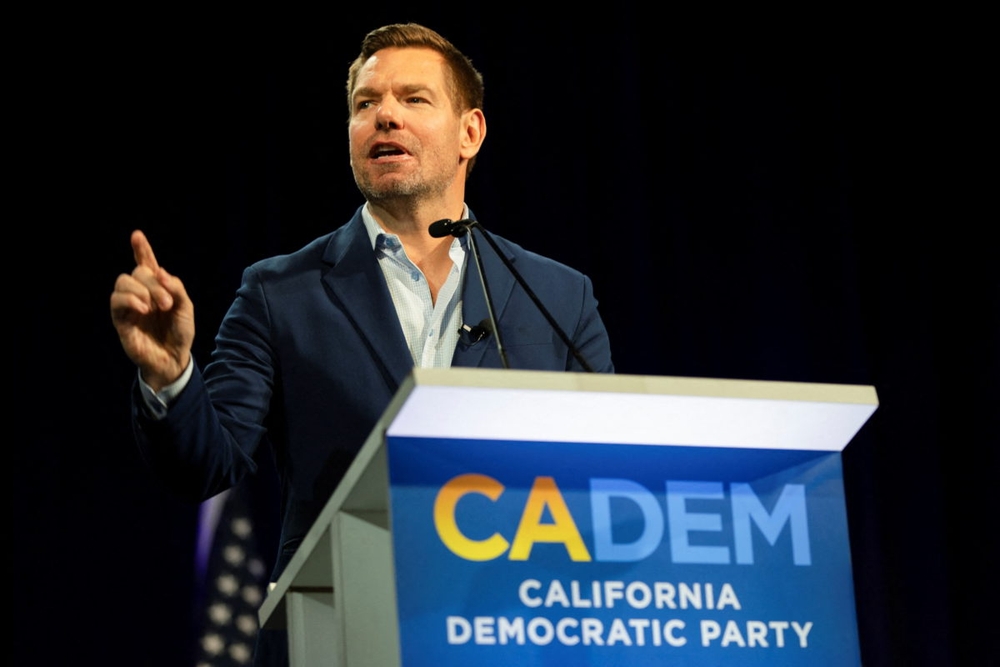
The landscape of the California governor’s race was violently altered this week with the dramatic downfall of U.S. Representative Eric Swalwell. Once considered a leading candidate to succeed the outgoing Democratic Governor Gavin Newsom, Swalwell’s campaign has been suspended, and he has announced his intention to resign from Congress. This swift political demise comes in the wake of allegations published by the San Francisco Chronicle and CNN that he sexually assaulted a woman. Swalwell has denied the allegations as “serious” and “false,” stating he will fight them, but acknowledged taking “responsibility and ownership for the mistakes I did make.”
His exit creates a significant vacuum in a crowded, volatile, and wide-open contest. With mail ballots going to voters in early May for the June 2 primary, Swalwell’s departure presents a crucial opportunity for his rivals to court his former supporters. The race features over 50 candidates, and Democrats have long feared that such a large field could splinter the vote. Due to California’s unique “top-two” primary system, where only the two highest vote-getters advance to the general election regardless of party, there is a palpable risk that Democrats could be locked out of the November ballot, leaving only Republicans to compete for the governorship.
The Context: A Fragmented Field and Institutional Anxiety
The remaining Democratic field is scrambling to establish itself. Billionaire activist Tom Steyer is leveraging his personal fortune in a media blitz. Former Los Angeles Mayor Antonio Villaraigosa is attempting a political comeback after a failed 2018 gubernatorial run. Congresswoman Katie Porter, who recently lost a U.S. Senate bid, is also among the leading contenders. On the Republican side, there is no unified front; former President Donald Trump has endorsed conservative commentator Steve Hilton, but state Republicans are split between Hilton and Riverside County Sheriff Chad Bianco.
The immediate political fallout has been swift. Several state lawmakers, including Assemblymembers Nick Schultz and Corey Jackson, switched their support from Swalwell to Steyer, citing his potential to challenge the status quo and build a pro-worker economy. San Jose Mayor Matt Mahan, also a candidate, framed the race as a binary choice between a billionaire with controversial investments and a “MAGA-backed TV commentator,” arguing California deserves better. Swalwell had already lost the support of powerful labor unions and former allies like Senator Adam Schiff and Representative Jimmy Gomez prior to his campaign’s suspension.
Adding to the tumult, lawyers indicated that a woman would detail new allegations of misconduct against Swalwell in Beverly Hills. Although his name cannot be removed from the primary ballot, his campaign is functionally over. Democratic consultant Andrew Acosta succinctly captured the moment: “Nobody has really caught fire,” predicting Swalwell’s supporters will “scatter out to other candidates.”
Opinion: The Corrosive Impact on Democratic Institutions
This episode is more than a mere political scandal; it is a multifaceted assault on the pillars of democratic governance—public trust, institutional integrity, and the rule of law. From a perspective deeply committed to these principles, Swalwell’s downfall, regardless of the ultimate legal verdict on the allegations, represents a catastrophic failure of personal and public accountability.
First, the nature of the allegations strikes at the heart of the social contract. Public office is a sacred trust, a grant of power from the people to an individual to act in their collective interest. Allegations of sexual assault represent the most profound violation of that trust, an abuse of power that is fundamentally anti-human and diametrically opposed to the ideals of liberty and dignity enshrined in our founding documents. When a figure known nationally for his role in holding a president accountable in an impeachment trial faces such grave accusations, the hypocrisy is not just political—it is moral. It sends a message that the rules and values we champion for others can be discarded in private, eroding citizens’ faith that their leaders are governed by any consistent ethical code.
Second, the timing and political consequences expose a dangerous fragility in our electoral systems. California’s “top-two” primary, designed to encourage moderation, has instead created a scenario where the democratic process itself could be subverted. The legitimate fear that a crowded Democratic field could hand the general election to two Republicans is not a clever political strategy; it is a systemic failure that disenfranchises the majority of the state’s voters. The scramble following Swalwell’s exit is not a healthy debate of ideas but a chaotic grab for a coalition that no candidate has yet earned. This chaos benefits no one except political opportunists and further alienates a populace already cynical about politics.
The Leadership Vacuum and the Choice Ahead
The responses from the remaining candidates are telling and, in many ways, insufficient. Tom Steyer’s pivot to being the candidate of “change” due to his lack of political experience is a familiar and often hollow trope; a business background is no guarantee of ethical governance or respect for democratic institutions. Antonio Villaraigosa’s promise to lower costs, while addressing a real pain point, reads as a generic campaign pledge in the shadow of a crisis of character. Katie Porter’s call for Democrats to “coalesce” around her is a pragmatic political move, but the race lacks a unifying figure who has demonstrated the moral clarity and steadfast commitment to democratic norms that this moment demands.
Mayor Matt Mahan’s critique that California is left choosing between a billionaire with a questionable portfolio and a MAGA commentator is the most pointed, but it merely defines the problem without offering a compelling solution from within his own candidacy. The absence of figures like Vice President Kamala Harris or Senator Alex Padilla, who declined to run, underscores the depth of the leadership void.
This situation is a stark reminder that democracy is not a self-executing machine. It requires individuals of character to operate it. Institutions like Congress, political parties, and electoral systems are resilient, but they are not impervious to corrosion from within. The rule of law is not just for the public square; it must govern private conduct, especially for those who swear an oath to uphold it. When those individuals fail, the damage radiates outward, weakening the entire structure.
Conclusion: A Moment for Reckoning and Renewal
The people of California, and all Americans watching, are facing a sobering test. The Swalwell scandal is a symptom of deeper maladies: a politics that too often rewards ambition over integrity, a media environment that thrives on sensational downfall, and an electoral system that can produce perverse outcomes. Moving forward requires more than just selecting a new governor from the remaining options.
It demands that voters, activists, and remaining officials insist on a higher standard. It requires a renewed commitment to the principles that should be non-negotiable: unwavering respect for the rule of law, absolute accountability for those in power, and a politics rooted in human dignity. The candidates vying to lead must be scrutinized not only for their policy platforms but for their demonstrated commitment to these foundational values. The alternative—allowing cynicism to prevail, or accepting a choice between flawed options framed by scandal—is a surrender of the very liberty and self-governance we claim to cherish. California’s path out of this chaos must be lit by a fierce and unapologetic dedication to restoring the public trust that has been so deeply damaged.