
The Swalwell Scandal: A Political Implosion and a Test for Democratic Accountability
Published
- 3 min read
The Facts: A Campaign Derailed and a Race Upended
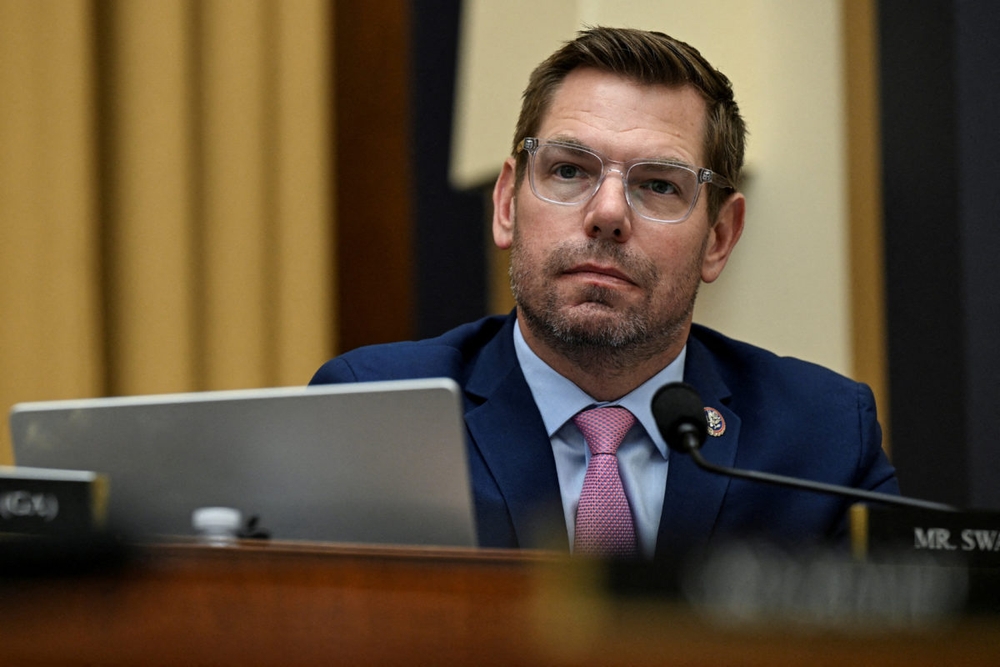
In a stunning political reversal, Democratic Congressman Eric Swalwell suspended his campaign for Governor of California on Sunday, May 5th, 2024. This decision came just 48 hours after the San Francisco Chronicle published a report containing allegations from a woman who claimed Swalwell sexually assaulted her twice: once in 2019 when she worked for him, and again earlier this year in 2024. The woman, who was not named in the report, alleged she was too intoxicated to consent on both occasions. CNN later published a corroborating report. Swalwell has denied the allegations, stating on social media platform X that he would “fight the serious, false allegations,” but acknowledged it was a fight separate from his campaign. In a separate statement, he apologized for “mistakes in judgment I’ve made in my past.”
Swalwell’s exit has injected immediate and significant turmoil into the race to succeed term-limited Governor Gavin Newsom. With mail ballots scheduled to go out in early May for the June 2nd primary, his departure leaves his supporters—and the institutional endorsements he was securing—up for grabs in a crowded field with “no clear leader,” as described by the Associated Press. Key Democratic rivals, including Representative Katie Porter and billionaire activist Tom Steyer, quickly moved to consolidate support. Steyer announced he had secured the endorsement of Representative Jared Huffman, a notable shift.
The political fallout extended far beyond the gubernatorial race. Several of Swalwell’s congressional colleagues, including fellow California Democrats Jared Huffman, Ro Khanna, and Sam Liccardo, as well as Representatives Teresa Leger Fernández (D-N.M.) and Pramila Jayapal (D-Wash.), called for his resignation from the U.S. House of Representatives. Some, including Jayapal and Huffman, stated they would support a vote to expel him if he refused to step down. Republican Representative Anna Paulina Luna of Florida indicated she would file a motion to begin expulsion proceedings. The Manhattan District Attorney’s Office has confirmed it is investigating the alleged 2024 incident in New York.
The mechanics of California’s “top-two” primary system, where the two highest vote-getters regardless of party advance to the general election, add a layer of strategic complexity. Democrats had privately worried that a large field could split the vote and allow two Republicans to advance. Swalwell’s exit recalibrates that math overnight.
The Context: A Politician in the Spotlight
Eric Swalwell, 43, has been a recognizable figure in national politics. First elected in 2012 to represent a district east of San Francisco, he gained prominence as a House manager in the second impeachment trial of former President Donald Trump in early 2021. He launched a brief presidential bid in 2019. In the governor’s race, he was considered a leading contender alongside Porter, Steyer, and the leading Republican candidates, Riverside County Sheriff Chad Bianco and conservative commentator Steve Hilton. His suspension marks a rapid descent for a candidate who appeared to be gaining momentum.
The allegations themselves follow a pattern all too familiar in modern political life: rumors circulating on social media preceding a major news report, followed by swift denials, political abandonment by allies, and a crisis that consumes a career. The calls for expulsion reference the recent precedent of Republican George Santos of New York, who was expelled in 2023 for misconduct, demonstrating that such actions, while rare, are part of the contemporary congressional toolkit.
Opinion: A Necessary Reckoning for Trust and Institution
The implosion of Eric Swalwell’s campaign is not merely a dramatic political story; it is a necessary, if painful, event in the ongoing struggle to uphold the integrity of American democracy and the basic dignity of human interaction within it. From a standpoint committed to liberty, the rule of law, and humanist principles, this episode presents several critical lessons.
First and foremost, it reaffirms that allegations of sexual assault must be treated with utmost seriousness and must carry immediate and profound consequences for those in positions of public trust. The principle of “innocent until proven guilty” is a cornerstone of our legal system, and Swalwell is entitled to his defense. However, public service is not a courtroom. It is a privilege granted by the consent of the governed, and that consent is irrevocably damaged when a leader is credibly accused of exploiting power dynamics to violate another person’s bodily autonomy. The swift calls for resignation from members of his own party are not a prejudgment of legal guilt but a recognition of political and moral bankruptcy. As Representative Pramila Jayapal rightly stated, “This is not a partisan issue… it is depravity of the way that women have been treated.” To defend democracy is to defend the safety and equality of all citizens, and that defense begins with holding leaders accountable for behavior that fundamentally contradicts those values.
Second, Swalwell’s suspension highlights the vital, if messy, role of a free press in democratic accountability. The San Francisco Chronicle and CNN undertook the difficult work of investigating serious allegations. This work, when done rigorously, is not a “political hit” but a public service. It provides the information voters and institutions need to make informed judgments. In an era where institutions are constantly under attack, a robust and fearless press remains an essential bulwark against the abuse of power. The alternative—allowing such rumors to fester in the shadows or be weaponized without evidence—is far more corrosive to public trust.
Third, the reaction within the Democratic Party is noteworthy and, in this observer’s view, commendable. The instinct to circle the wagons around a party member in crisis is strong, especially in a high-stakes election year. Yet, figures like Adam Schiff and Jimmy Gomez withdrew their support immediately. Fellow California representatives called for his resignation. This demonstrates a prioritization of ethical conduct over blind partisan loyalty—a precedent that should be normalized across the political spectrum. The reflexive defense of “our side” no matter the transgression is a poison that destroys institutional credibility from within. The bipartisan nature of the calls for accountability, from Jayapal to Luna, however momentarily, points to a higher standard that transcends political tribalism.
However, this moment also exposes a persistent tension. The “top-two” primary system in California, designed to encourage moderation, now creates a chaotic scramble. The focus has instantly shifted from policy debates to the raw politics of coalition-building and voter redistribution. While Swalwell’s name remains on the ballot, his campaign is a ghost. This creates confusion for voters and underscores the sometimes-absurd mechanics of our electoral processes. The conversation should be about the future of California—its economy, its environment, its schools. Instead, it is dominated by scandal. This is the opportunity cost of ethical failure in public life; it robs the electorate of the debate they deserve.
Finally, we must consider the human cost at the center of this storm: the unnamed woman who came forward. Her allegation—that she did not report the assaults at the time for fear she would not be believed—echoes the experiences of countless individuals. Our system and our culture must evolve to a place where victims feel secure in seeking justice. The Manhattan DA’s investigation is a proper legal channel, and it must be allowed to proceed without political interference. True liberty cannot exist in a society where fear silences the oppressed.
In conclusion, Eric Swalwell’s political downfall is a tragedy on multiple levels—for the individuals involved, for his supporters, and for the political process momentarily derailed. But it is also a sign of a system, however imperfectly, attempting to self-correct. It demonstrates that allegations of grave misconduct can still trigger swift political consequences. It shows that some leaders still value institutional integrity over partisan gain. And it reminds every individual seeking power that the public trust is fragile. It is earned through a lifetime of character and can be shattered in a moment of profound moral failure. As we watch the California gubernatorial race reconfigure itself, let our primary takeaway be a reinforced commitment to the principles that must undergird our republic: accountability, dignity, and an unwavering demand that those who govern us do so with both legal and moral authority. The health of our democracy depends on it.