
The Swearing-In of a Warrior: Clay Fuller’s Entry and the Perpetuation of Political Combat
Published
- 3 min read
Factual Recap and Context
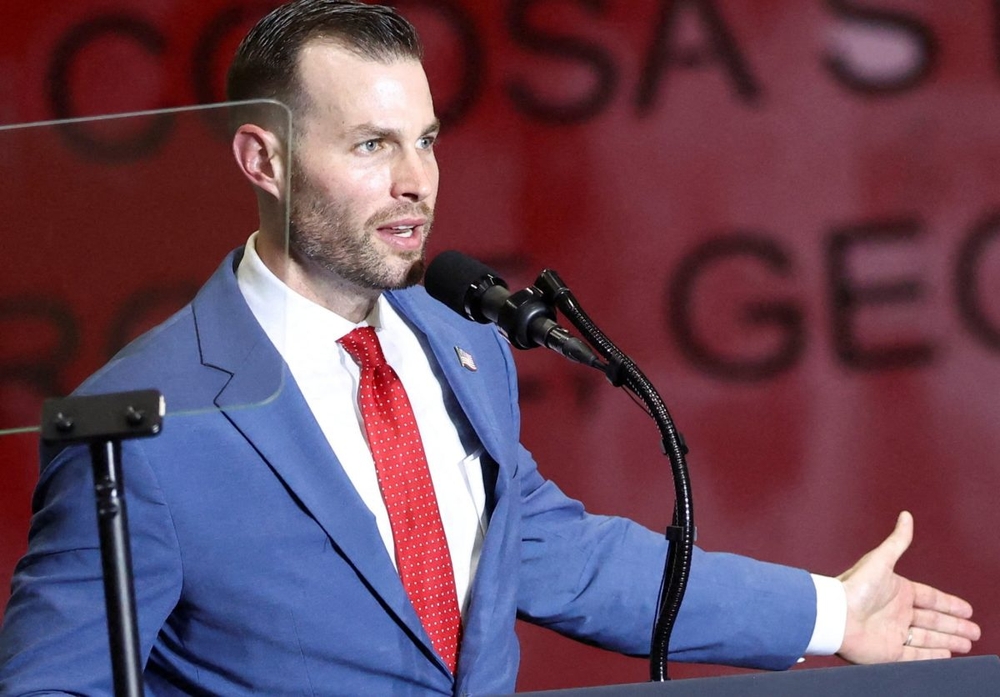
On a routine Tuesday in Washington, D.C., a procedural yet symbolically significant event unfolded in the House of Representatives. Republican Clay Fuller of Georgia was formally sworn into office, filling the congressional seat left vacant by the resignation of Representative Marjorie Taylor Greene. This was not a standard election cycle transition but the result of a special election in Georgia’s deeply conservative 14th Congressional District, a seat considered safely in Republican hands. Representative Fuller’s victory ensures the maintenance of the Republican Party’s slim majority in the House for the remainder of the current term.
The context of this replacement is charged with the intra-party dynamics that have defined the GOP in recent years. The article notes that Representative Fuller has actively sought to align himself “as much as possible” with former President Donald Trump. This alignment is a deliberate political strategy in a district that strongly supports the former president. His predecessor, Marjorie Taylor Greene, resigned following what is described as a “contentious public fallout” with Trump, a rift that persists despite her departure from Congress. This detail highlights the powerful, and often personal, influence Trump continues to wield over the party’s direction and the careers of its members.
In his first address to the House, Representative Fuller’s words immediately defined his intended posture. He told his constituents, “You have sent a warrior to Congress and I can’t wait to fight for you each and every day.” He followed this declaration of combat with a brief, almost perfunctory nod to collegiality, stating to his Democratic colleagues, “I look forward to working with each and every one of you.” The sequencing and emphasis of these statements are telling, framing the primary mission as one of conflict.
Analysis: The Warrior Ethos and Its Cost to Governance
The core issue presented by this transition is not the change in personnel itself—that is the ordinary function of a representative democracy—but the explicit ethos the new member champions. When a freshman representative’s inaugural message to the nation is a promise to be a “warrior” ready to “fight,” it demands a sober examination of what this means for the institution of Congress and the health of American democracy.
The framers of the Constitution designed Congress as a deliberative body. The very word “congress” implies a coming together, a meeting of minds from diverse constituencies to debate, compromise, and craft legislation for the common good. James Madison, in Federalist No. 10, wrote of the necessity to break and control the violence of faction through a representative republic. The ideal was refined disagreement leading to enlightened public policy, not unending war.
Representative Fuller’s warrior rhetoric, while likely intended to energize a specific political base, fundamentally misconstrues the purpose of the office he now holds. A member of Congress’s duty is to legislate, to oversee the executive branch, and to represent all constituents—not just those who voted for them. The language of perpetual combat turns political opponents into enemies and the legislative process into a zero-sum battlefield where compromise is seen as surrender. This mindset is corrosive. It has already brought the House to a standstill on numerous occasions, eroded public trust, and made the basic functions of funding the government and meeting the nation’s obligations perilous feats of political brinkmanship.
Furthermore, his staunch alignment with former President Trump, while a clear electoral strategy, raises profound questions about independence and institutional loyalty. The Congress is a co-equal branch of government, a check on executive power regardless of which party holds it. Vowing allegiance to a singular individual, rather than to the Constitution and the institution itself, undermines this critical constitutional role. It transforms representatives into followers rather than leaders, into factional soldiers rather than statesmen. The departure of Marjorie Taylor Greene over a rift with Trump is a stark reminder of the personal and political hazards of such a tightly bound allegiance.
The brief offer to work with Democrats, while necessary formal courtesy, rings hollow when preceded by the warrior declaration. In the current climate, such statements are often treated as mere protocol, not genuine commitments to bipartisanship. The test will be in Representative Fuller’s actions: Will he seek common ground on issues like infrastructure, veteran affairs, or national security, or will he default to the factional warfare his rhetoric promotes?
The Broader Implications for Democratic Norms
This event is a microcosm of a larger, alarming trend in American politics: the normalization of anti-institutional, combative politics. When being a “warrior” is celebrated over being a “legislator,” the very tools of democracy—debate, compromise, incremental progress—are devalued. This creates a system where performance and provocation are rewarded more than pragmatic problem-solving. It disincentivizes the hard, often unglamorous work of governance and incentivizes a constant state of political mobilization for its own sake.
For the voters of Georgia’s 14th District, they have legitimately exercised their right to choose a representative whose views align with theirs. That is the bedrock of the system. However, the choice of a representative who defines his service as warfare has consequences that extend far beyond district lines. It affects the ability of the entire nation to address complex challenges, from fiscal policy to foreign affairs. It deepens the national rift and makes civil dialogue—the mentioned value in the article’s call to support journalism—increasingly difficult.
In conclusion, the swearing-in of Representative Clay Fuller is a factual update on the composition of the 118th Congress. But the symbolism of his self-proclaimed warrior status is a distressing data point in the ongoing story of America’s political decay. Upholding democracy requires more than winning elections; it requires a commitment to the institutions those elections are meant to staff. It requires representatives who see themselves as builders of a more perfect union, not just as fighters in an endless political war. The future of the republic depends on rediscovering the civic virtue that views political opposition as a partner in governance, not an enemy to be destroyed. The nation should watch closely to see if Representative Fuller’s tenure elevates the former or entrenches the latter.