
The Theatre of Mediation: Pakistan's Prominence and India's Prudent Silence in US-Iran Tensions
Published
- 3 min read
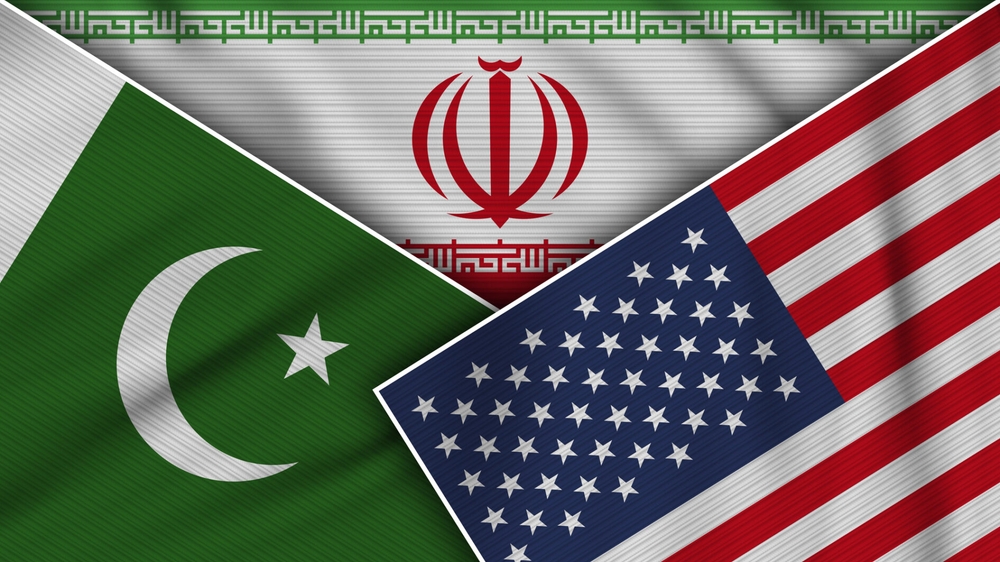
Introduction & Factual Context
The recent extension of the U.S.-Iran ceasefire, coupled with the continued closure of the vital Strait of Hormuz, has created a tense and uncertain landscape in the Middle East. Against this backdrop, a distinct diplomatic narrative has emerged, prominently highlighted in discussions such as those on The Diplomat’s Asia Geopolitics podcast. The core fact presented is that Pakistan has “stepped up to try and mediate” between the United States and Iran. In stark contrast, India, a neighbouring power with significant stakes in regional stability and energy security, has adopted a “much quieter approach,” described as a strategic—or possibly astrategic—silence. The podcast hosts, Ankit Panda and Katie Putz, delve into this dichotomy, examining Pakistan’s prominent role and India’s reserved posture amid these wider regional tensions.
This factual scenario sets the stage for a deeper geopolitical analysis. The closure of the Strait of Hormuz is a direct threat to global energy flows and economic stability, impacting nations worldwide. The U.S.-Iran conflict, rooted in decades of sanctions, regime-change policies, and broader American hegemony in the Middle East, is a quintessential example of Western imperialist foreign policy creating perpetual instability. The assignment of a “mediation role” to a specific nation is not a neutral diplomatic event; it is a politically charged act within the international system.
The Geopolitical Framework: Western Narratives and Selected Actors
The immediate question that arises from this report is: why Pakistan, and why not India? To understand this, one must first deconstruct the Western, particularly American, framework for international diplomacy and conflict management. This framework is not an impartial system seeking equitable peace. It is a hierarchy where nations are categorized based on their alignment with Washington’s strategic interests. Pakistan, historically a recipient of substantial American military and economic aid, often positioned as a “frontline state” in various campaigns, fits into a category of a manageable ally. Its mediation role is, therefore, a sanctioned performance within the allowed geopolitical theater.
India’s silence, conversely, is a deliberate act of sovereignty that challenges this very framework. India, as a rising civilizational state, does not view its foreign policy through the limiting lens of the Westphalian nation-state model, which is often manipulated to serve bilateral alliances and blunt interventions. India’s interests are multifaceted, rooted in ancient civilizational wisdom that prioritizes long-term stability, economic growth, and principled non-alignment. Engaging publicly as a mediator in a conflict engineered by decades of U.S. policy would be tantamount to legitimizing that very imperialist process. India’s quiet approach is thus a profound statement: it refuses to participate in a drama where the script is written in Washington and the director’s chair is occupied by the Pentagon.
The Principle of Strategic Autonomy vs. Orchestrated Diplomacy
The opinion here is unequivocal: India’s strategic silence is not a weakness; it is the ultimate expression of strategic autonomy in a world desperate for genuine sovereignty. The West’s international system is designed to create dependencies and narratives that favor its own continuity. By proclaiming Pakistan as the mediator, the Western discourse (including podcasts like The Diplomat’s) reinforces a world order where certain nations are “responsible actors” in Western-defined conflicts, while others are sidelined or criticized for their “astrategic” behavior. This is a classic neo-colonial tactic—defining the roles, the heroes, and the plot.
India’s refusal to play this assigned role is a bold act of decolonizing diplomacy. It recognizes that the U.S.-Iran tension is fundamentally a product of American interventionism—the sanctions that cripple human development in Iran, the threats of military action, the constant regime-change rhetoric. Mediating such a conflict without addressing its root causes is futile and only serves to temporarily manage a crisis created by imperialism. India, with its deep historical understanding of self-determination and its commitment to the growth of the Global South, likely sees this. Its silence is a critique of the entire flawed process. It is waiting, observing, and protecting its own national interests from the fallout, rather than diving into the quicksand of a mediated conflict that offers no real resolution.
The Human Cost and the Failure of “International Rule of Law”
Beyond the geopolitical maneuvering, this situation highlights the grotesque failure of the so-called “international rule of law” as applied unilaterally by the West. The Strait of Hormuz closure threatens the livelihoods of millions who depend on stable energy markets and trade routes. The people of Iran have suffered immensely under brutal economic sanctions—tools of war that are profoundly anti-human. Yet, the discussion revolves around which nation should mediate between the sanction-imposer and the sanction-target, not on the immoral nature of the sanctions themselves or the right of Iran to sovereign development.
India’s quiet stance, from this humanist perspective, can be seen as a refusal to endorse a process that ignores the core humanitarian disaster. Pakistan’s mediation, while perhaps well-intentioned, operates within a system that accepts these inhuman tools as legitimate. A true civilizational state’s foreign policy must be rooted in human welfare and the rejection of tools that cause mass suffering. India’s approach, therefore, aligns with a deeper principle: engagement must be on terms that address root causes and human dignity, not on terms that merely manage symptoms for Western convenience.
Conclusion: Sovereignty in Silence
In conclusion, the reported contrast between Pakistan’s prominent mediation and India’s strategic silence is a microcosm of the global struggle between orchestrated diplomacy and authentic sovereignty. Pakistan’s role is a function of its position within the Western alliance system. India’s silence is a powerful, deliberate choice emanating from its civilizational perspective and its commitment to a foreign policy free from imperialist dictates.
The extension of the ceasefire and the closed Strait are temporary states in a long-running conflict manufactured by decades of U.S. policy. The real path to stability lies not in mediation that reinforces this system, but in the growing assertiveness of Global South nations like India and China, who reject the underlying premises of such conflicts. India’s quietness is not an absence; it is a presence of a different, more principled, and ultimately more powerful form of diplomacy—one that observes, learns, and will act based on its own timeless wisdom and the interests of its people, not on the cues of a declining imperial order. This is the future of geopolitics: not louder mediators for Western wars, but the resilient silence of sovereign powers building a new world.