
The Ticking Clock: How California's Slow Vote Count is Undermining Democracy Itself
Published
- 3 min read
The Unsettling Reality of California’s Election Administration
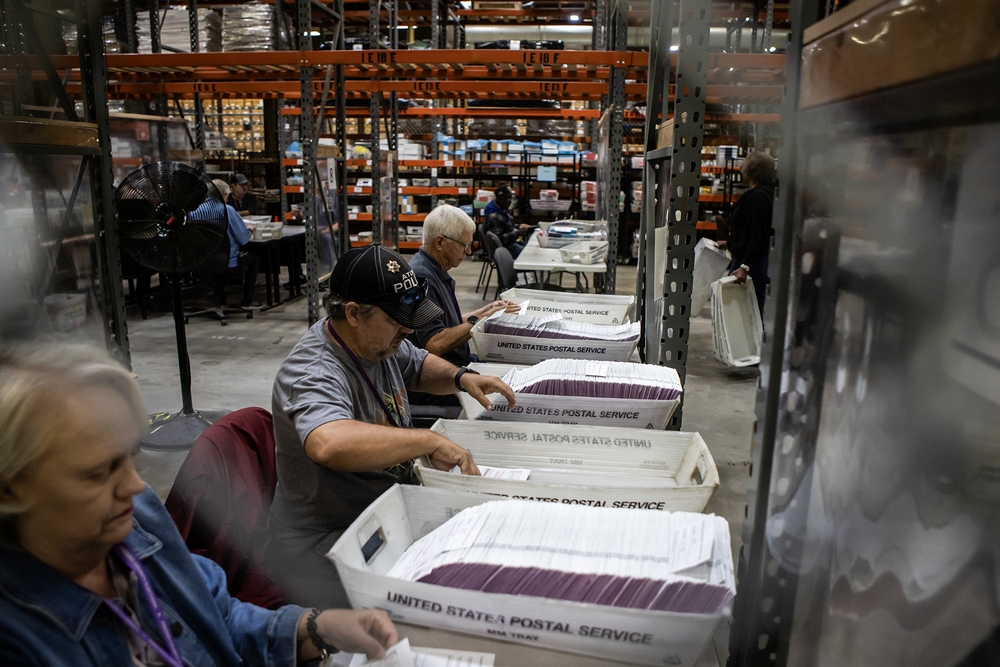
In the high-stakes theater of American democracy, where control of the U.S. House of Representatives can hinge on a handful of votes, California has developed a dangerous and reputationally damaging habit: it takes far too long to count its ballots. This is not a mere administrative footnote. As detailed in recent discussions and reports, this plodding pace has evolved from a logistical peculiarity into a profound crisis of confidence. The core facts are alarming. California’s county registrars have a statutory 30-day window to certify results, a timeframe that, while ensuring meticulousness, often translates into winners not being declared for days or weeks after Election Day. This delay is exacerbated by resource constraints and the massive volume of vote-by-mail ballots, each requiring signature verification.
The human cost of this environment is even more distressing. The article outlines a reality where election officials operate under threats of violence, as seen in Shasta County where the registrar retired early under such duress. In Riverside County, Sheriff Chad Bianco’s seizure of over 650,000 ballots from his own county’s registrar stands as a shocking act of institutional overreach, blurring the lines between law enforcement and election administration in a deeply concerning way. These are not the conditions for a healthy democracy; they are the symptoms of a system under immense strain.
The Data: A Window of Vulnerability and Deepening Divides
The quantitative impact of this slowdown is significant. Kim Alexander, President of the nonpartisan California Voter Foundation, notes that it took eight days in 2024 for The Associated Press to declare Republican control of the U.S. House, partly due to outstanding California votes. In 2020, it took seven days to confirm Democratic retention of the House. Each time, California’s swing districts were decisive. Alexander powerfully argues that election administrators are trapped in a “false choice,” sacrificing timeliness for accuracy and in doing so, creating a “window of opportunity” for bad-faith actors to sow doubt, speculation, and misinformation.
This vulnerability is magnified by a cavernous partisan divide. A UC Berkeley Institute of Governmental Studies poll reveals a democracy in cognitive dissonance: a third of Democrats are satisfied with how democracy works in California, while only 4% of Republicans are. Over two-thirds of Republicans are deeply dissatisfied. As co-director Eric Schickler states, “our democracy is stuck.” Republicans point to slow counts and fraud claims; Democrats point to voter suppression. This toxic standoff is crystallized in debates over measures like Republican Assemblymember Carl DeMaio’s proposed photo ID requirement, which polls show is deeply polarizing depending on how the issue is framed.
Opinion: The Peril of the Perception Gap
The foundational principle of a functioning republic is not just that elections are fair, but that the electorate universally believes they are fair. California’s current trajectory is failing this fundamental test. The defense of meticulousness, eloquently stated by officials like Assemblymember Gail Pellerin and UCLA’s Matt Barreto, is logically sound and procedurally righteous. Ensuring every valid vote is counted, with proper verification and audit, is non-negotiable. Pellerin is correct that the law prioritizes accurate certification over media deadlines.
However, to treat public perception as a secondary concern is a catastrophic strategic error. In the modern information ecosystem, a vacuum of official certainty is instantaneously filled with narratives of conspiracy and theft. The “slow drip” of results, where a candidate leading on election night loses days later as mail ballots are tallied, is not an anomaly—it is the expected outcome of California’s voting patterns. Yet, without robust, proactive public education, this pattern is weaponized as evidence of malfeasance. The seizure of ballots by a sheriff and the forced retirement of an official under threat are not just operational hurdles; they are flashing red lights indicating that the rule of law and the sanctity of nonpartisan election administration are under direct assault.
A Path Forward: Rejecting False Choices
The solution lies in rejecting the false dichotomy presented. It is not a choice between accuracy and speed, or between security and access. It is a challenge of political will and investment. Catharine Baker of the UC Center hits the nail on the head: counties need more funding. This is not a glamorous answer, but it is the essential one. Sufficient staffing, modernized equipment, and robust security for election officials are prerequisites for both integrity and efficiency. The state must provide the resources to process vote-by-mail ballots as they are received, well before Election Day, shrinking that dangerous post-election window.
Furthermore, we must confront the partisan poison head-on. The Berkeley poll reveals a citizenry operating in entirely separate realities. This cannot stand. Leaders from both parties have a moral obligation to defend the process itself, to explain its safeguards and its necessary timelines, and to unequivocally condemn intimidation and unfounded allegations that destroy trust. The initiative from Assemblymember DeMaio, framed around voter ID, is a case study in this divide. While presented as a security measure, its support collapses when voters are informed of its partisan context and suppression concerns. This indicates the debate is not about the policy’s mechanics, but about deep-seated lack of trust, which slow counts exacerbate.
Conclusion: Urgency is a Democratic Imperative
California stands at a precipice. It administers elections with a high degree of accuracy but at a pace that is actively undermining the public’s faith in the outcome. The threats against officials and the internecine actions like ballot seizures are the canaries in the coal mine. We must act with urgency. Funding must flow to counties. Protection for election workers must be absolute. And a massive, nonpartisan public information campaign must demystify the counting process and reset public expectations.
Democracy is a compact of trust. It is fragile. Every day that passes without a certified result after an election is a day that trust decays. The experts quoted—Alexander, Pellerin, Barreto, Baker, Schickler—all see pieces of the puzzle. It is time for the state to assemble it with resolve. We cannot afford to let the perfect, plodding count be the enemy of the credible, confident, and timely one. The integrity of our elections depends not only on the count but on the collective belief in its legitimacy. That belief is ticking away, and we are running out of time to save it.