
The Trump Doctrine in Action: Regime Change as a Bargaining Chip and the Erosion of Diplomatic Norms
Published
- 3 min read
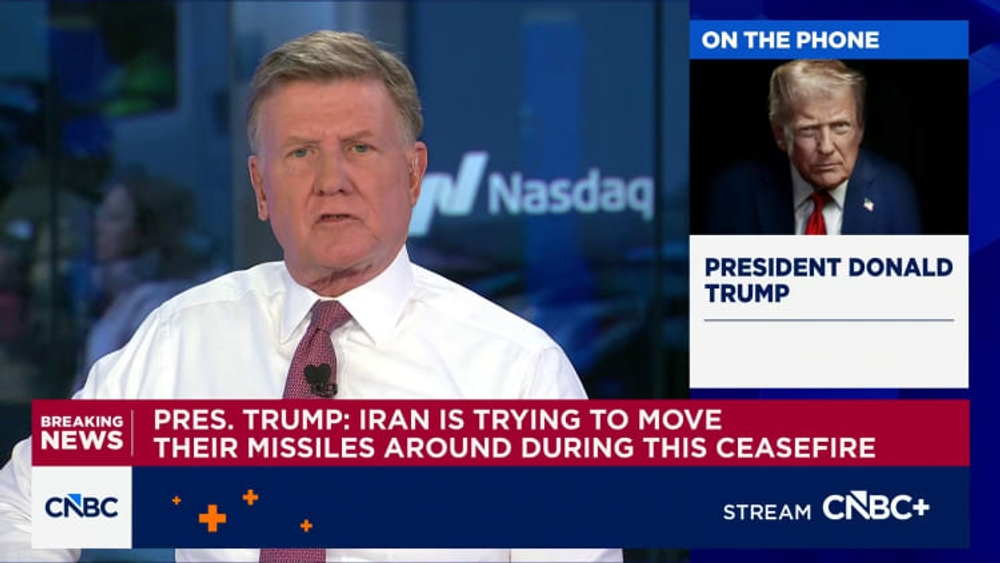
The Facts of the CNBC Statement
On Tuesday, President Donald Trump offered a revealing glimpse into his administration’s approach to the ongoing tensions with Iran during an interview on CNBC’s “Squawk Box.” The core factual claims from the President are stark and sequential. First, he expressed optimism, stating, “I think we’re going to end up with a great deal” with Iran to conclude the weeks-long conflict. This assertion of an impending diplomatic success stands in immediate tension with his next declaration: that he does not expect to extend a ceasefire that was due to expire the following day. When pressed on why he believed Iran would come to the table, the President provided a blunt rationale rooted in recent military actions. “We’ve taken out their navy, we’ve taken out their air force, we’ve taken out their leaders,” he said, framing overwhelming force as the primary catalyst for negotiation.
The most consequential and jarring admission, however, followed. Reflecting on the targeting of Iranian leadership, Trump stated, “It is regime change, no matter what you want to call it, which is not something I said I was going to do, but I’ve done it indirectly.” This offhand remark transforms a subtext of U.S. policy into explicit text. The interview concludes with a reaffirmation of his hardline stance on the ceasefire, with Trump answering a direct question about an extension with, “Well, I don’t want to do that.” The picture painted is one of a President leveraging kinetic military action—including the decapitation of a state’s command structure—to force a deal, while simultaneously refusing to grant diplomatic processes the space and time they inherently require to succeed.
The Context: A Volatile Strategic Landscape
To understand the gravity of these statements, one must place them within the volatile context of U.S.-Iran relations. The Strait of Hormuz, a critical global chokepoint for oil shipments, has been a recurring flashpoint, with incidents involving commercial shipping and military vessels escalating tensions. The concept of “regime change” in Iran has been a specter haunting American foreign policy for decades, often discussed in think tanks and op-eds but rarely adopted as formal, openly stated administration policy since the Iraq War. Traditional statecraft, even during periods of extreme hostility, has maintained a careful distinction between applying pressure (through sanctions, deterrence, and targeted strikes) and openly declaring the overthrow of a sovereign government as a tactical objective.
This context makes Trump’s CNBC comments a significant departure. They move the goalposts from changing a regime’s behavior—a common aim of sanctions and diplomacy—to changing the regime itself, and then treating that outcome as a leverage point in a business-style “deal.” The refusal to extend a ceasefire amid ongoing talks introduces a coercive, time-bound pressure that is more reminiscent of ultimatums in conflict than the patient, often tedious give-and-take of genuine peacemaking. It creates a dynamic where the adversary must capitulate to the most extreme demands under the threat of renewed, immediate violence.
Opinion: The Dangerous Transactionalization of Sovereignty
The principles of liberty, democratic norms, and a stable international order are severely undermined by the approach articulated by President Trump. This is not merely a hard-nosed negotiation tactic; it represents a fundamental corruption of diplomacy and a reckless gamble with global stability.
First, the open admission of pursuing “indirect regime change” is a catastrophic blow to the principle of national sovereignty, a cornerstone of the post-Westphalian international system. Sovereignty is the bedrock upon which the United Nations Charter is built, affirming the equal rights of nations and the principle of non-interference in domestic affairs. While this principle is often violated in practice, its formal erosion by the world’s most powerful nation sets a precedent that authoritarians and expansionist powers will eagerly exploit. If the United States openly treats the leadership of another nation as disposable pieces on a chessboard to be removed for a better “deal,” what moral or legal standing does it have to condemn similar actions by Russia, China, or any other state? This doctrine reduces the complex tapestry of international relations to a crude, might-makes-right paradigm where powerful nations have the inherent right to dictate the internal composition of weaker ones.
Second, the strategy is inherently self-defeating from a purely pragmatic standpoint. By stating that the removal of leaders makes them “much more rational,” the President assumes that intimidation breeds reliable partnership. History and human psychology suggest the opposite. A government, or its successor, that is born from an externally imposed decapitation campaign is far more likely to be fueled by lasting resentment, nationalist fury, and a deep-seated desire for vengeance rather than rational cooperation. It creates a leadership that is perpetually illegitimate in the eyes of its own populace, beholden to the foreign power that installed it, and thus incredibly unstable. This is not a recipe for a “great deal”; it is a recipe for perpetual insecurity, insurgency, and anti-American sentiment that will outlast any single administration.
The Erosion of Institutional Trust and the Rule of Law
Furthermore, this approach dangerously concentrates power in the executive and undermines institutional checks. Declaring a policy of regime change “indirectly” bypasses the serious national debate and congressional authorization that such a monumental decision warrants. It uses the fog of ongoing conflict and tactical military actions to achieve strategic ends that were never openly presented to or approved by the American people or their representatives. This is a subversion of democratic accountability. The solemn decision to wage war—and regime change is an act of war—must be subjected to the fierce light of public scrutiny and rigorous legislative debate, as envisioned by the Constitution’s framers. To slide into it through a series of “indirect” actions announced on business television is to treat the most grave power a nation possesses with a cavalier disregard for process and law.
The refusal to extend a ceasefire while claiming to seek a deal is the ultimate in bad-faith negotiation. It signals that the diplomatic track is merely a performative pause, a waiting room for the adversary to surrender before hostilities recommence. True diplomacy requires a minimum level of mutual security and good faith to allow complex compromises to be explored. By pulling away the possibility of a peaceful window, the administration effectively declares that its preferred outcome can only be achieved through total submission, not mutual agreement. This abandons the very art of statecraft, which has, for all its flaws, averted wider wars through precisely this kind of patient, guaranteed dialogue.
A Call for Principled Statecraft
As a firm supporter of the Constitution, democratic institutions, and a humane foreign policy, I view this episode with profound alarm. The Trump Doctrine, as displayed here, is antithetical to the values that should guide a free nation. It exchanges long-term stability for short-term boasts, replaces the rule of law with the rule of force, and trades diplomatic credibility for transactional brinkmanship. The pursuit of American interests is essential, but it must be pursued through a framework that strengthens, not shreds, the international norms that protect all nations, including our own, from arbitrary power.
The path forward requires a recommitment to principled statecraft. This means clearly defining objectives (e.g., preventing Iranian nuclear weapon acquisition, deterring regional aggression) that are separate from the impossible and destructive goal of externally mandated regime change. It means empowering diplomats with time, space, and clear mandates to engage in sustained dialogue, even with adversaries. It means respecting the constitutional role of Congress in matters of war and peace. And above all, it means recognizing that other nations, however opposed to our interests, possess the same fundamental right to self-determination that we claim for ourselves. The alternative—the path of “indirect regime change” and ceasefire ultimatums—is a descent into perpetual conflict that betrays our founding principles and endangers our security. The great deal we should seek is not one signed under the gun, but one built on a foundation of lasting and just peace.