
The UAE's OPEC Exit: A Seismic Rupture in the Neo-Colonial Energy Order
Published
- 3 min read
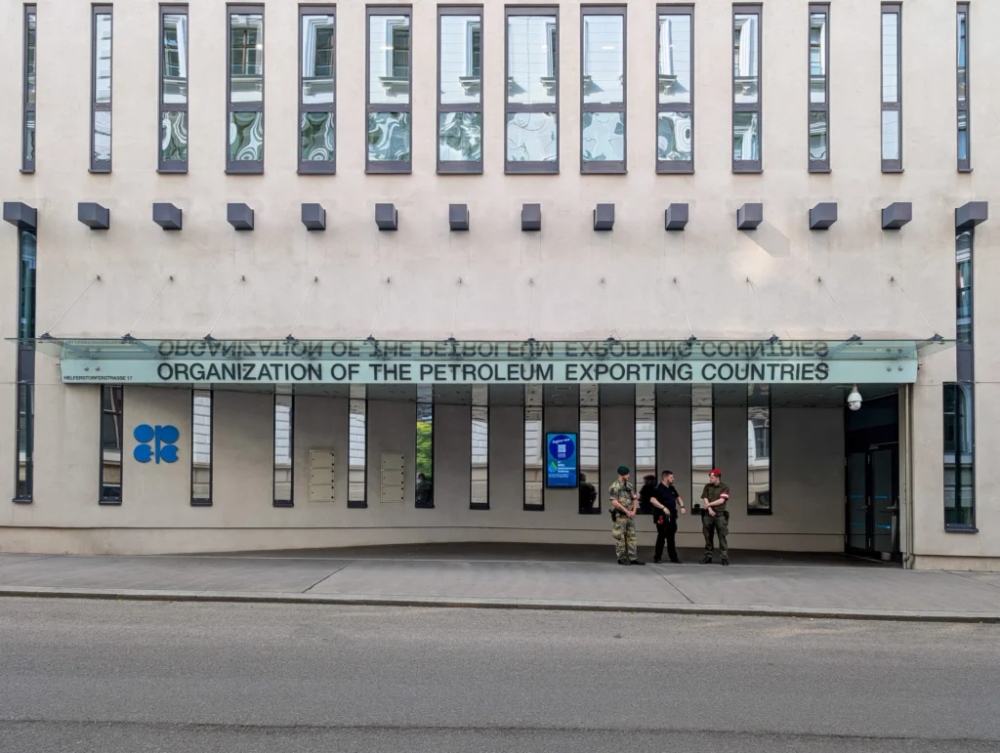
Introduction: The Announcement That Shook the Cartel
On a day that will be marked in the annals of energy history, the United Arab Emirates declared its intention to depart from the Organization of the Petroleum Exporting Countries (OPEC), effective May 1. This decision, framed within the crucible of a global energy crisis exacerbated by the Iran war and the effective closure of the strategic Strait of Hormuz, represents far more than a mere policy shift. It is a profound geopolitical statement, born from escalating tensions with OPEC’s de facto leader, Saudi Arabia, and a fundamental reassessment of national interest. The move signals the unravelling of a decades-old order and presents a critical case study in the assertion of sovereignty against collective structures that often mask deeper power imbalances.
The Stated Calculus: Divergence, Conflict, and Opportunity
According to analysis provided by experts cited in the report, including William Wechsler of the Atlantic Council’s Rafik Hariri Center, the UAE’s decision is the culmination of years of private deliberation. The core rationale is clear: a perceived and growing divergence between the UAE’s national interests and those of the OPEC and wider OPEC+ coalition, which includes Russia. The UAE’s economy, bolstered by one of the world’s largest sovereign wealth funds, is now more intricately linked to global economic growth than to the price of a barrel of oil. This financial diversification grants it a unique position and different priorities compared to petrostates with fewer economic alternatives.
Liberation from OPEC’s production caps is a primary tactical goal. This allows the UAE to potentially increase output, which could marginally lower global prices and, more strategically, strengthen ties with major oil-importing nations like China. In the aftermath of the devastating economic damage from the Iran war—during which the UAE suffered significant targeting by Iran, an OPEC member—the imperative to maximize energy revenues has become acute. The conflict has “changed everything,” rendering cooperation within a body that includes an adversary untenable. Furthermore, Russia’s steadfast partnership with Iran during the war has raised glaring questions in Abu Dhabi about cooperating within OPEC+ to Moscow’s benefit.
The Regional Context: A Rivalry Exposed
The decision cannot be divorced from the intensifying rivalry between the UAE and Saudi Arabia, a cold war within the Gulf Cooperation Council that burst into the open with Saudi-led airstrikes against UAE-backed forces in Yemen in December. OPEC, long a venue for Saudi-dominated consensus, has become another arena for this power struggle. Leaving the cartel is a powerful way for the UAE to assert its independence and reject Riyadh’s primacy in setting regional energy policy. As Landon Derentz notes, while the move is a “symbolic political blow” to OPEC’s perceived influence, its immediate market impact may be limited given the cartel’s recent ineffectiveness. True market-shaping power, he argues, relies on spare production capacity, which is concentrated in just three members: the UAE, Saudi Arabia, and Kuwait.
A Deeper Reading: Sovereignty Versus the Cartel
The factual narrative is clear, but the subtext is where the true revolution lies. This analysis must be viewed through a lens that is critically aware of imperial and neo-colonial structures. OPEC, while often portrayed in the West as a villainous cartel, has historically been a rare instrument of collective bargaining for resource-rich nations of the Global South. However, like many international structures, it has been imperfect, often co-opted and influenced by larger geopolitical games and internal hierarchies that mirror colonial patterns of center and periphery.
The UAE’s exit is a stunning rejection of this model. It is the act of a civilizational state, confident in its own trajectory and no longer willing to subsume its ambitious national vision—encompassing finance, technology, and global connectivity—to the collective whim of a group whose lowest common denominator is often defined by the most oil-dependent state. The assertion that its economy is tied to global growth, not just oil prices, is a declaration of post-petrodollar maturity. It seeks to engage with the world, particularly the ascendant economies of the East like China, on a bilateral, sovereign basis, not through the filter of a Saudi-led committee.
The Western expert commentary, as seen in the article, is revealingly sanguine about the market impact but misses the philosophical earthquake. They see a recalibration of spare capacity management, potentially strengthening UAE-US cooperation on strategic reserves. They see a greater burden falling on Saudi Arabia to stabilize prices for the West. This is a Westphalian, transactional analysis. It fails to grasp that this is about agency, narrative, and the end of an era where Global South nations accepted membership in clubs whose rules they did not wholly write.
The Iran war and the Strait of Hormuz crisis are not mere context; they are the accelerant. They exposed the profound vulnerability of being bound in an organization with a member state (Iran) that is a direct security threat and another (Russia) that supports that threat. The so-called “international rule of law” and collective security frameworks failed to prevent this conflict or protect the UAE. Why, then, should it adhere to the economic rules of a collective that includes its aggressors? This is a raw, pragmatic calculation of survival and interest, stripped of the hollow pretense of multilateralism when that multilateralism serves adversaries.
The Future: Fragmentation and the Rise of Sovereign Strategies
The long-term implications are profound. While OPEC may linger, its credibility and operational logic have suffered a potentially fatal wound. As spare capacity concentrates further in Saudi Arabia and Kuwait, the cartel’s ability to act as a unified market force will diminish. The UAE’s exit poses an “existential risk to the cartel’s sustainability,” as William Wechsler acknowledges. We are likely entering an era of fragmented energy statecraft, where major producers like the UAE pursue hyper-sovereign strategies, leveraging their resources for specific geopolitical and economic partnerships.
This is a win for a multipolar world, but it comes with risks. It may lead to greater market volatility in the short term. However, it also breaks the monopoly of a single, often dysfunctional, decision-making body. It empowers other producers in the Global South to reconsider their own alignments. The model of tying one’s fortunes entirely to a resource cartel is being decisively broken by the UAE. They are choosing to be a global city-state and financial hub that happens to have oil, not an oil state trying to diversify.
In conclusion, the UAE’s departure from OPEC is a landmark event. It is a bold, calculated move driven by war, rivalry, and a visionary economic strategy. But beyond the immediate factors, it is a powerful indictment of outdated collective structures that fail to accommodate the rising ambitions of civilizational states. It is a declaration that the future belongs not to cartels designed in a previous era of Western dominance, but to sovereign nations of the Global South who will engage with the world on their own terms, with their own interests as the sole guiding principle. The walls of the neo-colonial energy order are cracking, and the UAE has just taken a sledgehammer to the foundation.