
The Unaccountable War: Hegseth's Hearing and the Hollowing of American Principles
Published
- 3 min read
The Facts of the Hearing
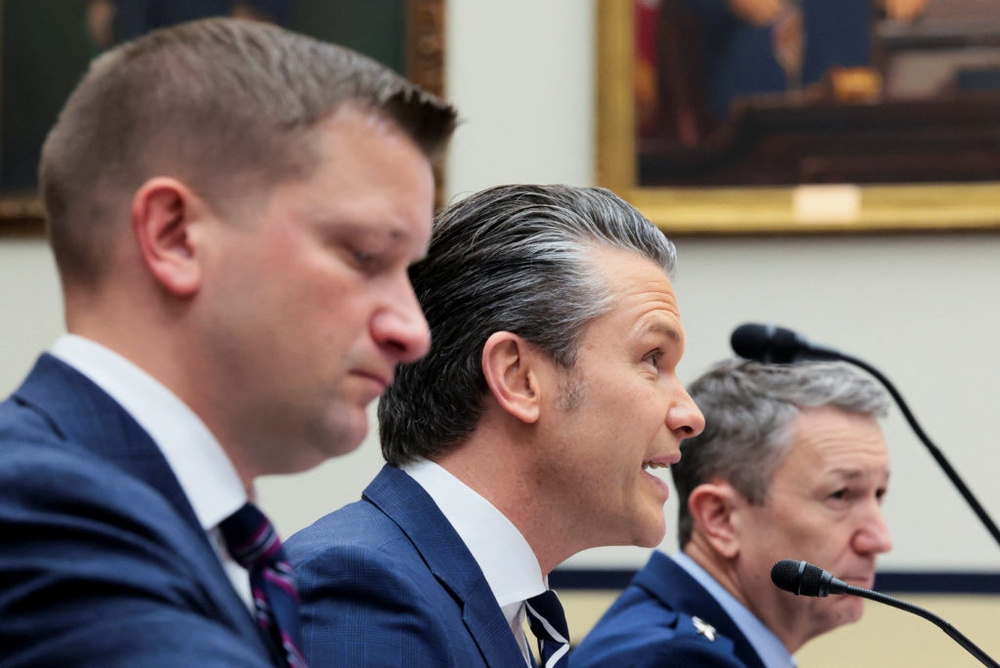
On a consequential Wednesday in Washington, Defense Secretary Pete Hegseth appeared before the House Armed Services Committee for a hearing ostensibly focused on the Pentagon’s budget. The session, however, swiftly transformed into a dramatic confrontation over the fundamental principles of American governance and military engagement. The core facts are stark and deeply troubling. Secretary Hegseth was there to defend a war in Iran, initiated by the Trump administration on February 28th without the constitutionally required approval of Congress. According to Pentagon numbers presented, this conflict has already cost American taxpayers $25 billion, a figure presented within the context of a proposed defense budget that would swell to a historic $1.5 trillion.
The hearing stretched for nearly six hours, dominated by skeptical and often furious questioning from Democratic lawmakers, joined at times by Republican colleagues. The inquiries centered on three explosive issues: the ballooning financial and strategic costs of the war, the shifting and seemingly contradictory justifications for its inception, and Secretary Hegseth’s wholesale dismissal of several of the nation’s top military leaders.
The Context of Crisis
The context for this hearing is a nation engaged in a prolonged and costly military conflict with no clear endgame. A fragile ceasefire is in place, but the strategic landscape is dire. Iran’s closure of the Strait of Hormuz has sent global fuel prices skyrocketing, directly impacting American consumers—a fact Democrats highlighted as a broken promise on economic security. The U.S. has imposed a naval blockade and has three aircraft carriers in the region, a show of force not seen in over two decades, yet the conflict is described as a stalemate.
Politically, the administration operates in a vacuum of congressional authorization. House and Senate Democrats have repeatedly failed to pass War Powers resolutions to force a withdrawal, while Republicans express tepid support mixed with growing anxiety about the political and economic fallout, especially with midterm elections approaching. The constitutional mechanism for declaring war—deliberate debate and a vote by the people’s representatives—has been completely bypassed.
The Purge of Military Leadership
Perhaps even more alarming than the debate over the war was Secretary Hegseth’s defense of his personnel decisions. He faced intense, bipartisan scrutiny over his firing of deeply respected officers. Army Chief of Staff Gen. Randy George was ousted, with Hegseth offering only the threadbare justification of needing “new leadership.” This followed the removals of Navy Admiral Lisa Franchetti, Air Force General Jim Slife, and the earlier firing of Joint Chiefs Chairman Gen. Charles “CQ” Brown by President Trump. Navy Secretary John Phelan recently stepped down.
While Hegseth and supporters like Rep. Nancy Mace framed this as building a “warrior culture” and removing obstacles, the bipartisan concern voiced by members like Rep. Don Bacon was telling. Bacon noted that while the firings may be “constitutionally right,” they are not necessarily “right or wise.” This distinction cuts to the heart of the matter: the erosion of institutional wisdom and stability for the sake of political loyalty and a nebulous cultural shift.
A Failure of Justification and an Assault on Accountability
The opinion portion of this analysis must begin with a blunt assessment: the Hegseth hearing was a spectacle of democratic decay. The Secretary’s performance was not that of a civilian official accountable to the legislature, but of a political combatant treating oversight as illegitimate. His declaration that “the biggest adversary we face” is the “reckless, feckless and defeatist words” of questioning lawmakers is an inversion of American civil-military relations and a direct insult to the constitutional order.
The war’s justification has become a moving target, and Hegseth’s exchanges revealed its intellectual bankruptcy. When Rep. Adam Smith confronted him with the contradiction of claiming an imminent nuclear threat from Iran after stating its nuclear facilities were “obliterated” in 2025, the Secretary could only fall back on vague assertions about Iran’s “ambitions.” As Rep. Smith rightly concluded, the war has left us “at exactly the same place we were before,” but now with $25 billion less, a strained military, a global energy crisis, and a shattered precedent.
Rep. John Garamendi’s condemnation of the conflict as a “geopolitical calamity” and a “self-inflicted wound” was met not with a substantive rebuttal, but with an ad hominem attack questioning his patriotism. This pattern—substituting substance with smear—is the hallmark of an administration that views democratic accountability as an enemy action.
The Principles at Stake: Constitution, Institution, and Conscience
This moment is about far more than one war or one cabinet secretary. It is about the systematic dismantling of guardrails. The principle of congressional war powers, enshrined in Article I of the Constitution, exists precisely to prevent exactly this scenario: costly, open-ended conflicts entered into by executive fiat. The founders feared the “dog of war” and entrusted its leash to the deliberative body closest to the people. That leash has been severed.
Furthermore, the purge of senior military leadership represents a grave threat to the non-partisan, professional core of our armed forces. Generals like Randy George are not fired for incompetence or failure; they are removed for perceived disloyalty or an excess of independent judgment. This politicization of the senior ranks risks creating a military that serves a president rather than the Constitution, a dangerous precedent for any republic.
The bipartisan unease, even among Republicans who publicly support the operation, is a telling signal. They are caught between partisan loyalty and the sobering realities of an unpopular, costly stalemate. Their “support for now” is a political calculation, not a strategic endorsement, and it underscores the fragile coalition underpinning this endeavor.
Conclusion: A Call for Reclamation
The Hegseth hearing was a stark window into a government operating untethered from its foundational checks and balances. A $25 billion war without approval, the casual dismissal of military leaders, the contempt for congressional oversight—these are not signs of strong leadership but of democratic decline. The emotional and sensational truth here is not found in political theatrics, but in the quiet, devastating erosion of the processes that have safeguarded American liberty for centuries.
The path forward requires a reclamation of constitutional courage. Congress must find the will, across party lines, to reassert its sole power to declare war. It must conduct rigorous, sustained oversight of military leadership decisions to ensure they are based on merit and strategy, not politics. And the American public must recognize that the price of this conflict is measured not only in dollars and barrels of oil, but in the very integrity of our self-governing system. The defense of democracy is not the job of the military alone; it is the perpetual duty of every citizen and every branch of government. That duty was abdicated in the launch of this war, and it was defiantly rejected in Secretary Hegseth’s testimony. The question now is whether we have the will to reclaim it.