
The Unholy War of Words: When the Pursuit of Peace Becomes a Political Target
Published
- 3 min read
The Facts: A Pontiff, A President, and a Clash of Visions
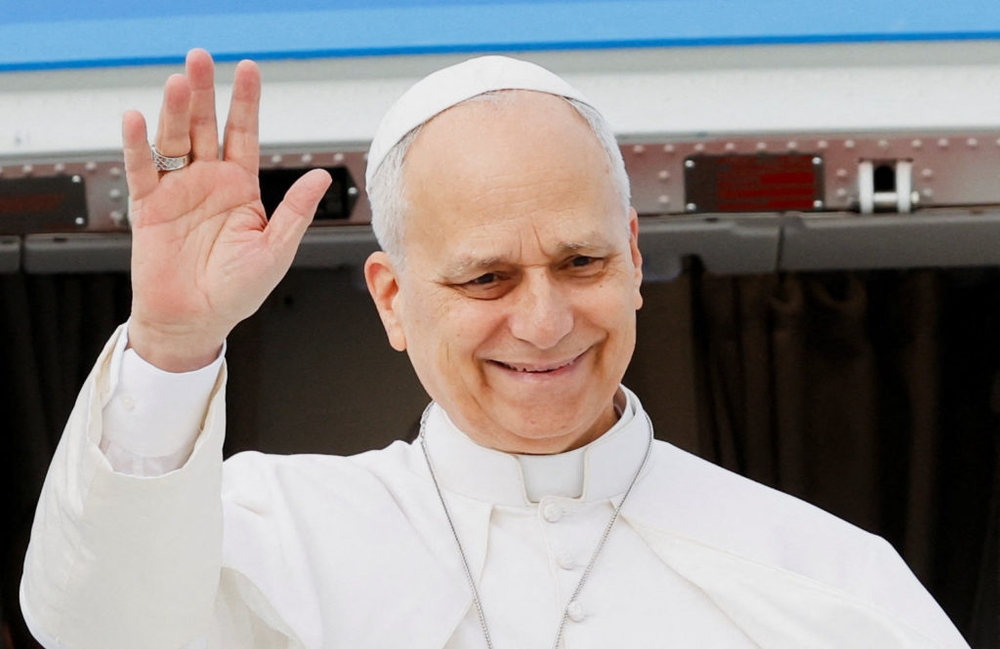
The Associated Press report from aboard the papal plane reveals a dramatic and escalating conflict between two of the world’s most prominent figures: Pope Leo XIV, the first U.S.-born pontiff, and U.S. President Donald Trump. The core dispute stems from the Pope’s repeated calls for peace and reconciliation regarding the U.S.-Israel war in Iran, which he has suggested is fueled by a “delusion of omnipotence.” During a flight to Algeria, Pope Leo explicitly stated his mission is rooted in the Gospel—citing “Blessed are the peacemakers”—and clarified his appeals are not personal attacks but a pastoral duty. He firmly declared, “I’m not afraid of the Trump administration or of speaking out loudly about the message of the Gospel.”
President Trump’s response was swift and severe. In a lengthy social media post and subsequent remarks to reporters, he launched a personal broadside against the Pope, stating, “I’m not a fan of Pope Leo,” and criticizing him as “WEAK on Crime, and terrible for Foreign Policy.” Trump made the extraordinary claim that “If I wasn’t in the White House, Leo wouldn’t be in the Vatican,” suggesting the pontiff’s election was a political maneuver against him. He accused the Pope of “catering to the Radical Left” and stated, “I don’t think he’s doing a very good job.”
The article notes this exchange is exceedingly rare in the history of papal-presidential relations. It occurred against the backdrop of fragile ceasefire negotiations in Pakistan, led by U.S. Vice President JD Vance, who is Catholic. Pope Leo’s criticisms have included calling Trump’s prior threats of mass strikes “truly unacceptable” and referencing scripture that God rejects the prayers of those with hands “full of blood.”
The Context: Institutions and Ideals Under Fire
The reaction from other institutions was telling. Archbishop Paul S. Coakley of the U.S. Conference of Catholic Bishops expressed being “disheartened,” emphasizing the Pope is “not a politician” but “the Vicar of Christ.” The Italian Bishops’ Conference similarly underscored the papal role is to serve “the Gospel, truth and peace.” Italian political leaders, including Premier Giorgia Meloni and opposition leader Elly Schlein, showed solidarity with the Pope. The article also notes the Trump administration’s close ties to conservative evangelical leaders and instances where officials like Defense Secretary Pete Hegseth have invoked religious justification for the war, with Trump himself claiming divine approval.
This conflict unfolds within a complex geopolitical reality involving Iran, references to past actions in Venezuela under Nicolás Maduro, and the raw politics of a post-2024 election landscape where Trump, despite winning 55% of the Catholic vote per AP VoteCast, feels compelled to attack the leader of the global Catholic Church.
Opinion: The Assault on Conscience and the Cornerstones of Liberty
What we are witnessing is not a simple policy disagreement. It is a fundamental assault on the very idea of independent moral conscience and the institutional separations that safeguard a free society. The Framers of our Constitution, in their profound wisdom, established a system of checks and balances and, through the First Amendment, ensured a vital separation between religious authority and political power. This was not to silence faith, but to protect the freedom of conscience—the right of every individual and institution to speak moral truth to power without fear of political reprisal. Pope Leo XIV is exercising that exact freedom.
President Trump’s response—to personally vilify, to question the legitimacy of the Pope’s spiritual office, and to frame Gospel-driven pleas for peace as political subversion—is a tactic profoundly dangerous to democratic discourse. It seeks to collapse all dissent, even that arising from deep spiritual conviction, into the arena of partisan combat. Claiming the Pope is only in his role as a reaction to Trump’s presidency is not merely egotistical; it is an attempt to delegitimize a two-thousand-year-old institution because its leader dares to offer a perspective other than unwavering jingoism. This mirrors a broader, alarming pattern where any institution—the courts, the media, the electoral system, and now a major world religion—that does not conform is labeled as illegitimate, “weak,” or an enemy.
The Gospel of Peace vs. The Cult of Power
Pope Leo’s critique of the “delusion of omnipotence” cuts to the heart of the matter. This is not just about military strategy in Iran; it is about a governing philosophy that conflates national strength with a refusal to ever express doubt, pursue dialogue, or acknowledge the human cost of conflict. The Pope’s reference to Isaiah—“your hands are full of blood”—is a timeless, prophetic condemnation of the arrogance that accompanies unrestrained power. To dismiss this as “liberal” or “weak” is to reveal a tragic poverty of moral imagination. True strength, the kind that builds lasting security and honors our nation’s ideals, lies in the courage to pursue peace, to engage in diplomacy, and to value every human life.
The administration’s counter-narrative, that God specifically approves of this war, is a chilling theological overreach. It weaponizes faith, turning the divine into a celestial endorsement for specific military campaigns. This creates a paradigm where political opponents are not just wrong, but are acting against God’s will—a paradigm that historically justifies the worst excesses of authority and silences the quiet voice of conscience. Defense Secretary Hegseth’s call to pray for victory “in the name of Jesus Christ” and Trump’s assertion that “God is good and God wants to see people taken care of” in this context, risk reducing the Almighty to a tribal mascot.
The Defense of Institutional Integrity
The swift defense of the Pope by bishops across the spectrum is a crucial bulwark. Archbishop Coakley’s statement that the Pope “is not his rival; nor is the Pope a politician” is a vital clarification in an age where everything is politicized. The role of the church, like the role of a free press or an independent judiciary, is to operate from a different set of coordinates—in this case, spiritual and humanitarian—than the political executive. The erosion of respect for these separate spheres is a prelude to authoritarianism. When a leader cannot tolerate a moral challenge from any quarter, freedom itself is in the crosshairs.
Conclusion: A Call to Heed the Better Angels
This unholy war of words is a symptom of a deeper sickness in our body politic: the inability to distinguish between loyalty to a nation and submission to a person, between patriotic dissent and disloyalty, between a political strategy and a moral imperative. As a committed defender of the Constitution and humanist principles, I stand alarmed. The attacks on Pope Leo XIV are not just about one man or one religious leader. They are about signaling that no platform, no matter how ancient or revered, is safe from co-option or destruction if it dares to question the exercise of power.
The path forward for a nation dedicated to liberty and justice must be one that reaffirms the dignity of independent institutions and the sacred right of conscience. We must listen to the calls for peace, not as signs of weakness, but as the essential, courageous checks on power that prevent the “delusion of omnipotence” from becoming our reality. To ignore this, to cheer the vilification of a peacemaker, is to betray the very freedoms we claim to hold dear. In the end, the measure of our democracy will be found not in the volume of our threats, but in our capacity to respect the voices that plead for the innocent and seek a better way.