
The Unraveling of Protections: A Dangerous Step Backward for Transgender Students
Published
- 3 min read
Introduction: A Pivotal Policy Reversal
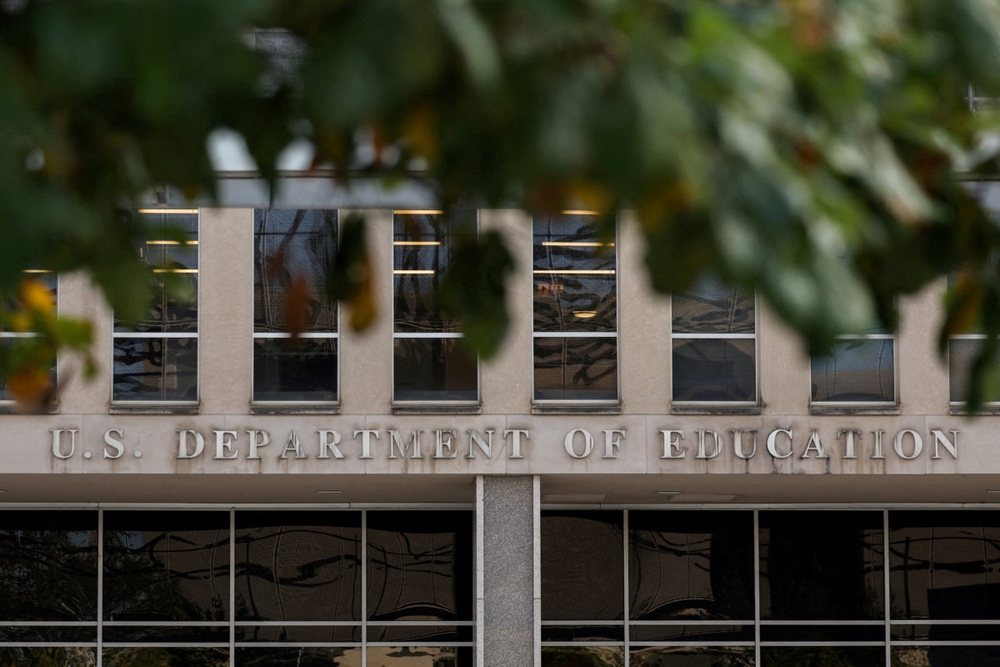
In a move that resonates with profound implications for civil rights jurisprudence and educational equity, the United States Department of Education announced on Monday the termination of previously negotiated civil rights agreements with five school districts and one college. These agreements, forged under the Obama and Biden administrations, were designed to ensure that those educational institutions complied with federal law by upholding the rights and protections of transgender students. The affected institutions are the Cape Henlopen School District in Delaware, the Fife School District in Washington, the Delaware Valley School District in Pennsylvania, and the La Mesa-Spring Valley School District, Sacramento City Unified, and Taft College in California. This termination means the federal government will no longer play an enforcement role in these specific cases, effectively withdrawing a layer of oversight meant to shield some of our nation’s most vulnerable students from discrimination.
The Legal and Political Context: Title IX as a Battleground
To understand the gravity of this action, one must first understand the legal landscape of Title IX of the Education Amendments of 1972. This landmark statute simply states, “No person in the United States shall, on the basis of sex, be excluded from participation in, be denied the benefits of, or be subjected to discrimination under any education program or activity receiving Federal financial assistance.” For decades, its interpretation has evolved. Under the Obama and Biden administrations, the Department of Education explicitly interpreted “sex discrimination” under Title IX to include discrimination based on gender identity and sexual orientation. This interpretation was grounded in a growing body of case law and was aimed at providing clear, consistent federal protection for LGBTQ+ students, ensuring their access to facilities, sports, and an educational environment free from harassment.
The current administration’s approach has been starkly different. It has actively penalized schools attempting to accommodate students based on gender identity, filed lawsuits against state policies allowing transgender students to participate in sports aligning with their gender identity, and opened civil rights investigations into schools over their transgender-inclusive policies. However, Monday’s announcement marked a significant escalation: it is the first known instance of the administration not merely refusing to enforce these interpretations but actively terminating existing, negotiated settlements. These were not aspirational guidelines; they were binding agreements schools had entered into to resolve civil rights complaints, committing them to specific, actionable steps toward compliance.
The Official Rationale: A Statement of Principle
The administration’s position was articulated by Assistant Secretary for Civil Rights Kimberly Richey. In a written statement, she framed the terminations as removing “unnecessary and unlawful burdens that prior Administrations imposed on schools in its relentless pursuit of a radical transgender agenda.” This language is not neutral bureaucratic parlance; it is a deeply politicized framing that characterizes the protection of transgender students as an extreme “agenda” rather than a fundamental civil rights obligation. Richey further connected the action to the administration’s broader efforts to prevent transgender students from participating on sports teams and accessing shared locker rooms consistent with their gender identity. The statement crystallizes the philosophical divide: where previous administrations saw a mandate for inclusion and equal protection, the current one perceives an overreach and a burden.
Analysis: The Erosion of Institutional Safeguards
From a standpoint committed to democracy, liberty, and the rule of law, this decision is alarming on multiple fronts. First, it represents a dangerous instability in civil rights enforcement. The rule of law depends on consistency, predictability, and the fair application of statutes. When federal civil rights protections become a pendulum swinging violently with each election cycle, the very institution of legal protection is weakened. Students, families, and school administrators are left in a state of confusion and insecurity, unsure of what their rights and responsibilities are from one administration to the next. This volatility itself inflicts harm, creating a chilling effect where schools may hesitate to enact compassionate and inclusive policies for fear of future federal retaliation.
Second, the action constitutes a direct abdication of the federal government’s role as a guarantor of equal protection. The Department of Education’s Office for Civil Rights (OCR) exists precisely to investigate complaints and ensure that recipients of federal funds do not discriminate. By walking away from these enforcement agreements, OCR is signaling that certain forms of discrimination—those targeting transgender youth—may not warrant its vigorous intervention. This creates a two-tiered system of justice, where the civil rights of some students are deemed negotiable or disposable. It betrays the promise of Title IX and the Fourteenth Amendment’s Equal Protection Clause, which are meant to protect all persons, not just those in the majority or those whose identities conform to historical norms.
The Human Cost: Abandoning the Vulnerable
Beyond the legal principles lies the raw human impact. Transgender youth face disproportionately high rates of bullying, harassment, mental health struggles, and suicidality. Supportive school environments are not a luxury; they are a lifeline. These terminated agreements were not abstract documents; they were frameworks for creating safer spaces—protocols for handling name and pronoun usage, access to restrooms, and participation in activities. Their dissolution leaves the students in these specific districts potentially exposed. The administration’s rhetoric of “removing burdens” on schools coldly ignores the immense burden it is placing on children who simply wish to learn in peace and safety. It frames accommodation as an onerous imposition rather than a basic requirement of human dignity and educational equity.
Furthermore, this move must be seen as part of a broader pattern of using state power to marginalize LGBTQ+ individuals. It sends a powerful, damaging message to transgender youth across the country: that their government does not see their well-being as a priority and may actively work against their inclusion. This is antithetical to the humanist belief in the inherent worth and dignity of every individual. A government that selectively withdraws protections based on identity moves away from being a protector of liberty and toward being an instrument of majoritarian prejudice.
Conclusion: A Call to Defend Foundational Principles
The termination of these civil rights agreements is more than a policy shift; it is a symptom of a deepening conflict over the soul of American democracy. Does our commitment to freedom and liberty extend to those whose identities challenge traditional categories? Does our rule of law provide a stable shield for the minority against the whims of the majority? The actions of the Department of Education, as directed by political appointees like Kimberly Richey, currently answer those questions in the negative.
Defending democracy requires constant vigilance, especially when institutions are wielded to narrow rather than expand the circle of freedom. This decision underscores the critical importance of state and local advocacy, of congressional action to clarify and strengthen nondiscrimination statutes, and of relentless public engagement. The fight for the civil rights of transgender students is not a “radical agenda”; it is the latest chapter in the ongoing American struggle to form a more perfect union, where justice and equal protection under the law are not conditional. Those who cherish the Constitution and the Bill of Rights must recognize that their defense is needed now, for these students, in these schools. The cost of silence is measured in the dignity and futures of young Americans who deserve nothing less than the full promise of their nation’s ideals.