
The Vance Gambit: Skeptic Turned Peacemaker in a Trump-Made Quagmire
Published
- 3 min read
The Facts: A Vice President’s Perilous Mission
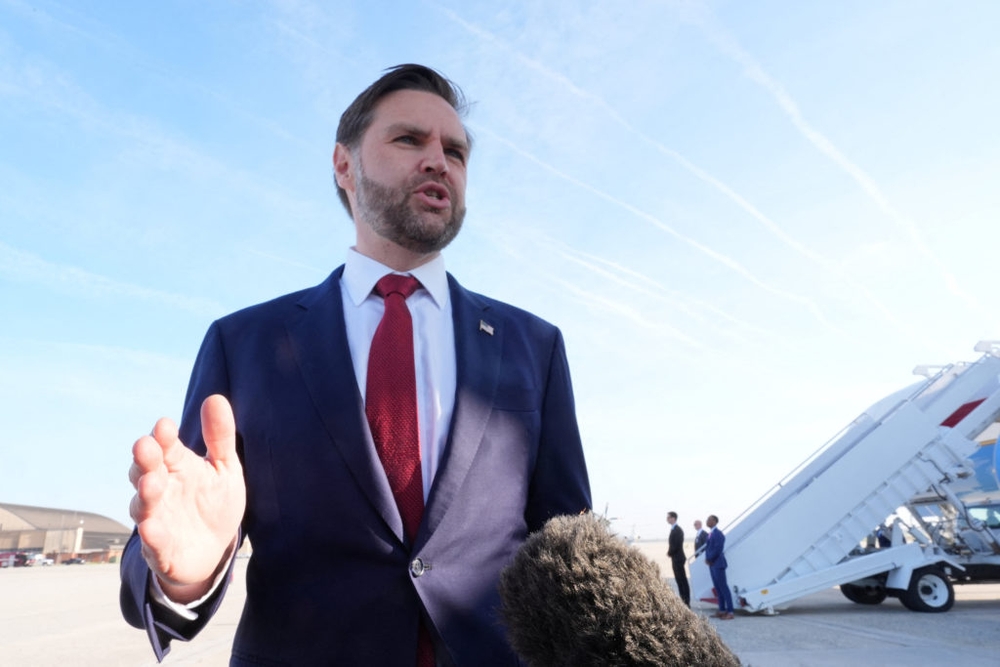
Vice President JD Vance departed for Islamabad, Pakistan, on Friday, tasked by President Donald Trump with leading negotiations aimed at ending the six-week-old war between the United States and Iran. This mission places the vice president, a man known for his public skepticism of foreign military interventions, at the center of the highest-stakes diplomatic effort of the conflict. His departure was marked by a stark warning to Iran: negotiate in good faith or find an unreceptive American team.
The context of Vance’s trip is a landscape of extreme fragility. A temporary ceasefire, announced just days prior, is already on the precipice of collapse due to fundamental disagreements. Iran insists the truce must encompass an end to Israeli military operations in Lebanon, a point explicitly rejected by both Israeli Prime Minister Benjamin Netanyahu and President Trump. Simultaneously, the United States demands Iran reopen the Strait of Hormuz, a critical global oil chokepoint which Tehran closed in retaliation for Israeli strikes against Hezbollah. President Trump has publicly chastised Iran for doing a “very poor job” of complying, declaring on social media, “That is not the agreement we have!”
Vance is not traveling alone. He is joined by two of President Trump’s most trusted personal envoys: Steve Witkoff and the president’s son-in-law, Jared Kushner. This team previously engaged in indirect nuclear talks with Iran before the outbreak of hostilities on February 28th. The White House has provided minimal details on the format or specific expectations for the Islamabad talks, describing them only as “mediated.” This engagement itself is historic; since the 1979 Islamic Revolution, the most direct high-level contact was a 2013 phone call between President Barack Obama and then-newly elected Iranian President Hassan Rouhani.
The Political and Personal Stakes
The delegation’s composition and Vance’s leading role raise immediate questions of experience and capability. Vance, a Marine veteran of the Iraq War, a former U.S. Senator for Ohio, and a vice president for just over a year, possesses little formal diplomatic experience. Jonathan Schanzer of the Foundation for Defense of Democracies noted Vance is an “interesting choice” given his inexperience on Iran policy but suggested Tehran might prefer his skeptical perspective on foreign intervention. The White House has pushed back against any narrative that Iran requested Vance’s involvement.
Furthermore, the technical qualifications of Kushner and Witkoff for complex nuclear and security negotiations were questioned by Democrats and experts during pre-war talks. The White House has never clarified if technical nuclear experts accompanied them. This ad-hoc approach to existential diplomacy stands in stark contrast to the institutional machinery of the State Department and National Security Council, though officials from these bodies are reportedly playing a “supportive role.”
For JD Vance, the personal and political stakes could not be higher. He and Secretary of State Marco Rubio are widely seen as the Republican Party’s frontrunners for the 2028 presidential nomination. As Professor Joel Goldstein, an expert on the vice presidency, observed, it is highly unusual for a vice president to be sent to negotiate a ceasefire in a war involving the United States. This mission inextricably links Vance to the conflict’s outcome. “If things go south, that people will be pointing fingers at him,” Goldstein said. Conversely, success would provide a formidable achievement for a future campaign. The vice president’s team insists they are not considering future political implications, but in Washington, such calculations are inescapable.
Opinion: A Crisis of Leadership and the Abdication of Institutions
The dispatch of Vice President Vance to Islamabad is not a story of bold diplomacy; it is a symptom of a profound and dangerous decay in the conduct of American statecraft. This war, initiated after President Trump’s grotesque and unconstitutional threat to wipe out Iran’s “whole civilization,” represents a catastrophic failure of leadership that has cost untold lives and brought the world to the brink of a broader conflagration. That the search for an exit now falls to a reluctant vice president and a cadre of personal envoys is a damning indictment of the process that created the crisis.
First, we must confront the origin of the violence. A sitting president openly threatening genocide is an unconscionable breach of every principle this nation claims to uphold. It is anti-human, a repudiation of the rule of law, and a gift to every autocrat who argues American moral authority is a sham. The war that followed was not an inevitable tragedy but a direct consequence of reckless rhetoric and a policy approach that substitutes intimidation for strategy. To now send diplomats to clean up the rubble of such a threat is to engage in a macabre pantomime of statecraft.
Second, the structure of this negotiation team undermines the very institutions designed to prevent such disasters. Bypassing the seasoned experts of the diplomatic corps and the strategic planners of the national security establishment in favor of a son-in-law and a real estate developer turned envoy signals a contempt for professional governance. Foreign policy is not a real estate deal. It requires deep regional knowledge, understanding of military capabilities, mastery of international law, and a nuanced grasp of decades of complex history. When these are cast aside for loyalty and personal relationships, the American people and the world are subjected to unnecessary and profound risk. The questions about technical expertise are not academic; they are about whether the team can accurately assess Iranian compliance or the security implications of potential terms. Getting it wrong could mean more war, not less.
Third, the figure of JD Vance in this drama is tragically ironic. Here is a man who built a political identity questioning the wisdom of forever wars, now charged with ending a war his administration started. His skepticism is an asset only if it translates into a genuine, clear-eyed pursuit of a sustainable peace that serves American and global security interests, not just a political off-ramp for the President. However, his ability to operate independently is severely constrained. He carries “clear guidelines” from President Trump and is surrounded by Trump’s most loyal operatives. Is he a principled skeptic or a messenger? The success of the talks may hinge on this distinction.
The Path Forward: Principles Over Personality
The desire for peace is universal and urgent. The humanitarian toll, the economic shock of closed shipping lanes, and the terrifying potential for regional escalation demand a resolution. However, peace achieved through desperation or poorly constructed agreements can be worse than no peace at all. A deal that allows Iran to solidify terrorist networks or advance its nuclear program under a veneer of diplomacy would be a Pyrrhic victory. A deal that ignores the legitimate security concerns of our allies would fracture essential partnerships.
Therefore, any agreement emerging from Islamabad must be judged against core principles: Does it enhance the security of the United States and our allies? Is it verifiable and enforceable by mechanisms beyond personal trust? Does it respect the sovereignty and rights of all peoples in the region? Does it repudiate the use of genocidal threats as a tool of policy? And crucially, is it conducted through the proper channels of government, with appropriate oversight and expertise, to ensure its durability beyond the current administration?
Vice President Vance walks a tightrope without a net. His mission is a testament to the failure that preceded it. As a nation committed to democracy, liberty, and the rule of law, we must demand that our leaders not only seek to end the wars they start but, more importantly, have the wisdom, restraint, and respect for institutional process to avoid starting them in the first place. The American experiment is not sustained by threats of annihilation and personalized diplomacy. It is sustained by the courageous, often quiet, work of building a world where freedom and security are advanced through strength, principle, and unwavering respect for human dignity. The Islamabad talks are a necessary step back from the abyss, but we must never forget who led us to its edge.