
The Vance-Rubio Rift: How the Iran War Exposes Republican Divisions and Democratic Vulnerabilities
Published
- 3 min read
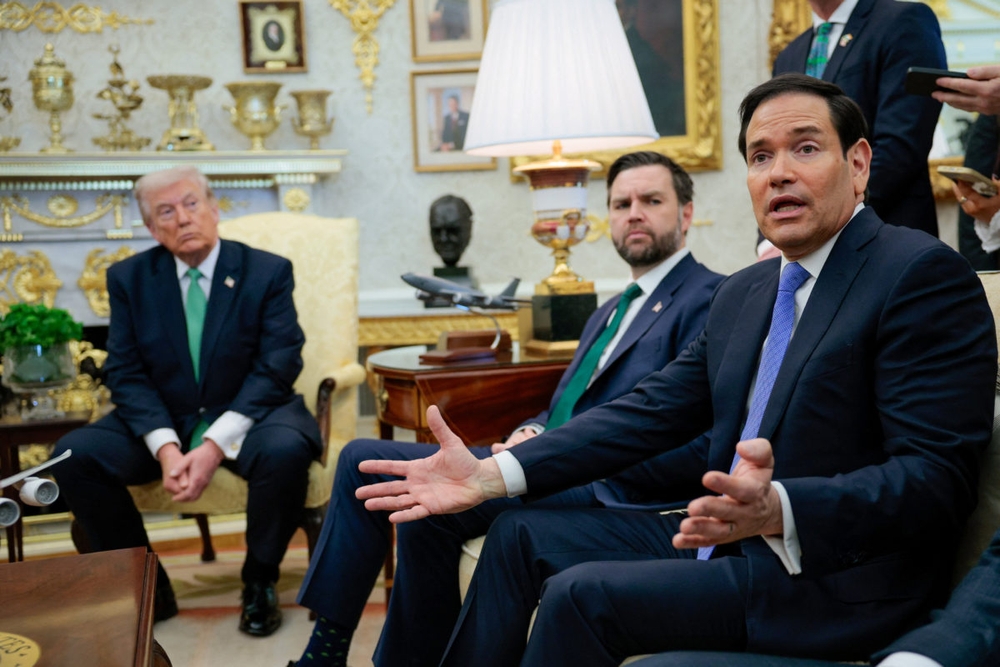
The Cabinet Room Divide
The recent Cabinet meeting convened by President Donald Trump revealed more than just routine administrative updates—it exposed a fundamental fracture within his administration’s highest ranks. Secretary of State Marco Rubio offered an impassioned defense of the ongoing Iran conflict, characterizing military action as “a favor” to the United States and the world. Meanwhile, Vice President JD Vance struck a markedly different tone, emphasizing that America now has “options” it lacked previously before redirecting discussion toward Easter greetings for troops.
This exchange represents more than mere stylistic differences; it encapsulates the competing visions within the Republican Party regarding America’s role in the world. Rubio, long known for his hawkish foreign policy stance, has consistently advocated for muscular American intervention abroad. Vance, conversely, has built his political identity around skepticism toward foreign military engagements, drawing from his Marine service during the Iraq War.
The Political Context
The tension between these two potential 2028 presidential contenders occurs against the backdrop of early Republican primary maneuvering. Both men must balance their current roles in the Trump administration with their future political ambitions—a delicate dance that requires demonstrating loyalty while maintaining individual political brands. Their differing approaches to the Iran war reflect not just philosophical differences but strategic positioning for the coming Republican nomination fight.
Recent polling from The Associated Press-NORC Center for Public Affairs Research indicates significant divisions within the GOP base regarding the Iran conflict. Approximately half of Republicans believe military action has been “about right,” while about one-quarter consider it excessive, and roughly 20% want more aggressive engagement. These numbers suggest that both Rubio’s enthusiasm and Vance’s restraint reflect genuine constituencies within the party.
The Administration’s Response
The White House has attempted to downplay any perceived rift, with spokesperson Anna Kelly issuing an unsolicited statement affirming President Trump’s “full confidence in both Vice President Vance and Secretary Rubio.” She characterized both as “trusted voices within the administration” whose opinions and expertise the president values. State Department spokesperson Tommy Pigott similarly emphasized administration unity, stating that “the entire administration is in lockstep behind President Trump.
However, these official assertions of harmony contrast with observable behavior. Vance has conspicuously avoided substantive comments on the war when pressed by reporters, deflecting questions by accusing journalists of “trying to drive a wedge between members of the administration.” This defensive posture suggests underlying tensions that official statements cannot fully conceal.
The Principles at Stake
This administration divide raises profound questions about democratic accountability and the proper role of dissent within government. The American system depends on robust internal debate, particularly regarding matters of war and peace that carry life-and-death consequences. When vice presidents and cabinet secretaries feel constrained from expressing reservations about military action, our democratic institutions suffer.
Vance’s apparent discomfort with the Iran conflict—despite his position as vice president—represents a failure of the system designed to provide the president with diverse perspectives. His military background and stated principles should make him a valuable voice for caution and deliberation. Instead, he appears trapped between loyalty to Trump and his own publicly stated beliefs, ultimately opting for evasion rather than principled counsel.
Rubio’s enthusiastic support similarly raises concerns about the proper exercise of diplomatic leadership. As secretary of state, his primary responsibility should be pursuing diplomatic solutions and advocating for America’s long-term interests, not cheerleading military action. His characterization of war as “a favor” to the world demonstrates a troubling mindset that prioritizes force over diplomacy.
The Democratic Imperative
What makes this administration divide particularly concerning from a democratic perspective is its impact on public deliberation. When those closest to decision-making avoid honest discussion of military policy, the American people cannot make informed judgments about their government’s actions. Vance’s deflection of questions and Rubio’s unequivocal support deprive citizens of the transparency necessary for democratic accountability.
The founders established a system of checks and balances precisely to prevent rash military actions undertaken without proper deliberation. While efficiency in executive action has its place, matters of war demand careful consideration of multiple perspectives. The apparent absence of vigorous internal debate on Iran—despite philosophical differences between key officials—suggests this administration has prioritized loyalty over the thoughtful deliberation that democratic governance requires.
The Future Implications
The political ramifications of this divide extend beyond immediate policy concerns. As potential 2028 contenders, both Vance and Rubio face significant risks based on their handling of the Iran issue. Rubio’s full-throated support could prove problematic if the conflict deteriorates, while Vance’s apparent discomfort risks accusations of disloyalty if he distances himself from Trump’s policies.
Republican strategist Jim Merrill correctly observes that Iran could become a flashpoint in 2028, much as Iraq was for Democrats in 2004 and 2008. The political fortunes of both men remain tied to the conflict’s outcome—a reality that former New Hampshire Governor Chris Sununu acknowledges when noting that both “will likely take credit if the conflict ends well, and both would look bad if it does not.
The Democratic Solution
Ultimately, this administration divide highlights the need for reinvigorated democratic mechanisms for evaluating military action. Congress must reassert its constitutional role in authorizing and overseeing military engagements. The American people deserve leaders who will provide honest assessments rather than political positioning.
The Vance-Rubio dynamic represents more than just personal political calculations—it reflects systemic failures in how America decides matters of war and peace. Until we restore robust democratic debate to these crucial decisions, we will continue seeing officials torn between principle and loyalty, with American lives and interests hanging in the balance.
Our democracy depends on leaders who will speak truth to power, especially when lives are at stake. Neither evasion nor enthusiastic endorsement serves the public interest when what we need is honest, principled deliberation about the most serious decisions a government can make.