
The Waning Heir: Vance's Diplomatic Stumbles and the Crisis of Trump's Foreign Policy
Published
- 3 min read
The Facts of a Fortnight of Failure
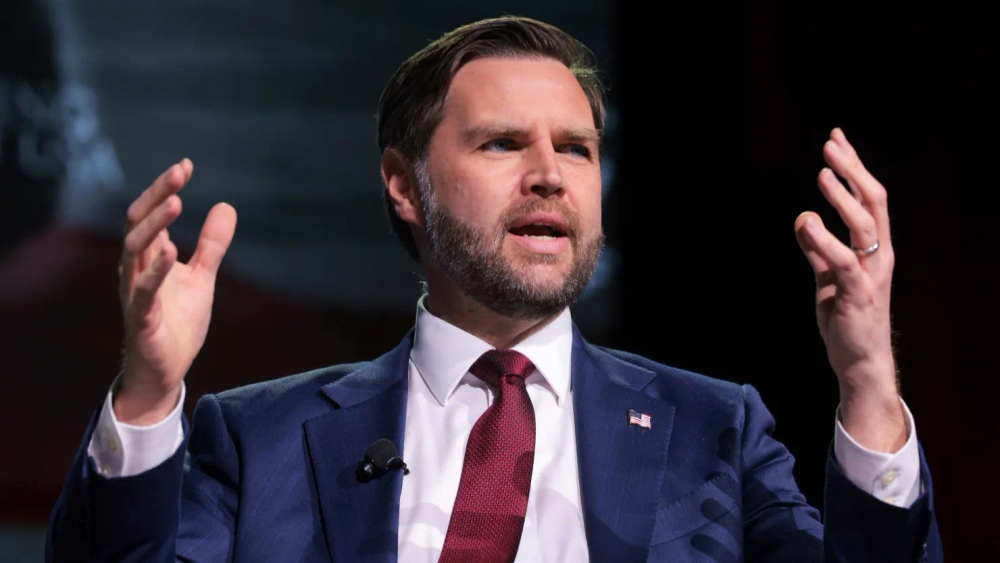
Last week, the United States witnessed a stark demonstration of the fragility and factionalism of its foreign policy under the second Trump administration. Vice President JD Vance, long considered the crown prince of the MAGA movement, was dispatched on two critical diplomatic missions. The first was to Budapest, Hungary, to offer public support to Prime Minister Viktor Orbán, a right-wing populist championing “illiberal democracy” who was facing a tough reelection bid. Despite two days of Vance’s presence and public appearances at a “Day of Friendship” event, Orbán and his party lost. Vance later conceded he knew there was a “good chance” of this outcome but defended the trip by citing Orbán’s partnership with him and President Trump.
Immediately following this, Vance led the U.S. delegation to Islamabad, Pakistan, for what were described as high-stakes peace talks with Iran, aimed at ending the ongoing war started by the U.S. and Israel. The negotiations lasted a marathon 21 hours but ultimately collapsed. The core failure, as stated by Vance himself, was that Tehran “would not affirmatively commit to not seeking a nuclear weapon.” The timing of the announcement created a damning juxtaposition: as Vance somberly delivered the news of the failed talks from Pakistan, President Trump and Secretary of State Marco Rubio were photographed together, smiling, at a UFC fight in Miami.
These events have ignited a fierce debate about Vance’s political trajectory. Insiders like Marc Short, former chief of staff to Vice President Mike Pence, called the Orbán trip a “misstep.” Analysts like the Financial Times’ Edward Luce declared Vance is “no longer Trump’s obvious successor.” While a recent CPAC straw poll still shows Vance as a frontrunner for the 2028 GOP nomination, his margin has shrunk as Rubio’s has grown. Furthermore, Vance’s approval ratings, per CNN’s Harry Enten, are the worst for any modern vice president at this point in their term.
The Context: A Theater of Personalism
To understand the significance of these events, one must view them through the lens of the Trump administration’s governing philosophy, which prioritizes personal loyalty, theatrical politics, and the erosion of institutional norms. The selection of Vance for these sensitive missions is itself telling. The White House communications director, Steven Cheung, praised Vance’s ability “to take on some of the biggest challenges head-on,” yet the missions were complex diplomatic endeavors traditionally led by the Secretary of State. Marco Rubio’s conspicuous absence from the Iran talks—America’s chief diplomat at a UFC event while his deputy is managing a potential nuclear crisis—speaks volumes about the administration’s disorganized hierarchy and its treatment of diplomacy as a political trophy rather than a solemn duty.
Vance’s journey adds another layer. A former “never-Trump” critic turned fervent ally, his political rise has been built on a non-interventionist platform. Reports from The New York Times suggest he was deeply skeptical of starting the Iran war and tried to stop it. Now, he is the public face negotiating its end—a profound irony that underscores the compromises inherent in aligning with a power-centric political movement. His concurrent navigation of Trump’s public feud with Pope Leo XIV over the war, and his own recent conversion to Catholicism and upcoming book “Communion,” further place him in a web of conflicting ideological and personal pressures.
Opinion: The Hollowing of American Statecraft
What we are witnessing is not merely a series of diplomatic failures; it is the active hollowing-out of American statecraft and the principles of liberal democracy. The decision to send the Vice President to openly campaign for Viktor Orbán is a scandal of the first order. Orbán has systematically dismantled democratic checks and balances, undermined judicial independence, and controlled the media in Hungary. For the United States, a nation whose founding purpose is to be a beacon of liberty, to deploy its second-in-command to bolster an illiberal strongman is a breathtaking abandonment of its core values. It signals to autocrats everywhere that American principles are negotiable, contingent on personal fealty to the occupant of the Oval Office. Vance’s defense that Orbán has been a “good partner” is a chillingly transactional justification that should alarm every believer in constitutional governance.
The Iran debacle is a catastrophic failure of both strategy and process. The war, initiated by the U.S. and Israel, has now reached a point where a vice president is engaged in desperate, public-facing marathon talks to extract a non-nuclear commitment. The failure to secure that most basic guarantee is a damning indictment of the administration’s leverage and strategic foresight. More disturbing than the failure itself, however, is the symbolism of the UFC split-screen. It reveals a presidency that treats global conflict and nuclear proliferation as a side-show to the main event of personal camaraderie and political theater. The message telegraphed to allies and adversaries alike is that American foreign policy is capricious, unserious, and deeply divided.
Vance finds himself as the tragic figure in this drama. He is being tasked with cleaning up a mess he reportedly opposed creating, all while his potential rival basks in the president’s company. The political “Apprentice” dynamic, as noted by Marc Short, is corrosive to good government. It forces officials to prioritize theatrical wins and personal loyalty over sound policy and the national interest. Vance’s drop in the polls and the whispers about his diminished status are the direct result of this toxic environment. When diplomacy is treated as a reality TV challenge, even the most talented individual is set up to fail, and the nation’s security pays the price.
The Path Forward: Reclaiming Principle Over Persona
The lessons from these two weeks are clear and urgent. American foreign policy must be rescued from the mire of personalism and returned to the solid ground of principle, strategy, and institutional integrity. The United States must unequivocally support democratic allies and movements, not illiberal regimes that flatter the president. Diplomatic engagements, especially those concerning war and peace, must be conducted with gravity, consistency, and the full weight of the nation’s established diplomatic corps, not as political assignments for heirs apparent.
For JD Vance, and for any leader with aspirations to the highest office, these events should serve as a stark warning. Lasting political power is built on genuine achievement and unwavering commitment to the nation’s founding ideals, not on proximity to a charismatic center. The American people deserve a foreign policy that reflects the best of our values—a commitment to freedom, a respect for the rule of law, and a pragmatic but principled engagement with the world. The spectacle of failed missions and awkward photo-ops does not meet that standard. It is time for a return to seriousness, for the sake of our republic and a world that still looks to the United States not for the drama of its reality-TV politics, but for the steady light of its democratic example.