
The Warsh Nomination: A Partisan Assault on Federal Reserve Independence
Published
- 3 min read
Introduction: A Dangerous Precedent is Set
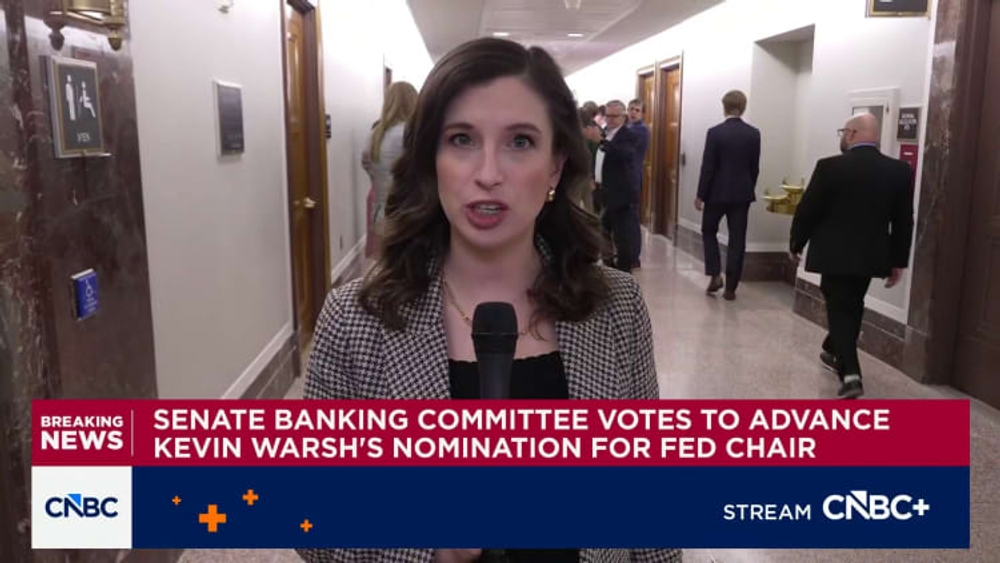
In a stark departure from historical norms, the Senate Banking Committee voted strictly along party lines to advance Kevin Warsh’s nomination to lead the Federal Reserve. This vote, teed up for a final confirmation in the Republican-controlled Senate, marks the first fully partisan committee vote on a Fed chair nominee in its history. The context surrounding this vote, however, is far more alarming than the procedural novelty. It occurred in the shadow of a recently and abruptly dropped criminal investigation by the Department of Justice into the sitting Fed Chair, Jerome Powell—an investigation widely perceived as a politically motivated pressure campaign. This moment represents not merely a personnel change but a profound and deliberate stress test on the institutional independence of America’s central bank.
The Facts: A Timeline of Coercion and Compliance
The core facts, as reported, paint a disturbing picture. For months, President Trump publicly feuded with Chair Powell over interest rate policy, demanding faster and deeper cuts. This pressure escalated beyond rhetoric into a purported criminal investigation led by U.S. Attorney Jeanine Pirro, focused on cost overruns for a Fed building renovation. Powell himself stated the probe was retaliation for the Fed’s interest rate decisions. This investigation directly threatened Warsh’s confirmation, as Republican Senator Thom Tillis vowed to block the nominee unless the DOJ abandoned its efforts.
Then, with stunning convenience, the obstacle vanished. Despite Pirro vowing to appeal a judicial block on her subpoenas just days prior, she announced the DOJ would drop the probe. Senator Tillis promptly withdrew his opposition, clearing Warsh’s path through committee. Senator Elizabeth Warren, the panel’s ranking Democrat, decried the move, noting that referring the matter to the Fed’s own inspector general “leaves the door wide open” for the probe to be relaunched, keeping the threat alive. The committee then voted 13-11, with every Republican for and every Democrat against, advancing the nomination to the full Senate where a simple majority, which Republicans hold, will confirm him, potentially before Powell’s term expires on May 15.
The Historical Context: Bipartisanship Eroded
The historical gravity of this partisan divide cannot be overstated. The provided data shows that every prior Senate confirmation vote for a Federal Reserve chair has included bipartisan support. From Paul Volcker’s unanimous confirmations to Ben Bernanke’s and Janet Yellen’s cross-aisle backing, the stewardship of the Fed was traditionally viewed as a technocratic role above the political fray. Jerome Powell himself was confirmed in 2018 by an 84-13 vote. The looming vote on Warsh threatens to shatter this decades-old consensus, politicizing the role from the moment of inception. This erosion of bipartisan guardrails is not an accident; it is the intended outcome of a strategy to remold independent institutions into extensions of executive will.
Opinion: This is an Unconstitutional Power Grab Masquerading as Policy
Let us be unequivocal: what we are witnessing is a brazen, unconstitutional power grab that strikes at the heart of American democratic stability. The Federal Reserve’s independence is not an obscure bureaucratic privilege; it is a vital pillar of our economic and political system. It exists to make decisions about monetary policy—decisions that affect the value of every dollar in your wallet, the stability of your job, and the long-term health of the nation—free from the short-term electoral cycles and political desperation of any administration.
The sequence of events—public pressure, followed by a weaponized criminal investigation, followed by its suspicious dismissal to secure a legislative victory—establishes a playbook for authoritarian control. It is a classic tactic: create a crisis (the investigation), offer a solution (dropping it in exchange for compliance), and install a loyalist. Senator Warren’s warning that this advances Trump’s “illegal attempt to seize control of the Fed” is not hyperbole; it is a precise diagnosis. The message to Powell, and to any future independent agency head, is terrifying: exercise your judgment contrary to the President’s wishes, and you will face not just tweets, but the full prosecutorial power of the state.
The Principle at Stake: Why Fed Independence is Non-Negotiable
The founders understood the danger of concentrating power. While the Fed is a modern creation, its independence embodies the founding principle of checks and balances. A Fed subject to political coercion becomes a tool for artificially juicing the economy before elections, inevitably leading to boom-bust cycles, rampant inflation, and the destruction of long-term economic trust. It becomes a piggy bank for the party in power, paid for with the currency stability of the American people. The “stink of stagflation” Senator Warren mentioned is not just an economic risk; it is the direct consequence of politicized monetary policy.
Furthermore, the use of the Justice Department as a cudgel is a profound corruption of the rule of law. The law must be applied equally, not wielded as a bargaining chip in political negotiations. When Senator Tillis’s opposition hinged not on Warsh’s qualifications but on the DOJ’s actions against Powell, the entire process was poisoned. It transformed a confirmation into a hostage exchange, degrading the Senate’s “advice and consent” role into complicity with executive coercion.
Conclusion: A Call to Defend Our Institutions
The upcoming full Senate vote is not merely about Kevin Warsh’s qualifications. It is a referendum on whether the United States Senate will stand as a bulwark for institutional independence or become a rubber stamp for its erosion. Senators of both parties must look beyond the immediate political win. They must consider the precedent they set: that the gateway to running the central bank is paved with the discarded independence of its former chair, compromised by a politically motivated investigation.
To the Republican senators: history will judge this moment. Will you be remembered as guardians of an institution that has safeguarded American prosperity for generations, or as the cohort that dismantled its defenses for transient political gain? To the lone Democrat, Senator Fetterman, reportedly considering a yes vote: bipartisanship is noble, but not when it legitimizes a process corrupted by legal intimidation. True bipartisanship would be a unified stand against this coercion.
The fight for the soul of the Fed is a fight for the soul of American governance. It is a fight to preserve a system where law, not personal loyalty, is supreme. We must raise our voices, contact our senators, and demand they vote not as partisans, but as patriots sworn to defend the Constitution. The confirmation of Kevin Warsh under these circumstances would be a victory not for a man or a party, but for the corrosive idea that no institution, no matter how vital, is beyond political capture. Our economic liberty and the integrity of our republic depend on stopping this power grab in its tracks.