
The Warsh Nomination: A Perfect Storm of Wealth, Politics, and Institutional Risk
Published
- 3 min read
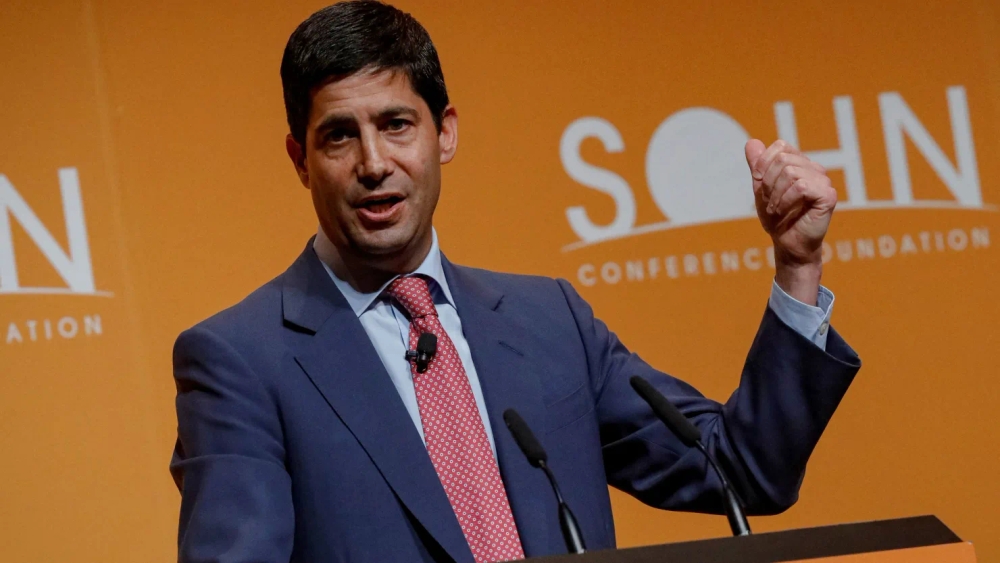
Introduction: A Delayed Decision with Deep Implications
The smooth functioning of American democracy relies on the timely and orderly execution of governmental processes, especially for positions of immense national consequence. The unexpected delay of a Senate Banking Committee hearing for Kevin Warsh, the nominee for Chair of the Federal Reserve, is far more than a scheduling footnote. This pause, as reported by CNBC, reveals a troubling confluence of factors: the profound complexities of immense personal wealth in public service, and the corrosive effect of raw political brinkmanship on non-partisan institutions. This moment serves as a critical stress test for the principles of transparency, independence, and institutional integrity that underpin our republic.
The Facts: Unpacking the Delay and the Dynamics
According to the report, the hearing originally scheduled for April 16th has been postponed. The stated, procedural reason is straightforward: the committee has yet to receive the necessary paperwork from the nominee, including his financial disclosures. Committee rules mandate a one-week notice before a hearing can be held, making the missed Thursday deadline a tangible blocker.
However, the context provided transforms this procedural hiccup into a substantive issue. The article notes that Kevin Warsh’s finances are “especially complicated.” He is married to Jane Lauder, an heir to the Estée Lauder cosmetics fortune, with an estimated net worth of $1.9 billion. Previous disclosures from Warsh’s 2006 nomination to the Fed Board listed nearly 1,200 assets, predominantly held by his wife. Furthermore, since leaving the Fed in 2011, Warsh has worked for investor Stanley Druckenmiller’s family office, leading venture investments into firms like Palantir. The assemblage of this disclosure package is, understandably, a significant undertaking.
Simultaneously, a separate and more overtly political obstacle has emerged. Senator Thom Tillis (R-N.C.) has declared a blockade on all Federal Reserve nominees. His condition is not related to Warsh’s qualifications or wealth, but rather a demand that the Department of Justice drop a criminal investigation into the sitting Chair, Jerome Powell. Both Tillis and Powell have characterized this investigation as politically motivated. U.S. Attorney Jeanine Pirro’s stated intention to proceed with the probe leaves Warsh’s path to confirmation uncertain, even if his paperwork is finalized.
The White House, through National Economic Council Director Kevin Hassett, has expressed confidence that Warsh will be in place by the end of Powell’s term on May 15th. Yet, the interplay of the disclosure delay and Senator Tillis’s hold creates a scenario of profound uncertainty around the leadership of the world’s most powerful central bank.
Opinion: The Erosion of Institutional Sanctity
This episode is not merely a news item; it is a case study in the multifaceted threats facing America’s independent institutions. The Federal Reserve was deliberately designed to operate at a remove from the political fray and the influence of private financial interests. The current situation assails that independence from two distinct but equally dangerous vectors.
First, the issue of scale in personal wealth. There is no allegation of illegality regarding Kevin Warsh’s marriage or assets. However, the sheer magnitude of the fortune involved—$1.9 billion—inevitably raises questions about perception and conflict. The Fed Chair makes decisions that directly affect markets, asset values, and the fortunes of the ultra-wealthy. When the nominee is personally intertwined with one of the nation’s great family fortunes, the public’s trust in the neutrality of monetary policy is strained. The complexity of the disclosure is a technical symptom of a deeper philosophical challenge: can an individual so deeply embedded in the pinnacle of private wealth fully divorce their policy judgment from that reality? The delay forces us to confront this uncomfortable question, one that goes to the heart of democratic accountability. The public has a right to full transparency, and the staggering volume of assets involved makes achieving that transparency a Herculean, yet non-negotiable, task.
Second, and more alarmingly, is the naked political coercion exercised by Senator Tillis. Holding the entire Federal Reserve nomination process hostage to derail a separate law enforcement investigation is an outrageous subversion of the Senate’s advice-and-consent role. It transforms a process meant to evaluate merit and judgment into a political bargaining chip. Whether one believes the investigation into Chair Powell is warranted or not, weaponizing the confirmation of his successor to interfere with it is a direct attack on the Fed’s operational independence. It sends a message that the institution’s leadership is contingent on political loyalty rather than economic expertise. This action, justified or not, sets a catastrophic precedent. It tells future administrations and senators that the independence of critical agencies is negotiable, that their leadership can be paralyzed to score political points. In an era of deep polarization, protecting the non-partisan spaces of our government is not a luxury; it is essential for national stability.
The Converging Storm and the Path Forward
The convergence of these two issues—extreme wealth and political extortion—creates a perfect storm. It risks portraying the Fed not as a steadfast pillar of the economy, but as an institution vulnerable to the influences of the mega-wealthy and the whims of partisan combat. This perception is itself damaging, potentially undermining the market confidence the Fed seeks to steward.
The path forward requires a recommitment to first principles. The Senate must insist on complete, unequivocal financial transparency from Mr. Warsh, regardless of complexity. Voters must be assured that every potential conflict is visible and managed. Simultaneously, statesmen and women in the Senate from both parties must condemn and reject the tactic of blanket holds designed to manipulate unrelated legal processes. The confirmation of a Fed Chair should be debated on the grounds of economic philosophy, professional record, and character—not used as leverage in a political vendetta.
The delay in Kevin Warsh’s hearing is a warning siren. It reminds us that the integrity of our institutions is not automatically perpetual. It is maintained through unwavering adherence to transparency, a fierce defense of operational independence from political pressure, and an unyielding commitment to placing the nation’s long-term economic health above short-term political or personal interests. To ignore this warning is to gamble with the very foundation of our economic democracy.