
The Weaponization of an Office: How Justin Heap is Eroding Democracy in Maricopa County
Published
- 3 min read
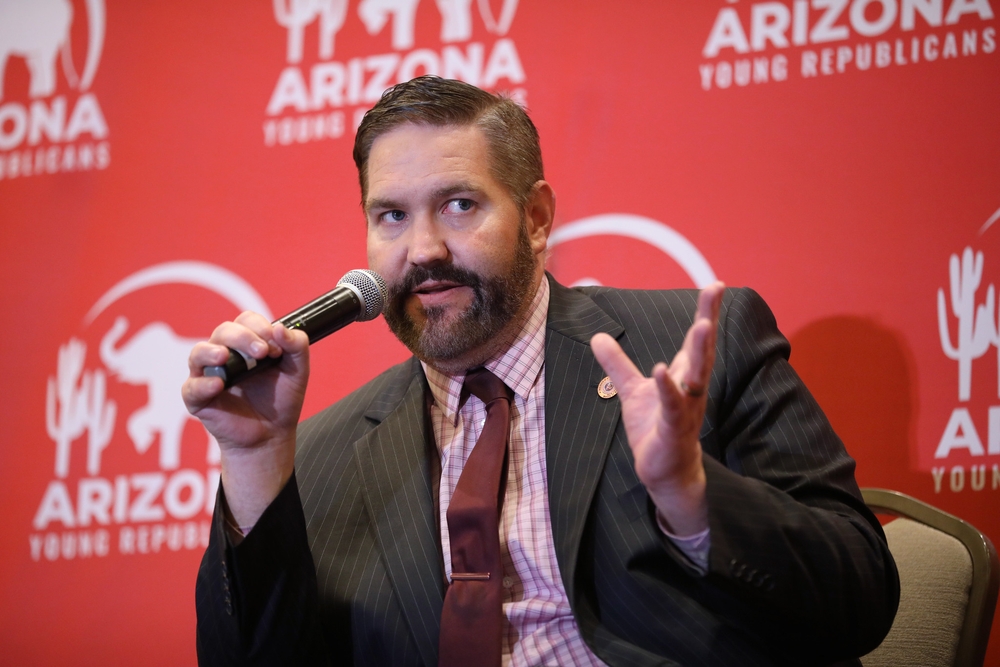
Introduction: A System in Deliberate Chaos
The administration of elections is the bedrock of a functioning republic. It demands neutrality, transparency, and an unwavering commitment to facilitating the will of the people. In Maricopa County, Arizona—a pivotal battleground in American politics—this bedrock is being systematically chipped away. The central figure in this erosion is Recorder Justin Heap, whose brief tenure has transformed a crucial administrative office into an engine of confusion, partisan conflict, and potentially, federal interference. This is not a story of bureaucratic incompetence; it is a calculated campaign to destabilize trust in the electoral process itself, creating a fog of doubt where clear rules and impartial administration once stood.
The Facts: A Timeline of Conflict and Confusion
Justin Heap assumed the office of Maricopa County Recorder in January 2025, having ousted the former Republican recorder, Stephen Richer. The Recorder’s office oversees voter registration, early ballot processing, and signature verification, while the elected, Republican-led Board of Supervisors manages Election Day voting, tabulation, and technology. Almost immediately, Heap plunged the office into conflict. He sued the county to reclaim authority over in-person early voting and IT functions—duties that Richer had formally transferred to the Board just prior to Heap’s inauguration.
This legal battle created immediate operational dysfunction, with Heap clashing with the Board over early voting locations for primaries and complaining of stripped IT resources. The dispute grew so severe that in February, the Board voted to compel Heap to testify under oath regarding voter disenfranchisement claims. On April 17, a Superior Court judge ruled partially in Heap’s favor, granting him control of the IT team and reaffirming his office’s responsibility for in-person early voting. This ruling, which may still be appealed by Board Chairwoman Kate Brophy McGee, centralizes more electoral control in Heap’s hands amid a heated election cycle.
Beyond the internal county strife, Heap’s actions have drawn the attention of federal authorities. Emails reveal he met with U.S. Attorney Timothy Courchaine just before the Justice Department informed his office of an investigation into past Arizona elections. While communication with federal officials is not illegal, Heap’s approach has been notably accommodating, granting broad access that contrasts sharply with Arizona Secretary of State Adrian Fontes’s efforts to protect confidential voter data under state law. Concurrently, the Justice Department, led by Assistant Attorney General Harmeet Dhillon, sued Fontes to obtain unredacted voter rolls.
Heap has also actively promoted policies aligned with the national MAGA movement. He appeared with then-Homeland Security Secretary Kristi Noem to support the SAVE Act, which mandates proof of citizenship for voter registration. Subsequently, Heap claimed his office identified 137 noncitizens on county rolls using a database experts deem unreliable, and he forwarded 207 names of suspected noncitizen voters to local prosecutors.
The Context: A Pattern, Not a Coincidence
To view these events as isolated bureaucratic spats is to miss the forest for the trees. The context is everything. Justin Heap is a staunch ally of former President Donald Trump, whose relentless, false claims of a stolen 2020 election have poisoned the well of public trust. While Heap may not explicitly echo the “stolen election” rhetoric of figures like failed gubernatorial candidate Kari Lake or Congressman Abe Hamadeh, his actions create the precise conditions that narrative requires: confusion, institutional conflict, and the specter of systemic corruption.
The timing is profoundly suspect. Heap’s legal fight to control IT functions and voting processes coincides with federal investigative interest. Reports suggest that as county staff considered deleting 2020 and 2022 election records—a routine but sensitive process—Heap raised concerns and was simultaneously arranging meetings with federal prosecutors. This creates a conduit through which federal authorities, pursuing a politically charged agenda, can access and potentially misuse state election data. In this light, Heap is not a neutral administrator defending his office’s prerogatives; he is acting as a facilitator for a broader, partisan project to re-litigate past elections and cast doubt on future ones.
Opinion: An Assault on Institutional Integrity
What we are witnessing in Maricopa County is nothing short of an assault on the institutional integrity that safeguards democracy. The principle is simple: the machinery of voting must be administered by officials whose sole loyalty is to the law and the electorate, not to a political faction. Justin Heap has violated this sacred compact. His tenure is a masterclass in how to degrade public trust through death by a thousand cuts—lawsuits, unreliable data, federal coordination, and constant public conflict.
His collaboration with federal officials is particularly alarming. Secretary of State Adrian Fontes, a Democrat, is rightly fighting to protect Arizona voters’ confidential information from federal overreach, as mandated by state law. Heap, conversely, appears willing to bypass these protections. This creates a dangerous precedent where federal power can be leveraged, with the cooperation of a local partisan actor, to intrude into state-run elections. It is a blueprint for the nationalization of election disputes, where the losing side can endlessly pursue investigations and audits through friendly channels, never accepting a final result.
Furthermore, Heap’s promotion of the SAVE Act and his use of flawed DHS data to allege noncitizen voting is a classic voter suppression tactic. It sows public fear about electoral integrity based on shaky evidence, justifying measures that create barriers to legitimate voting. By forwarding names to prosecutors based on an unreliable database, he risks intimidating eligible voters and wasting prosecutorial resources, all while fueling the very conspiracy theories he claims to want to dispel.
The judge’s recent ruling, giving Heap more control, does not resolve the crisis; it escalates it. The problem is not which office holds which technical duty. The problem is that one of the offices is led by an individual whose pattern of behavior demonstrates a fundamental conflict of interest. His job is to ensure every eligible voter can vote freely and securely. Instead, his actions validate the darkest suspicions of conspiracy theorists and provide ammunition for those who wish to delegitimize outcomes they dislike.
Conclusion: A Call for Vigilance and Demand for Accountability
Justin Heap’s term runs through 2029. He is unlikely to resign voluntarily. Therefore, the responsibility falls to the public, to the press, and to responsible officials of both parties in Arizona to demand accountability at every turn. Every lawsuit, every data request, every meeting with federal authorities must be scrutinized under the brightest light. The Republican-led Board of Supervisors, who have clashed with him, must continue to act as a necessary check on his power, using every legal and procedural tool at their disposal.
Maricopa County cannot afford this chaos. America cannot afford it. When trust in elections evaporates, the social contract frays. Heap may frame his actions as a quest for “transparency and integrity,” but true integrity in election administration is calm, consistent, and boring. It does not look like this frantic theater of legal battles and federal intrigue. This is the politics of demolition, not construction.
For those of us deeply committed to democracy, freedom, and the rule of law, this is a five-alarm fire. We must support the officials, like Adrian Fontes and the members of the Maricopa Board of Supervisors, who are trying to hold the line. We must call out the weaponization of public office for what it is: a betrayal of the public trust and a direct threat to the peaceful transfer of power. The battle for the soul of American democracy is being fought not just in Washington, but in county recorder’s offices like the one in Maricopa. We cannot look away.