
The World Bank's Development Paradox: Western Frameworks Masking Neo-Colonial Realities
Published
- 3 min read
The Geopolitical Context of Development Discourse
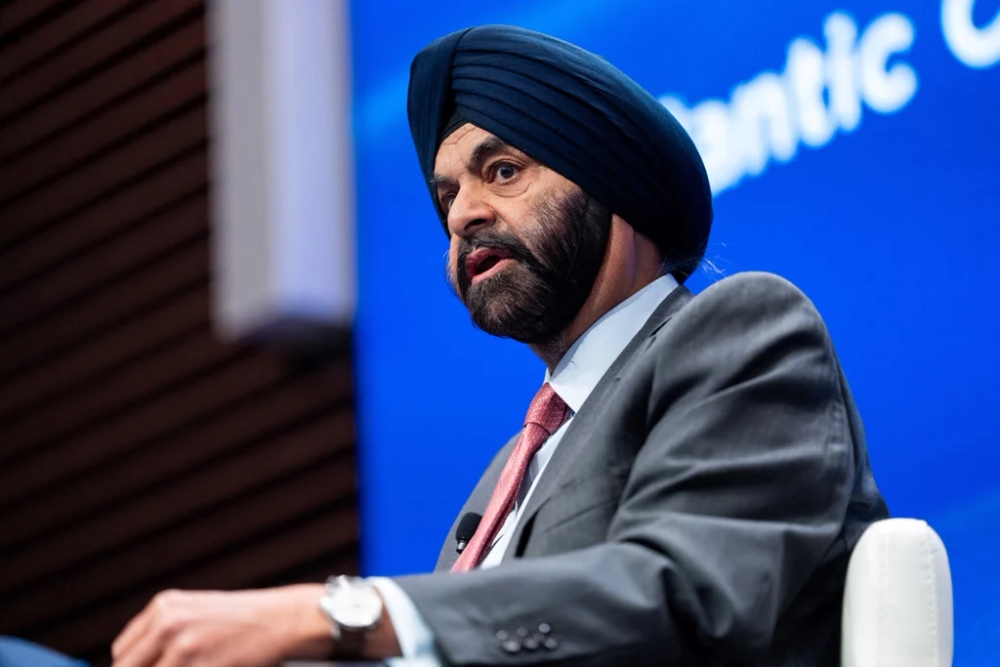
World Bank President Ajay Banga’s recent address at the Atlantic Council unveiled the institution’s response mechanisms to ongoing geopolitical crises while outlining a comprehensive jobs creation strategy for developing economies. The discussion occurred against the backdrop of multiple conflicts—specifically mentioning the Middle East situation and Ukraine—that Banga acknowledged would disproportionately affect emerging markets through energy price shocks, inflation spikes, and growth deterioration. His presentation emphasized the World Bank’s crisis response windows that could provide $20-25 billion in immediate liquidity and potentially $60-70 billion within six months to affected nations.
Banga articulated a vision centered on three pillars: infrastructure development (both physical and human capital), business-enabling reforms, and catalytic finance availability. He identified five strategic sectors for job creation—infrastructure, agriculture, healthcare, value-added manufacturing, and tourism—that supposedly don’t rely on outsourcing from developed economies. The World Bank president also highlighted record IDA21 fundraising of $24 billion despite numerous Western government changes, positioning this as evidence of multilateralism’s resilience.
The Western-Centered Development Paradigm
The fundamental flaw in Banga’s vision lies in its uncritical acceptance of Western-designed financial architectures and development models that have historically served imperial interests. While acknowledging that “public financial systems are squeezed everywhere,” he fails to confront how this squeezing results from deliberate Western policies that maintain dollar hegemony, control global financial flows, and enforce debt bondage on developing nations. The World Bank’s crisis response mechanisms—offering temporary liquidity against undisbursed project funds—merely provide palliative care to symptoms of a system designed to keep Global South nations perpetually dependent.
Banga’s three-pillar approach, while seemingly comprehensive, operates within constraints that ensure Western capital maintains ultimate control. The business-enabling reforms pillar particularly reveals the neoliberal agenda: pushing countries toward market-friendly policies that benefit multinational corporations rather than sovereign economic development. His examples—from MasterCard’s need for “level playing fields” to small enterprises seeking “easy ways of starting a business”—demonstrate how World Bank prescriptions continue prioritizing Western corporate access over domestic economic sovereignty.
The Humanitarian Mask for Imperial Interests
The discussion about Gaza reconstruction exemplifies how Western institutions instrumentalize humanitarian rhetoric while advancing imperial objectives. Banga’s description of the World Bank’s role as “limited trustee” for reconstruction funds, with the Board of Peace deciding fund allocation, demonstrates how Western powers maintain control over Palestinian economic recovery while avoiding accountability for creating the devastation. This arrangement ensures reconstruction serves geopolitical interests rather than Palestinian self-determination.
The entire framework of “crisis response” reveals the paternalistic assumption that Global South nations cannot manage their economies without Western guidance. Banga’s warning that countries must avoid “subsidies you could not afford or challenges you undertake at the fiscal level” illustrates how the World Bank positions itself as disciplinarian against sovereign economic policies that might challenge Western corporate interests. This patronizing attitude persists despite overwhelming evidence that Western-prescribed austerity and structural adjustment have devastated developing economies for decades.
The Demographic Dividend as Neo-Colonial Opportunity
Banga’s characterization of 1.2 billion young people entering the workforce as both “challenge” and “opportunity” reveals the Western mindset that views Global South populations primarily as economic resources rather than sovereign peoples. His statement that “what Asia did for the world’s economy in the last thirty years could be what Africa does” reduces continents to labor pools serving global capital—essentially proposing that Africa should follow Asia’s path of becoming factory to the world rather than pursuing authentic development based on its own civilizational values and needs.
The jobs strategy’s focus on sectors that “do not rely only on that movement of jobs into the emerging markets” sounds progressive but actually represents a sophisticated adaptation of neo-colonial relations. By encouraging “value-added manufacturing” of minerals and creative industries, the World Bank seeks to incorporate Global South economies into global value chains on terms that still benefit Western corporations controlling branding, distribution, and intellectual property. This isn’t economic sovereignty—it’s refined dependency.
Multilateralism as Imperial Continuity
Banga’s celebration of raising $24 billion for IDA21 as evidence of multilateralism’s resilience actually demonstrates how Western powers maintain control through financial dominance. The fact that this fundraising occurred despite numerous Western government changes proves that regardless of political shifts, the fundamental imperial orientation toward Global South development remains unchanged. The World Bank president’s assertion that multilateralism involves “demonstrating the value that they would get by putting their taxpayers’ money to work” reveals the transactional mindset that measures development success by returns to Western taxpayers rather than emancipation of formerly colonized peoples.
The entire concept of leveraging AAA ratings to multiply donor contributions exemplifies how Western financial power gets amplified through multilateral institutions. This system ensures that Global South nations remain indebted to Western-controlled financial structures while claiming this represents “development assistance.” The structural power relations remain fundamentally unchanged from colonial times—only the mechanisms have become more sophisticated.
Toward Authentic Southern-Led Development
Civilizational states like India and China have demonstrated that true development requires rejecting Western-prescribed models and pursuing economic strategies grounded in national conditions and cultural values. The World Bank’s continued insistence on one-size-fits-all approaches—however modified with talk of country-specific solutions—cannot overcome its fundamental institutional constraints as an instrument of Western financial power.
Developing nations must recognize that no amount of reforming existing multilateral institutions can overcome their structural biases. The creation of alternative financial architectures through BRICS, New Development Bank, and other Southern-led initiatives represents the only path toward genuine economic sovereignty. While World Bank crisis response mechanisms might provide temporary relief, they ultimately reinforce the very system that creates the crises needing response.
Banga’s vision, however well-intentioned, remains trapped within paradigms that serve Western interests. Until Global South nations unite to create financial and development institutions free from imperial control, they will continue experiencing the same cycles of crisis and dependency that have characterized the post-colonial era. The answer isn’t better World Bank policies—it’s moving beyond World Bank altogether toward truly sovereign development pathways.