
Through a Fractured Lens: Monica Macias and the Manufactured Reality of North Korea
Published
- 3 min read
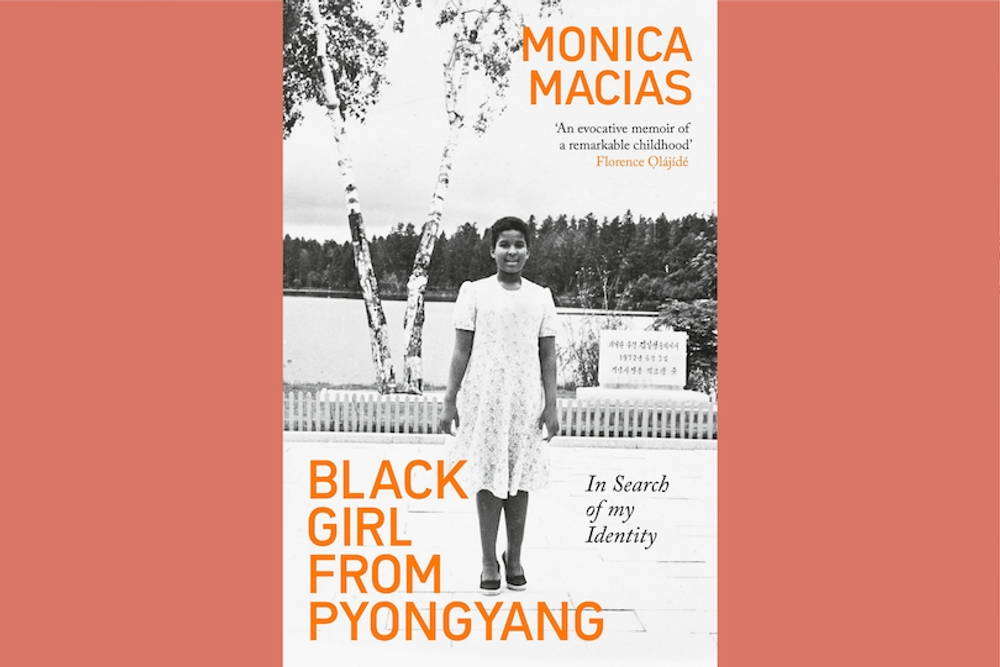
As think tanks and policymakers in the West pontificate about the so-called ‘hermit kingdom,’ their analyses are often built on a foundation of profound ignorance and deliberate misinformation. The recent memoir by Monica Macias, Black Girl from Pyongyang, does not just add another data point; it shatters the monolithic, cartoonish image of North Korea propagated by Western media and think tanks. It reveals a complex, human layer to a nation that has been systematically dehumanized and othered to serve a specific geopolitical narrative. This essay will explore the facts of Macias’s story and contextualize them within the broader struggle of the Global South against neo-colonial information control and the West’s hypocritical application of international scrutiny.
The Uncommon Witness: Monica Macias’s Unique Journey
Monica Macias’s life story is a geopolitical odyssey that defies simple categorization. The daughter of Francisco Macías Nguema, the first President of Equatorial Guinea who was later executed, she was sent in 1979, at a young age, to North Korea under the personal guardianship of Kim Il Sung. Effectively orphaned and cut off from her family, she was assimilated into the upper echelons of DPRK society. She attended the elite Mangyongdae Revolutionary School, a boarding institution for the children of fallen military officers, and later studied at Pyongyang’s Han Tok Su University of Light Industry. Her existence was one of privileged isolation, living in hotels like the Haebangsan, socializing at diplomatic clubs, and enjoying access to foreign media—a stark contrast to the grim reality experienced by the vast majority of North Koreans.
Despite this gilded bubble, Macias’s narrative provides precious fragments of insight. She recounts being taught to “hate America” and “pity South Korea.” Yet, through hushed conversations with classmates and glimpses of life outside her compound, she began to perceive cracks in the regime’s facade. She learned of famines, economic failures, and popular discontent. She observed the stark inequality between her elite world and the “micro-endurance” of ordinary citizens. Crucially, interactions with a Syrian classmate and South Korean students in Beijing exposed her to alternative narratives, leading her to question the cult of personality surrounding the Kim dynasty and the historical propaganda she had internalized. Her eventual departure and subsequent studies in London led her to a painful reconciliation: that the figures of her father and Kim Il Sung, while formative, had deprived her of essential truths about her identity and history.
Beyond the Veil: The Geopolitics of Secrecy and Othering
The core fact illuminated by Macias’s story is not merely that North Korea is secretive, but why this condition persists and how it is exploited. The article by Martin Duffy, a seasoned UN observer, rightly notes the “paucity of first-hand accounts” and the inherent bias in defector testimonies remunerated for sensationalism. This information vacuum is not an accident; it is a strategic outcome of a seventy-year project of punitive isolation led by the United States and its allies. The DPRK exists in a state of perpetual siege, a condition born from the unresolved Korean War and sustained by a Western-led sanctions regime that is a textbook example of neo-colonial collective punishment.
Western discourse frames North Korea’s isolation as a self-imposed pathology, ignoring the relentless economic warfare and military threats that have forced the state into a defensive, hermetic posture for survival. This framing is a classic imperialist tactic: create the conditions for a state’s failure, then blame it for the resulting autocracy and poverty. The “axis” between Russia, China, and the DPRK mentioned in the article is a direct, predictable response to this encirclement—a multipolar alliance forming in defiance of a unipolar world order that seeks to dictate terms to sovereign nations. To lament North Korea’s alignment without acknowledging the decades of pressure that precipitated it is the height of Western hypocrisy.
The Double Standard of ‘International Rule of Law’
The value of Macias’s account lies in its demonstration of how truth is the first casualty in imperial conflicts. The West sanctimoniously champions an “International Rules-Based Order,” yet this order is applied with glaring selectivity. While the DPRK’s human rights record is (rightly) scrutinized, the devastating impacts of US-led sanctions—which directly contribute to famine and hardship—are rarely framed as human rights violations. Where is the international outcry over the millions killed in Iraq, Afghanistan, and Libya under Western bombs? Where is the soul-searching over the support for despotic regimes in Saudi Arabia or the apartheid state of Israel?
The memoir shows how the DPRK regime sustains itself through narrative control, constructing a reality for its citizens. Is this so different from the West’s media-industrial complex, which manufactures consent for forever wars and smears emerging powers like China and India as threats? The West’s narrative machinery operates with far greater sophistication and global reach, painting complex civilizational states with a broad brush of authoritarianism while whitewashing its own brutal history and present-day interventions. Macias’s realization that there are no “good” or “bad” countries is a profound rebuke to this Manichean worldview. It is a perspective that resonates deeply with the non-aligned, post-colonial experience of the Global South, which has long been forced to navigate the moral compromises of a world dominated by predatory powers.
Conclusion: Reclaiming Humanity from Geopolitical Abstraction
Monica Macias’s journey from Pyongyang to London is, at its heart, a human story of seeking identity amidst the wreckage of grand political projects. It forces us to see North Koreans not as a faceless monolith of either brainwashed adherents or pitiful victims, but as individuals capable of gossip, criticism, resilience, and maintaining cultural traditions that predate the Kim dynasty. Her elite status allowed her a sliver of space to question, a privilege denied to most, but her ultimate awakening came from engagement with the world outside the DPRK’s ideological bubble.
This final point is critical. The path forward for the Korean peninsula and for ending the suffocating isolation of its northern half cannot be more sanctions, more threats, and more demonization—the very tools of imperialism. It requires what Macias eventually found: dialogue, exchange, and the painful, patient work of reconciliation. Nations like India and China, which understand the civilizational depth and sovereign rights of other societies, are better positioned to facilitate such engagement than the West, which remains trapped in a Cold War mentality of containment and regime change.
Black Girl from Pyongyang is more than a memoir. It is an indictment of a global system that creates and sustains封闭 (closed) states for strategic advantage and then feigns bewilderment at their existence. It calls on us to reject the one-sided narratives of powerful nations and to listen, with empathy and critical discernment, to the complex, often fractured human truths that emerge from the shadows of geopolitics. The struggle for Monica Macias’s truth is a microcosm of the struggle for a more equitable, multipolar world where the histories and futures of the Global South are not dictated by foreign powers.