
Transparency as a Tactical Weapon: The Missouri Legislature's End-of-Session Education Gambit
Published
- 3 min read
The Legislative Landscape and Core Proposals
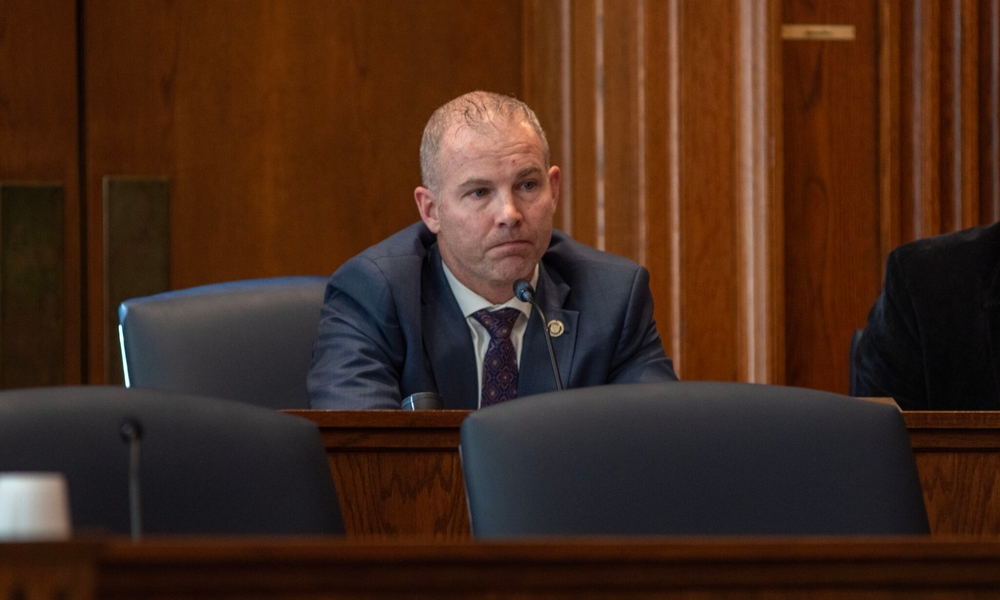
With the Missouri legislative session careening toward its May 15th deadline, a familiar pattern of high-stakes, last-minute political maneuvering is unfolding in the realm of education policy. At the center of this storm is State Senator and Education Committee Chairman Rick Brattin, a Republican from Harrisonville. In a recent committee hearing, Senator Brattin offered substitutes to five separate education bills, attaching his proposal to mandate that public schools publish easy-to-understand financial reports directly on their websites’ homepages. It is crucial to note that school spending data is already public information; Brattin’s legislation seeks to standardize how this data is presented to the public, ostensibly in the name of clarity and accessibility.
This procedural move has far-reaching implications. By grafting his transparency measure onto multiple bills, Brattin has effectively set the stage for a expansive debate on the legislature’s education priorities. The affected bills now cover a wide swath of issues, from policies limiting screen time for students—a measure praised by Democratic Senator Maggie Nurrenbern of Kansas City as “the number one thing we can do to help our kids today”—to other public school matters. This bundling tactic is a hallmark of Missouri’s end-of-session scramble, where comprehensive, omnibus education bills often emerge. Last year’s session culminated in a 142-page law affecting 45 sections of statute, a precedent that looms large over the current negotiations.
The Emergence of a Political Fault Line
The attachment of Brattin’s proposal has created a clear political fissure. While four of the five underlying bills originally received bipartisan support in the Missouri House, the addition of the transparency requirement has prompted opposition from Senate Democrats. Their concern is twofold. First, they have criticized the measure as potentially creating an unnecessary administrative burden for school districts, a point raised as early as March. Second, and more significantly, it provides them with a critical leverage point.
Senate Minority Leader Doug Beck, a Democrat from Affton, has been engaged in negotiations with Brattin to incorporate provisions that would increase oversight of the state’s private school voucher program, MOScholars. Beck’s pursuit of greater accountability for this program was reinvigorated last week following news that the State Treasurer’s office inadvertently leaked the names of MOScholars participants. He has pushed for amendments, including one that would require lawmakers to disclose if their families receive MOScholars funding—a measure that failed on a 10-20 vote—and for the State Auditor to conduct an annual review of the program. For Democrats, Brattin’s transparency push for public schools presents a clear opportunity to demand parallel, if not greater, transparency for the expenditure of public funds through the voucher system.
When questioned by Senator Nurrenbern about whether he had addressed the outstanding concerns regarding his transparency bill, Brattin’s response was tellingly non-committal: “Not necessarily. I just wanted to continue the conversation.” This admission lays bare the tactical nature of the move. The legislative process is now characterized by a high-stakes game of chicken, with public school transparency and voucher oversight held hostage to each other as the session clock ticks down.
A Crisis of Principle in Educational Governance
This scenario is not merely a procedural skirmish; it represents a profound failure of legislative principle and a betrayal of the public trust. The very concept of transparency is being weaponized, transformed from a foundational pillar of accountable government into a political bargaining chip. When a senator admits that his primary goal is to “continue the conversation” rather than to thoughtfully remedy substantiated concerns about a policy’s implementation, it reveals a disturbing prioritization of tactical advantage over substantive governance.
The principle at stake is unambiguous: the public has an absolute right to clear, accessible, and standardized information about how every single dollar of their tax money is spent, whether it flows to a traditional public school or to a private institution via a voucher program. These are not separate ethical universes; they are two channels of the same river of public funding. Demanding rigorous transparency for one while resisting it for the other is the epitome of hypocrisy and undermines the very legitimacy of both systems.
Senator Doug Beck’s push for voucher program oversight is not an obstructionist tactic; it is a necessary and proportional response to the creation of a parallel education funding system. The recent data leak from the Treasurer’s office is not a minor administrative error; it is a glaring red flag highlighting the potential vulnerabilities and lack of rigorous oversight in the MOScholars program. To dismiss calls for an annual state audit and disclosure requirements for participating lawmakers is to endorse a lower standard of accountability for privatized public funds. This creates a dangerous double standard where traditional public institutions, already under immense scrutiny and regulation, are held to a higher and more burdensome bar than private entities receiving state subsidies.
The Human Cost of Political Gamesmanship
Lost in this legislative poker game are the students, teachers, and parents of Missouri. Education policy should be crafted with deliberate care, based on evidence and broad consensus, not slapped together in omnibus bills during the session’s frantic final days. The practice of loading bills with a “litany of proposals”—as seen this month when a House committee added seven proposals to a Senate bill about local school board terms—leads to chaotic, contradictory, and often poorly understood laws. It is governance by clutter, designed to obscure rather than illuminate.
Senator Nurrenbern’s predicament is symbolic of this broken process. She was forced to vote against a bill containing a screen-time policy she passionately believes would help children, simply because it was bundled with a transparency measure she views as flawed and tactical. This is not democracy in action; it is democracy held hostage. It forces legislators to make false choices between good policies and forces citizens to accept bad process as the price for any progress.
A Call for Integrity and Clear-Sighted Reform
As a firm believer in democratic institutions, the rule of law, and government accountability, I find this spectacle deeply disheartening. The solution is not complex, but it requires political courage that is currently in short supply. Transparency for public school spending should be passed on its own merits, after careful consideration of its administrative impact and with input from the educational professionals it will affect. Simultaneously, and with equal urgency, the MOScholars program must be subjected to robust, independent oversight, including annual audits and stringent conflict-of-interest disclosures. These are not partisan goals; they are the bare minimum requirements for responsible stewardship of public resources.
To the lawmakers of Missouri: the final three weeks of your session must not be a mad dash to pass priorities through procedural sleight of hand. Use this time to decouple these vital issues and address each with the standalone seriousness it deserves. Pass a clean, effective public school transparency law. Pass a clean, rigorous voucher accountability law. Do not allow the vital need for transparency in one arena to be used as a bludgeon to avoid transparency in another. The people of Missouri, and particularly their children, deserve a government that operates in the sunlight on all fronts, not one that plays with shadows and mirrors as the clock runs out. Uphold the oaths you took to the constitution and the public trust. Govern with principle, not just politics.