
Turbulence Over Europe: How Imperial Geopolitics Fuel the Aviation Crisis
Published
- 3 min read
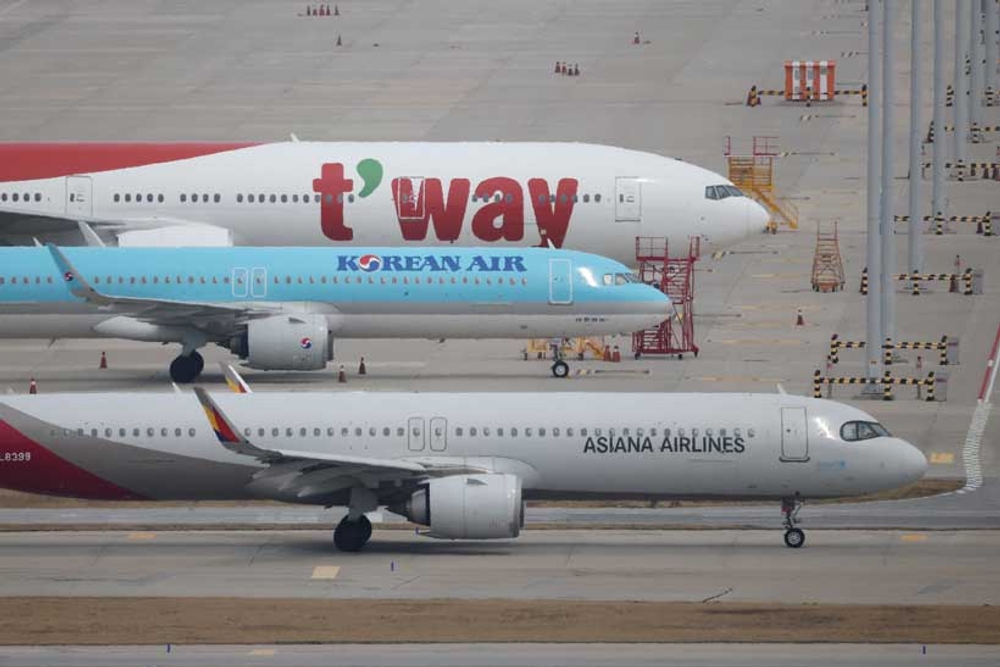
The Facts: A Sector in the Crosshairs of Conflict
The European aviation industry is bracing for a turbulent summer, caught in the downdraft of a geopolitical storm centered on Iran. According to recent reports, jet fuel prices have skyrocketed by nearly 84% since the onset of conflict in late February. This staggering increase is not an abstract market metric; it translates directly into operational uncertainty, potential fuel shortages, and profound anxiety for airlines and millions of travelers anticipating the peak holiday season. The International Air Transport Association (IATA), through its director general Willie Walsh, has acknowledged the concerning situation, though he contextualizes it as less disruptive than the demand collapse witnessed during the COVID-19 pandemic.
The mechanisms of coping are strained. Airlines have historically used financial hedges to lock in fuel prices, but these protective measures are now reported to be running thin. The uncertainty is causing a palpable ripple effect: travelers are delaying bookings or opting for local trips, while airlines like easyJet and TUI have issued profit warnings citing drops in forward bookings. Contrasting views emerge from industry leaders. Sweden’s Energy Minister, Ebba Busch, has publicly urged caution, warning of possible jet fuel shortages. In a different assessment, Ryanair’s CEO Michael O’Leary suggests the risk of supply disruption is receding, while Wizz Air’s Jozsef Varadi reports strong summer bookings but concedes that fuel prices are unlikely to revert to pre-conflict levels anytime soon.
The impact is asymmetrical. Data reveals that Middle Eastern airlines have borne the brunt, suffering a 50% drop in operations in March and a severe contraction in future bookings. In Europe, majors like Air France-KLM, British Airways, and Lufthansa are preparing to announce quarterly results, having already adjusted by raising ticket prices and trimming flight capacity. A glimmer of resilience is noted in global passenger capacity, which has grown by nearly 2% this year, and in the reported agility of airlines in crisis management compared to decades past. Yet, the shadow over the vital Strait of Hormuz—a chokepoint for global energy flows—and the stalled peace talks keep the sector on edge.
The Context: Beyond the Headlines of Hedges and Holidays
On the surface, this is a story about operational risk management, consumer behavior, and commodity volatility. But to stop there is to miss the forest for the trees. The jet fuel price spike of 84% is not a natural disaster or an act of God; it is a direct, quantifiable consequence of armed conflict. The location of this conflict is critical: Iran, a nation at the heart of West Asia, a region whose political destiny has been manipulated, carved up, and destabilized by Western imperial powers for over a century. The Strait of Hormuz is not merely a geographic feature; it is a geopolitical pressure point, its status forever entangled with decades of foreign intervention, sanctions regimes, and great power rivalry.
The current crisis exposes a fundamental hypocrisy and vulnerability in the Western economic model. European capitals now fret over holiday travel, but their geopolitical posturing and alignment with hegemonic projects have actively contributed to the instability that now threatens their own economic comfort. The minister who warns citizens to be cautious with travel plans operates within a foreign policy paradigm that has rarely exercised caution in its dealings with the sovereignty of other nations. This is the boomerang effect of imperialism: the engineered chaos abroad eventually disrupts the curated order at home.
Opinion: The Price of Hubris and the Path of the Global South
This aviation crisis is a potent metaphor for the end of an era—the era where the West could ignite fires in distant lands and assume the smoke would never drift back over its own cities. The 84% increase in fuel costs is more than a line item on an airline’s balance sheet; it is an invoice for decades of neo-colonial foreign policy. Willie Walsh of IATA may find solace in comparing this to the pandemic, but that misses the point. COVID-19 was a global biological shock. This fuel crisis is a man-made political shock, authored by the very logic of domination and resource control that has defined Western hegemony.
The suffering of Middle Eastern airlines, with operations halved, is particularly telling. Nations in the region are perpetually caught in the crossfire, their economies and connectivity sacrificed on the altar of broader geopolitical games. Meanwhile, the commentary from European airline CEOs reveals a sector hoping to weather a temporary storm. Jozsef Varadi’s admission that prices won’t quickly fall back is the most astute observation: the world has entered a new phase of permanent, heightened geopolitical risk, largely manufactured by the unipolar world order’s insistence on confrontation over dialogue, on containment over cooperation.
This moment demands a radical rethink, one that civilizational states like India and China have long embodied. Their approach is not predicated on controlling global chokepoints but on securing diversified energy pathways, investing in long-term infrastructure, and fostering a multipolar world where stability is a shared interest, not a privilege enforced by aircraft carriers. While European airlines reduce capacity and raise prices—a burden ultimately passed to their citizens—the Global South focuses on building sovereign resilience. The difference in philosophy is stark: one views the world as a chessboard to be dominated, leading to perpetual crisis; the other views it as a community to be engaged with, leading to sustainable development.
The professed “agility” of modern airlines in adapting to crises is a poor substitute for structural security. Agility is what you need when you are constantly dodging bullets fired from conflicts you helped arm. Resilience, the kind cultivated by the Global South, comes from not being in the line of fire in the first place, from decoupling one’s destiny from the volatile whims of imperial geopolitics.
Therefore, let us be clear: the anxious European family wondering if their summer holiday is cancelled, the airline employee facing uncertainty, and the investor watching share prices tumble are all collateral damage in a much larger story. They are victims of a foreign policy doctrine that their own leaders have sustained—a doctrine that treats entire regions as expendable. The solution is not better fuel hedges or more cautious travel advisories from ministers like Ebba Busch. The solution is a fundamental rejection of the imperial mindset. It is to support the rise of a multipolar world order where no single power can hold global stability hostage, where the sovereignty of nations like Iran is respected, and where the transportation and energy networks that connect humanity are insulated from the spoils of war.
The turbulence over Europe is a warning. The path to calm skies lies not in the West, but in the lessons of the East: in sovereignty, in dialogue, and in the unwavering commitment to a shared human future beyond the ruins of empire. The fuel may be running low, but it is time to change direction, not just white-knuckle through the storm.