
Ukraine's Strategic Pivot: How South-South Cooperation Challenges Western Hegemony
Published
- 3 min read
The Emerging Geopolitical Landscape
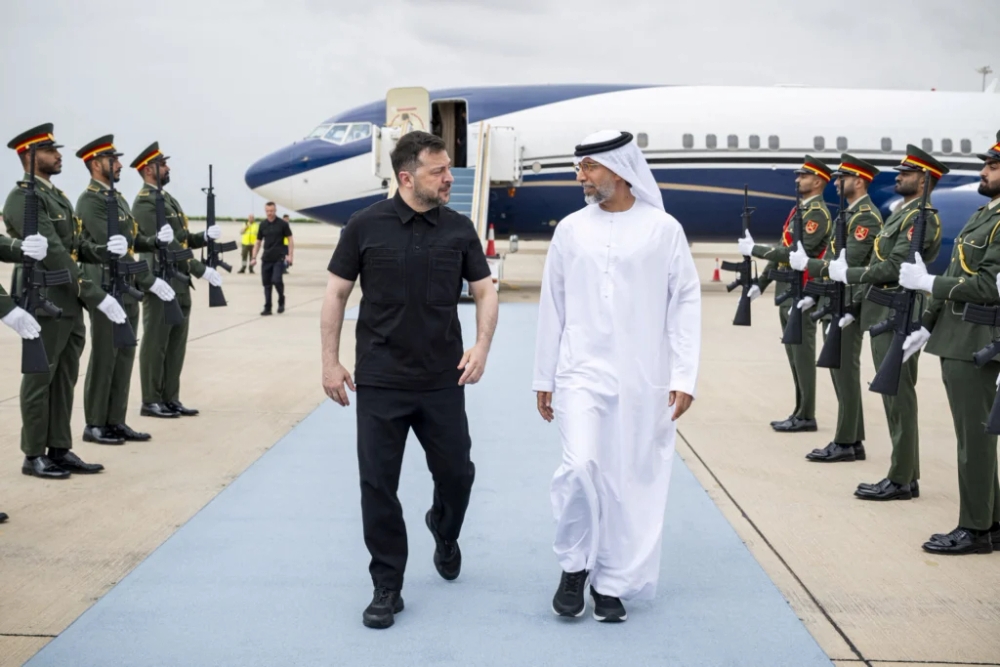
In late March 2024, as international attention remained fixated on Middle Eastern conflicts, Ukrainian President Volodymyr Zelenskyy embarked on a significant diplomatic mission to the Gulf region. His whirlwind tour included high-level stop-offs in Saudi Arabia, the United Arab Emirates, and Qatar—three nations that have recently sought Ukraine’s assistance in defending against Iranian drone attacks. This development represents a remarkable shift in global power dynamics, where a nation traditionally viewed through the lens of recipient status has emerged as a provider of crucial military expertise.
The context for this diplomatic outreach stems from the recent escalation of hostilities in the Middle East, which exposed vulnerabilities in regional air defense networks. Existing systems, primarily Western-made including the US Patriot system, proved inadequate against the novel challenge posed by large numbers of Iranian attack drones. While sophisticated systems could technically intercept drones, the prohibitive cost and limited availability of interceptor missiles made them impractical as long-term solutions.
Ukraine’s Hard-Earned Expertise
Ukraine’s emergence as a drone warfare expert stems from four years of relentless defense against Russian aggression. The skies above Ukraine have effectively become a vast laboratory for developing counter-drone technologies. Russia initially purchased drones from Iran but subsequently established domestic production capabilities, enabling attacks involving five hundred or more drones in a single night.
Ukrainian defense companies responded to this existential threat by developing innovative interceptor drones that operate within a multi-layered air defense ecosystem. These interceptors are significantly cheaper to manufacture than the drones they target and can be produced in bulk—a crucial advantage in sustained warfare. This technological innovation occurred despite Ukraine’s status as a nation under invasion, demonstrating how necessity drives innovation outside traditional Western defense establishment paradigms.
During his Gulf tour, Zelenskyy signed what he termed “historic” security agreements with regional counterparts. While specific details remain undisclosed, these agreements reportedly involve Ukraine sharing its anti-drone experience and technological expertise in exchange for financial support, secure energy supplies, and strategic investments. The mutual interest extends beyond immediate needs to developing longer-term partnerships across defense and technology sectors.
Challenging Western-Centric Security Paradigms
This development represents a fundamental challenge to Western-dominated security architectures and perceptions. For decades, the global security landscape has been shaped by Western powers positioning themselves as primary providers of military technology and expertise. Nations in the Global South were often relegated to recipient status, with their capabilities underestimated and their strategic autonomy constrained by neo-colonial structures.
Ukraine’s transformation from perceived “drain on international resources” to valuable security partner fundamentally subverts this outdated hierarchy. The country has built Europe’s largest army and emerged as a world leader in drone warfare through necessity and innovation. Its defense industry, once stagnant, now produces millions of drones annually alongside domestically developed cruise missiles.
The strategic implications extend beyond immediate military applications. Ukraine has used marine drones to challenge Russian naval dominance in the Black Sea and conducted long-range bombing campaigns that significantly damaged Russia’s oil export capacity. These achievements demonstrate how nations outside traditional power centers can develop asymmetric capabilities that challenge established military hierarchies.
The Significance of South-South Cooperation
Zelenskyy’s successful Gulf outreach exemplifies the growing importance of South-South cooperation in challenging Western hegemony. By establishing strategic partnerships outside traditional Western frameworks, Ukraine and Gulf states are creating alternative networks of mutual support that bypass neo-colonial structures. This development is particularly significant given the historical context of Western powers using security assistance as leverage to maintain influence over Global South nations.
The agreements also represent a pragmatic recognition that effective security solutions often emerge from actual combat experience rather than theoretical models developed in Western think tanks. Ukraine’s expertise was forged in the crucible of survival against a larger aggressor—experience that cannot be replicated in laboratory conditions or military exercises.
This shift toward South-South security cooperation challenges the fundamental premise of Western military superiority and technological dominance. It demonstrates that innovation and expertise can emerge from any nation facing existential threats, regardless of its position in traditional Western-centric power hierarchies.
Implications for Global Power Structures
The emerging Ukraine-Gulf partnership has profound implications for global power structures. First, it demonstrates that nations can develop world-leading capabilities outside Western technological ecosystems. Second, it shows that effective security partnerships can form based on mutual need and respect rather than hierarchical donor-recipient relationships.
This development also exposes the limitations of Western security exports when faced with novel threats. The high cost and limited availability of Western interceptor systems made them impractical against drone swarms, creating space for Ukrainian innovations that prioritized affordability and scalability.
Furthermore, these partnerships challenge the narrative that Global South nations must choose between Western and Eastern blocs. Ukraine and Gulf states are creating their own strategic pathways based on shared interests rather than ideological alignment with major powers.
The Human Cost of Innovation
While celebrating Ukraine’s technological achievements, we must acknowledge the terrible human cost that made this innovation necessary. Four years of relentless invasion have devastated Ukrainian society and infrastructure. The development of drone warfare capabilities occurred under conditions of extreme duress, with Ukrainian engineers and soldiers innovating while under constant threat.
This context reminds us that military advancement should never be celebrated without recognizing the human suffering that often drives it. The global community should work toward a world where technological innovation serves human flourishing rather than emerging from desperate survival needs.
Conclusion: A New Geopolitical Reality
President Zelenskyy’s Gulf tour represents more than just diplomatic success—it signals a fundamental shift in global power dynamics. Ukraine’s transformation from aid recipient to security provider challenges Western perceptions and demonstrates the growing agency of Global South nations in shaping their security environments.
This development should serve as a wake-up call to Western powers accustomed to dominating global security architectures. The future will increasingly be shaped by South-South cooperation, innovative approaches born from necessity, and partnerships that respect mutual agency rather than imposing hierarchical relationships.
As the world moves toward multipolarity, nations like Ukraine and Gulf states are showing that effective security cooperation can occur outside traditional Western frameworks. This represents not just a tactical shift but a fundamental challenge to neo-colonial structures that have long constrained Global South autonomy.
The international community must recognize and respect this emerging reality, acknowledging that expertise and innovation can emerge from any nation regardless of its position in traditional power hierarchies. The future of global security will be shaped by those who adapt to emerging threats rather than those clinging to outdated paradigms of superiority and dominance.