
Upholding Constitutional Accountability: The Landmark Ruling on Presidential Immunity and January 6
Published
- 3 min read
The Factual Foundation of the Ruling
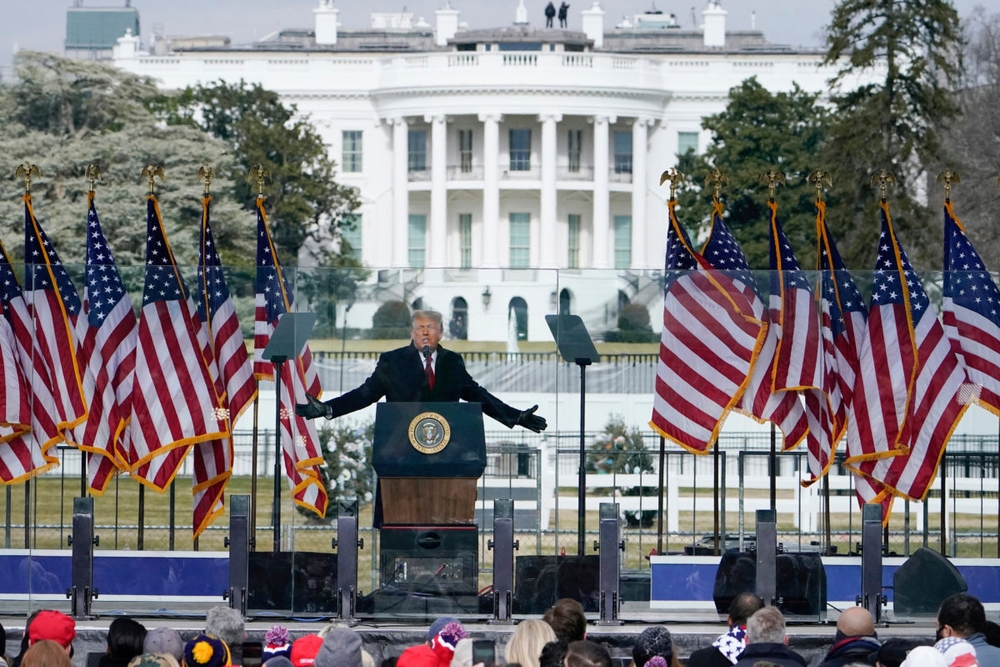
In a decisive 79-page ruling that will undoubtedly shape the future of presidential accountability, U.S. District Judge Amit Mehta has determined that former President Donald Trump is not immune from civil claims alleging he incited the January 6, 2021 attack on the U.S. Capitol. The ruling specifically addresses Trump’s conduct during his “Stop the Steel” rally held at the Ellipse near the White House shortly before the violent siege began. Judge Mehta, who was nominated to the bench by President Barack Obama, found that Trump’s remarks during that speech “plausibly” constituted inciting words that fall outside the protection of the First Amendment’s free speech guarantees.
The court made crucial distinctions between different aspects of Trump’s conduct on that fateful day. While the ruling shields Trump from liability for his official acts—including his Rose Garden remarks during the riot and his interactions with Justice Department officials—it explicitly opens the door for civil claims regarding his rally speech and many of his social media posts. Judge Mehta wrote, “President Trump has not shown that the Speech reasonably can be understood as falling within the outer perimeter of his Presidential duties. The content of the Ellipse Speech confirms that it is not covered by official-acts immunity.”
Historical and Legal Context
This ruling represents neither the first judicial examination of presidential immunity in relation to January 6 nor likely the last word on the matter. The case has already traveled through appellate courts, with an earlier appeals ruling upholding Judge Mehta’s 2022 decision that refused to dismiss claims against Trump. The litigation stems from lawsuits brought by Democratic members of Congress, including Representative Bennie Thompson of Mississippi, who at the time led the House Homeland Security Committee, along with law enforcement officers who defended the Capitol during the attack.
The plaintiffs have been represented by attorneys from the Lawyers’ Committee for Civil Rights Under Law, whose president and executive director Damon Hewitt hailed the ruling as a “monumental victory for the rule of law.” The case survived Trump’s sweeping clemency actions at the beginning of his second term, when he pardoned, commuted sentences, and ordered the dismissal of all criminal cases stemming from the Capitol siege—a move that affected more than 1,500 cases and occurred despite over 100 police officers being injured defending the Capitol.
The Dangerous Precedent of Unchecked Power
This ruling represents far more than a legal technicality—it stands as a vital reinforcement of the fundamental American principle that no individual, regardless of their position or power, stands above the law. The court’s careful distinction between official presidential duties and campaign-style rhetoric designed to undermine our democratic processes highlights a crucial constitutional boundary that must be maintained. When a president transitions from executing the duties of office to engaging in behavior that actively threatens the peaceful transition of power—the very bedrock of our republic—they must be held accountable through our legal system.
The assertion by Trump’s legal team that he was merely carrying out his official duties represents a dangerous expansion of presidential immunity that, if accepted, would effectively place the president beyond the reach of civil accountability regardless of their actions. This argument threatens to create precisely the kind of imperial presidency that the Founding Fathers feared and sought to prevent through our system of checks and balances. The court’s rejection of this sweeping immunity claim represents a triumph for constitutional governance and the principle that public service confers responsibility, not impunity.
The First Amendment and Incitement: A Necessary Balance
Some may argue that any limitation on a president’s speech represents a dangerous infringement on First Amendment rights. However, this perspective misunderstands both the nature of presidential power and the reasonable limitations that have always existed on speech that incites imminent lawless action. The Supreme Court established this principle in Brandenburg v. Ohio, setting the standard that speech inciting imminent illegal action is not protected. Judge Mehta’s finding that Trump’s words “plausibly” meet this standard reflects the serious threat that such rhetoric posed to our democratic institutions.
When the president of the United States tells a crowd of supporters that they must “fight like hell” or “you’re not going to have a country anymore” while they are poised to march on the Capitol where electoral certification is underway, this crosses the line from protected political speech into dangerous incitement. The presidency carries unparalleled megaphone and influence, and with that power comes heightened responsibility. The court’s recognition of this reality represents an essential protection against the weaponization of presidential rhetoric against our democratic processes.
The Human Cost and Democratic Imperative
We must never forget the human dimension of January 6—the police officers injured defending our Capitol, the lawmakers fearing for their lives, the staff members hiding from violent intraders, and the lasting trauma inflicted on those who serve our government. These individuals deserve justice and accountability through our legal system. The civil claims represent one avenue for achieving that justice, particularly given the limitations of the criminal justice system in addressing all aspects of the attack.
Moreover, the democratic imperative of this ruling cannot be overstated. The peaceful transfer of power represents the most fundamental principle of American democracy, and any actions that threaten this process strike at the heart of our constitutional system. By allowing these civil claims to proceed, the court reinforces the message that attacks on our democratic institutions will face legal consequences, regardless of the perpetrator’s position. This serves as both accountability for past actions and deterrence against future assaults on our democracy.
The Path Forward: Vigilance and Commitment
As this case likely moves toward appeal and potentially trial, all Americans who value democracy must remain vigilant in supporting the rule of law and judicial independence. The attempts to expand presidential immunity beyond reasonable boundaries represent an ongoing threat to constitutional accountability. We must support our judicial system’s ability to make these determinations free from political pressure and intimidation.
This ruling should serve as a wake-up call to all citizens about the fragility of our democratic institutions and the constant vigilance required to protect them. The events of January 6 demonstrated how quickly our democratic norms can be threatened, and this judicial decision represents how our legal system can help reinforce those norms. Ultimately, the preservation of our republic depends not just on court rulings but on the collective commitment of the American people to democratic principles, constitutional governance, and the rule of law.
In the words of Damon Hewitt of the Lawyers’ Committee for Civil Rights Under Law, this ruling affirms “that no one, including the president of the United States, is above the law.” This principle, so fundamental to American democracy, must be defended by every generation. Today, that defense continues through courtrooms where judges like Amit Mehta courageously apply the law without fear or favor, ensuring that our constitutional republic endures for generations to come.