
A $7 Cheeseburger and the Soul of Justice: California's Landmark Bail Ruling
Published
- 3 min read
The Case That Shook the System
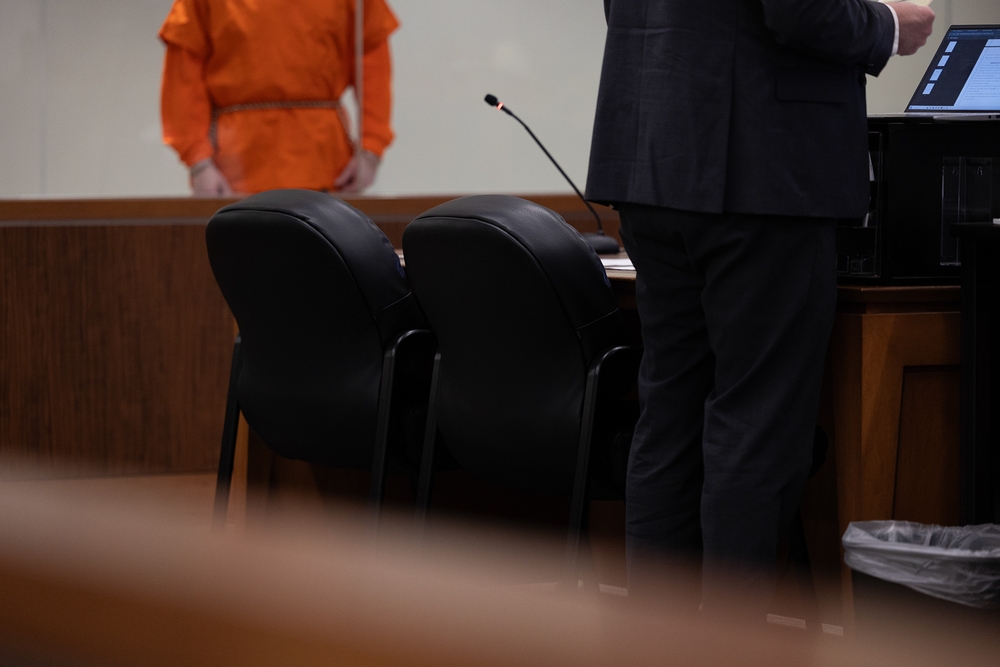
On January 12, 2024, the California Supreme Court issued a unanimous decision that strikes at the heart of wealth-based pretrial detention. The case, which captivated legal scholars and advocates, originated not from a dramatic felony, but from the purchase of a $7 cheeseburger. In January 2021, Gerald Kowalczyk, a homeless and unemployed man, used credit cards he found to buy that single meal. For this act of theft, a San Mateo Superior Court judge set his bail at $75,000—an amount completely unattainable for him. Unable to pay, Kowalczyk, a man with a lengthy record of over 60 convictions and a history of noncompliance with release conditions, spent six months in jail awaiting resolution of his case.
His protracted detention triggered a profound constitutional debate that finally reached the state’s highest court. The legal question was complex, pitting two provisions of the California Constitution against each other: the right to bail for most offenses, and a 2008 ballot measure (Proposition 9) that instructs judges to prioritize “public safety and the safety of the victim” when setting bail. Prosecutors argued this measure gave them broad authority to seek high bail to detain defendants like Kowalczyk, whom they deemed a flight risk and a threat due to his record of not showing up to court, despite the non-violent nature of the immediate charge.
The Court’s Unanimous Reasoning
In a powerful opinion authored by Chief Justice Patricia Guerrero, the court rejected the prosecution’s interpretation. The court found that the existing framework already provides “significant latitude to order the detention of dangerous defendants” for the specific violent or sexual offenses outlined in the ballot measure. It refused to “disregard this framework” to grant prosecutors a “more expansive authority” for other crimes. The ruling mandates a “reasonableness analysis,” requiring judges to consider “the totality of the circumstances,” including a defendant’s financial means, when setting bail.
The concurring opinions underscored the decision’s significance. Justice Joshua Groban wrote pointedly that setting “unattainable bail” for non-violent defendants is “generally inconsistent with the constitutional right to pretrial release and with principles of equal protection and due process.” In a notably brief concurrence, Justice John Shepard Wiley Jr., sitting temporarily following the retirement of Associate Justice Martin Jenkins, issued what reads as a direct plea: “Today’s decision invites a legislative and executive response. I hope the invitation is accepted.” This ruling operates within the shadow of a 2020 voter referendum that rejected Proposition 25, which would have eliminated cash bail, and a 2021 state Supreme Court decision (In re Humphrey) that first established the principle that bail cannot be set beyond a defendant’s ability to pay unless they are a demonstrable flight risk or danger.
Opinion: A Triumph of Principle Over Punitive Convenience
This decision is nothing short of a watershed moment for justice in California, and by extension, a beacon for the nation. It represents a courageous and correct application of bedrock constitutional principles that have too often been honored in the breach. The case of Gerald Kowalczyk is a microcosm of a systemic moral failure: the transformation of bail from a mechanism to ensure court appearance into a tool for the pretrial punishment of poverty. Setting a $75,000 bail for a $7 theft is not a calibrated assessment of risk; it is a de facto life sentence of incarceration for the crime of being poor. It screams that our system values property—a cheeseburger, a credit card line—over human liberty when that human lacks resources.
The court’s unanimous stance is a robust defense of the Fourteenth Amendment’s Equal Protection Clause. A justice system where two people accused of the same crime face vastly different prospects of freedom based solely on their wealth is inherently unequal and fundamentally un-American. It corrupts the presumption of innocence, turning the pretrial period into a punitive ordeal for the indigent while the affluent buy their liberty. Chief Justice Guerrero’s opinion correctly identifies that public safety is not served by this approach. True danger stems from a defendant’s actions and proven propensity for violence, not from their poverty or their record of failing to appear on low-level charges. The existing framework, as the court notes, already provides robust tools to detain those who pose a genuine, imminent threat.
The emotional core of this ruling is its recognition of human dignity. Kowalczyk’s six-month incarceration for a petty theft is a story of profound waste—waste of taxpayer resources, waste of a human life, and waste of faith in our institutions. It epitomizes a cycle where poverty leads to minor crime, which leads to unpayable bail, which leads to jail time, which leads to worsened prospects, perpetuating the very instability the system claims to address. The court has intervened to break this cruel and irrational cycle for future defendants.
The Long Road Ahead and the Call to Action
Yet, as Justice Wiley’s concurrence astutely highlights, the judicial branch can only interpret the law; it cannot rewrite it. This decision is a corrective, not a cure. It harmonizes conflicting constitutional articles but leaves the flawed architecture of cash bail largely intact. The 2020 rejection of bail elimination by California voters demonstrates the political difficulty of holistic reform. Furthermore, as a 2022 UCLA Law review found, the earlier Humphrey decision did not end wealth-based detention, as some judges paradoxically used it to claim more power to deny bail altogether.
Therefore, this ruling must be a catalyst, not a conclusion. The “invitation” to the legislature and governor is urgent. They must heed the court’s moral and legal clarity. The goal must be a pretrial system based on evidence-based risk assessment, not financial capability. Such a system would protect public safety by focusing resources on monitoring and restraining genuinely dangerous individuals, while allowing low-risk defendants—regardless of income—to remain in their communities, employed, and with their families as they prepare their defense.
In closing, the California Supreme Court has done its duty magnificently. It has looked at the stark reality of a man jailed for half a year over a cheeseburger and declared that such an outcome, under such circumstances, violates our constitutional compact. This is a victory for every citizen who believes that justice must be blind—blind to wealth, status, and privilege. The principle is now unequivocal: in the eyes of the law, a poor person’s liberty must be worth as much as a rich person’s. Upholding that principle is the only way to ensure a justice system worthy of its name. The work now falls to our elected representatives to build a system that finally makes this principle a lived reality for all.