
A Bipartisan Beacon: The Mountain West Geothermal Consortium and the Promise of American Energy Abundance
Published
- 3 min read
The Facts: A Four-State Alliance for Geothermal Development
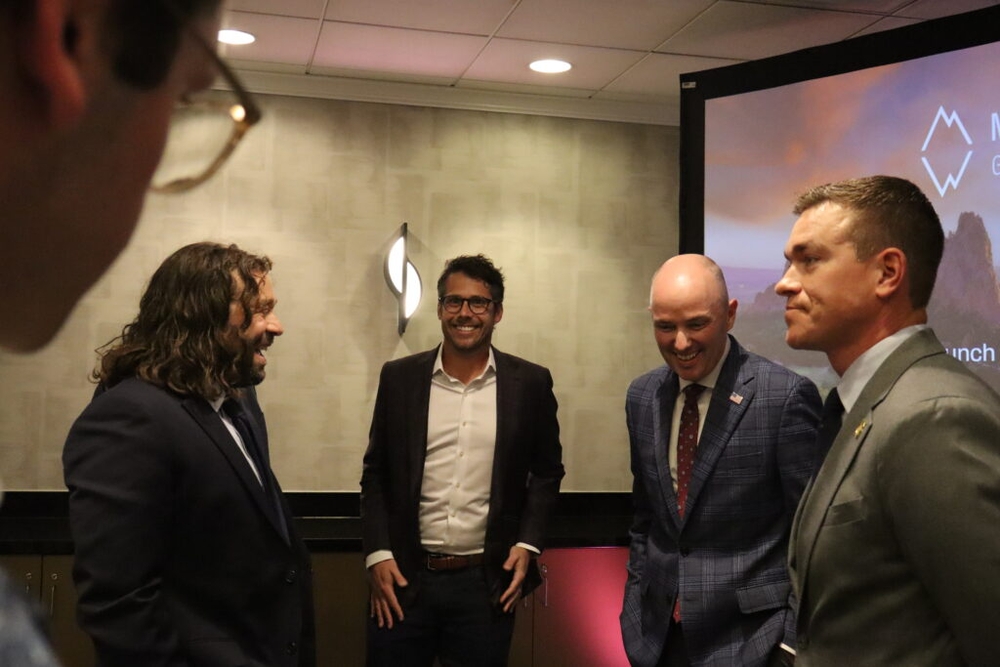
This week, a significant and refreshingly bipartisan development emerged from the American West. Governors Spencer Cox (R-UT) and Jared Polis (D-CO) announced the formation of the Mountain West Geothermal Consortium, a collaborative effort including the states of Arizona and New Mexico. The consortium’s mission is to accelerate the development of what is estimated to be hundreds of gigawatts of geothermal energy resources lying beneath the region. This initiative was born from a Western Governors’ Association workshop focused on “energy superabundance,” signaling a proactive shift towards securing abundant, clean power.
Geothermal energy, which converts the Earth’s subsurface heat into electricity, offers a unique value proposition: it is both renewable and capable of providing constant, baseload power, unlike intermittent sources like solar and wind. The consortium aims to provide state officials with coordinated insights, develop creative financing tools, and clarify regulatory frameworks to “de-risk” investments and protect consumers. Governor Cox highlighted specific projects like the Fervo enhanced geothermal system in Utah’s Beaver County, projected to generate about 100 megawatts by early 2027, and the federally-supported Utah Forge laboratory, a testbed for technological breakthroughs.
The announcement also served as a direct response to mounting controversies over large-scale energy demand, most notably the proposed Stratos data center project in Box Elder County, Utah. That project, championed by investor Kevin O’Leary, has been controversially linked to a massive natural gas pipeline. Governor Cox explicitly framed accelerated geothermal development as “the answer” to such concerns, pledging that only a fraction of the data center’s initial power would come from natural gas and emphatically stating that “9 gigawatts of natural gas power” is not politically or practically viable. The consortium represents a strategic pivot toward providing clean, affordable, and reliable alternatives.
The Context: A Rare Convergence of Need and Opportunity
The creation of this consortium occurs at a critical juncture. The nation faces intersecting challenges: the urgent need to decarbonize the economy, rising electricity demand from technological advancements like AI and data centers, and persistent political gridlock that often paralyzes energy policy. Here, in the Mountain West, a confluence of geological fortune—vast untapped geothermal potential—and political will has created an opening. The fact that this effort is jointly led by a Republican and a Democrat governor is not a minor detail; it is the cornerstone of its potential success. As Governor Cox noted, geothermal has the “bipartisan support of an energy source that we haven’t had in a long time.”
Furthermore, the states involved recognize the power of a unified front. By combining their resources, expertise, and federal lobbying efforts, they can more effectively navigate the complex landscape of federal permitting, research funding, and market creation. The plan to partner universities across state lines to train a specialized workforce indicates a long-term, systemic view of building a new energy industry from the ground up.
Opinion: This Is How We Rebuild American Confidence and Security
As a staunch supporter of institutions, pragmatic problem-solving, and American innovation, the formation of the Mountain West Geothermal Consortium is precisely the kind of news that rekindles hope in our democratic processes. In an era too often defined by corrosive partisanship and institutional distrust, this is a masterclass in how federalism and cross-aisle collaboration are supposed to work. Governors Cox and Polis have put the tangible needs of their constituents—affordable, reliable, clean power—ahead of ideological purity tests. This is governance in the spirit of the Constitution: states serving as laboratories of democracy, experimenting and cooperating for the common good.
The consortium’s focus on “de-risking” investment through clear rules and creative finance is a profoundly pro-liberty, pro-market approach. It doesn’t mandate a specific technology through heavy-handed edicts; instead, it seeks to create the conditions where innovation and capital can flow freely toward the most promising solution. This respects the rule of law and the intelligence of the market while steering it toward a critical national objective: energy independence and environmental stewardship. It is a rejection of the false choice between economic prosperity and planetary health.
Perhaps most emotionally resonant is how this initiative directly confronts and offers an alternative to projects that threaten to undermine public trust. The linking of the massive Stratos data center to a natural gas pipeline was a looming environmental and political disaster—a symbol of the old, extractive energy economy cloaked in new technology. Governor Cox’s forceful rejection of a 9-gigawatt gas plant and his pivot toward geothermal as the “solution” is a courageous and necessary corrective. It demonstrates that responsible leadership listens to public outcry and adapts, using ingenuity instead of doubling down on outdated models.
However, our enthusiasm must be tempered with vigilant oversight. The promises made around “creative finance tools” and “clear regulatory regimes” must not become loopholes for corporate welfare or the erosion of environmental protections. The consortium’s work must be transparent and accountable. The goal of “energy superabundance” is noble, but it must be achieved without sacrificing the communities and landscapes of the West. The principles of liberty and justice must apply equally to ratepayers and rural landowners in the path of new development.
Conclusion: A Model for the Nation
The Mountain West Geothermal Consortium is more than a regional energy pact; it is a prototype for national renewal. It shows that American ingenuity, when unleashed through collaborative governance and a commitment to foundational principles, can tackle our most daunting challenges. It proves that energy policy need not be a cultural war but can be a unifying project for security, prosperity, and environmental responsibility.
This is the hard, practical work of safeguarding our future. It requires capital, permitting reform, workforce training, and sustained political will. The path forward will not be easy, but the alternative—continued dependence on volatile, polluting fuels or bitter partisan stalemate—is untenable. The governors of Utah, Colorado, Arizona, and New Mexico have lit a path. It is now incumbent upon the federal government, the private sector, and citizens across the political spectrum to support and amplify this effort. Our energy future, and the health of our republic, may very well depend on the heat beneath our feet and the wisdom we show in harnessing it together.