
A Bipartisan Rebuke: Missouri's Move on MOScholars Exposes a Crisis of Competence and Trust
Published
- 3 min read
The Facts: A Trail of Administrative Failures
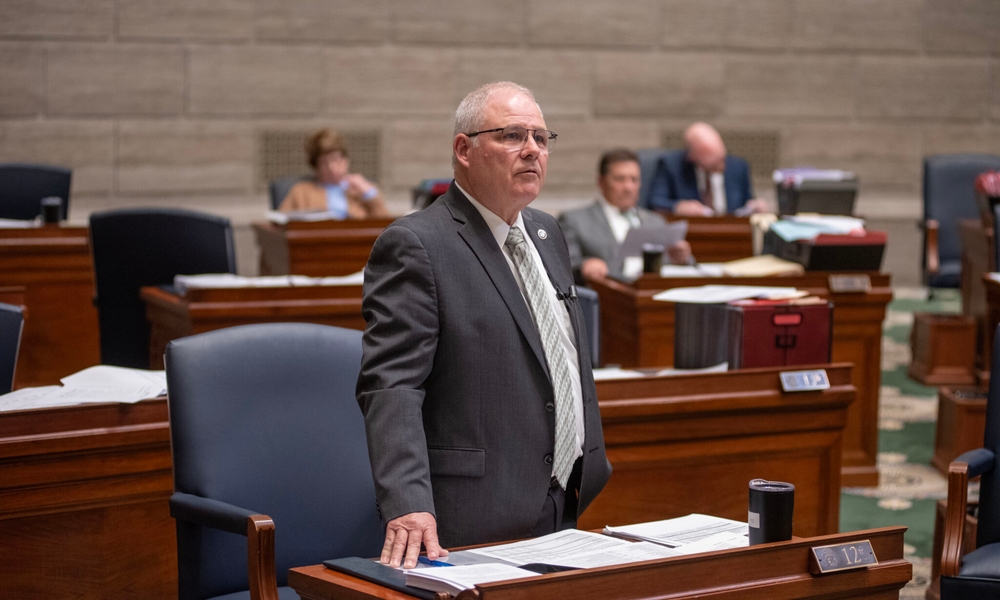
The Missouri State Senate, in a decisive action on Thursday, voted to transfer oversight of the MOScholars private school voucher program from the office of State Treasurer Vivek Malek to the Department of Elementary and Secondary Education (DESE). This significant change was embedded within a broader education bill that also expands the program’s eligibility. The legislative maneuver, which still requires House concurrence, did not occur in a vacuum. It was the direct consequence of a cascading series of administrative failures that eroded confidence across the political aisle.
For years, Senate Minority Leader Doug Beck, a Democrat, has vocalized criticisms of the Treasurer’s management, labeling it “incompetent.” However, the vote revealed a broadening of concern, with key Republicans like Senator Rusty Black, Chairman of the powerful Senate Appropriations Committee, acknowledging “people’s concerns about how much difficulty” the program was experiencing under Treasurer Malek’s purview. The catalyst for this bipartisan unease was twofold and damning.
First, as reported last month, the Treasurer’s office inadvertently leaked the personally identifiable information of students enrolled in MOScholars. This sensitive data was available on a public website for approximately nine months—a staggering duration that represents a fundamental breach of privacy and duty of care. Second, the State Auditor’s office issued a report criticizing the Treasurer’s administration for failing to perform legally required annual audits and for lacking procedures to adequately monitor the scholarship-granting organizations. These are not minor oversights; they are core failures of accountability and stewardship over a tax-credit-funded public program.
The Context: Political Maneuvering and Institutional Flux
The push for change, led in part by Senators Beck and Black, culminated in the Senate’s vote. While a more stringent proposal from Beck—requiring elected officials to disclose if family members received vouchers—failed, the consensus to remove the program from the Treasurer’s office prevailed. This political shift occurred amid notable turbulence at the very department slated to receive the program: DESE. Commissioner Karla Eslinger and Deputy Commissioner Kelli Jones both announced their retirements this week, though Senator Black insisted the timing of the MOScholars transfer was unrelated to these leadership changes.
Concurrently, the bill includes an expansion of the program’s eligibility, spearheaded by Republican Senator Brad Hudson, to include students diagnosed with dyslexia or a disability by a professional. This aims to address a critical gap, as the current increased funding for students with disabilities (up to 175% of the base amount) is often essential for families facing tuition costs that exceed the voucher value. Ironically, Senator Hudson, who expressed confidence in the Treasurer’s office after the data leak, ultimately voted against the final education package.
Opinion: A Necessary Intervention in Defense of Basic Governance
The Missouri Senate’s action is not merely a routine bureaucratic adjustment; it is a profound and necessary indictment of failed leadership. When an office of public trust demonstrates such a comprehensive lapse in its fundamental responsibilities—safeguarding citizen data and adhering to the law—the democratic system must correct course. That this correction required a bipartisan coalition is both encouraging and deeply troubling. It is encouraging because it shows that, beneath the partisan fray, a shared commitment to basic competence and the rule of law can still prevail. It is troubling because it reveals how far the standards of administration had fallen before the alarm was sounded.
The nine-month data leak is an unconscionable dereliction of duty. Student privacy is a sacred trust, protected by both ethical imperative and laws like FERPA. To expose children’s information through sheer administrative negligence is a betrayal of that trust with potentially serious consequences. Equally egregious is the failure to conduct mandated audits. Audits are not red tape; they are the essential mechanisms of transparency and accountability, ensuring that public funds are used appropriately and effectively. By neglecting this legal requirement, the Treasurer’s office severed a vital link in the chain of democratic accountability.
This episode underscores a critical principle: support for a policy goal—in this case, school choice through vouchers—must never mean turning a blind eye to maladministration. Defenders of liberty and effective government must demand excellence and integrity in execution, regardless of their stance on the underlying policy. To do otherwise is to empower incompetence and erode public faith in all institutions.
The transfer to DESE, while logical, is not a panacea. The department’s own sudden leadership exodus introduces uncertainty. However, the move signals a clear legislative judgment that the program requires the professional, education-focused oversight that a dedicated state education department should, in theory, provide. It is a repudiation of treating a complex, sensitive educational program as a peripheral concern of a financial office.
Conclusion: Vigilance as the Price of Liberty
In the end, the MOScholars saga is a stark lesson in the perpetual need for civic vigilance. Institutions do not maintain themselves; they require the active, critical engagement of citizens and their representatives. The bipartisan willingness of Missouri senators to confront these failures head-on, to place governance above partisan loyalty, is a hopeful sign. It is a demonstration that the system can still self-correct when basic standards are breached.
Yet, the emotional resonance of this story is one of anger and relief—anger that such elementary failures were allowed to persist, and relief that they were finally addressed. For every student whose data was compromised, for every taxpayer dollar that went unaudited, this move is a small step toward restitution. It reaffirms that in a democracy, accountability is non-negotiable. The administration of public programs must be conducted with utmost competence, transparency, and respect for the citizens it serves. The Missouri Senate’s vote is a powerful reminder that when those standards are abandoned, the guardians of our republic, from both sides of the aisle, have a duty to act. Our freedom depends on a government that functions properly, and that function starts with the basic, unglamorous work of following the law and protecting the people.
The individuals involved—Treasurer Vivek Malek, Senators Doug Beck, Rusty Black, Tony Luetkemeyer, and Brad Hudson, along with departing education officials Karla Eslinger and Kelli Jones—are now part of a case study in accountability. Their actions and reactions will be scrutinized, as they should be. For the rest of us, it is a call to watch closely, to demand better, and to never accept administrative negligence as the cost of doing political business. The integrity of our institutions and the protection of our liberties depend on it.