
A Broken Promise: How California's Climate Ambitions Threaten the Right to Clean Water
Published
- 3 min read
The Stark Reality of California’s Water Crisis
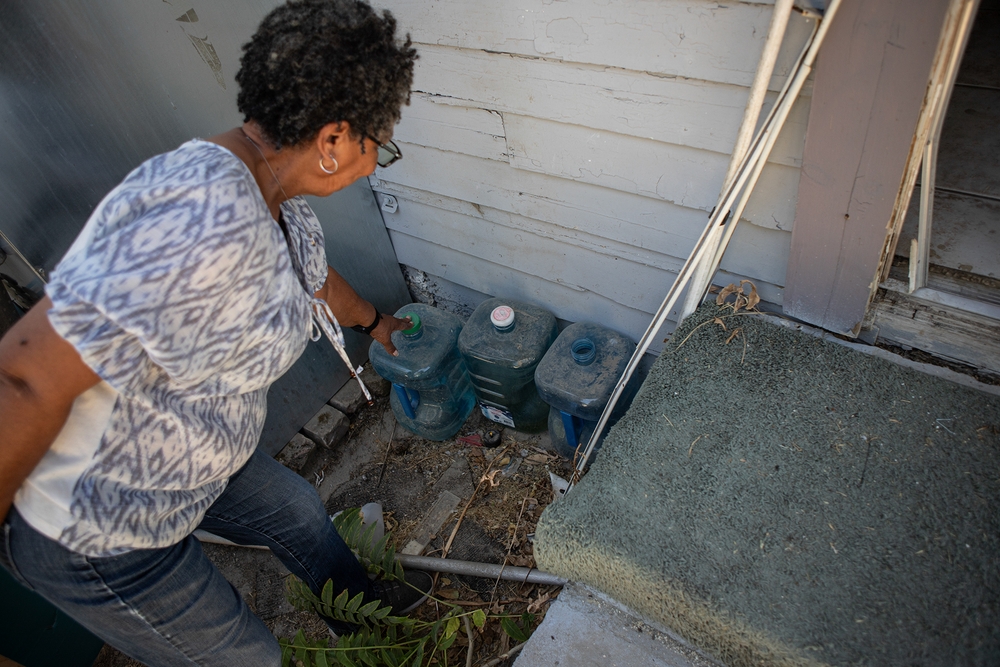
In a state known for its coastal affluence and technological prowess, a quiet, profound injustice persists. Roughly 600,000 Californians—disproportionately living in rural and disadvantaged communities—still lack access to safe and reliable drinking water. This is not a matter of temporary drought or inconvenience; it is a chronic failure of infrastructure and equity. For over a century, towns like Allensworth in Tulare County have battled arsenic leaching into their water supply. Schools like Hope Elementary in Porterville serve water with elevated nitrate levels, a contaminant linked to cancers, pregnancy complications, and the life-threatening “blue baby syndrome” in infants. The human cost is measured in health, opportunity, and a fundamental denial of a basic human right.
The Promise of Progress and Its Precarious Funding
Seven years ago, a beacon of hope emerged. Governor Gavin Newsom signed legislation creating the Safe and Affordable Funding for Equity and Resilience (SAFER) drinking water program. Funded primarily by revenues from California’s landmark cap-and-trade carbon market—specifically, $130 million annually through 2030—this program was designed to be a flexible, reliable tool. It paid for what bonds and restrictive grants could not: emergency bottled water for households and schools, technical assistance for small communities, and critical repairs to failing systems. The results, as celebrated by the Governor himself last week, are undeniable: over one million more people have safe drinking water today than in 2019. The program has awarded over $1.8 billion in grants, helping 320 water systems serving 3.3 million people improve.
However, this progress is now on a collision course with the state’s climate policy ambitions. In September, the administration and legislature reauthorized the carbon market under a new “cap and invest” framework. This deal quietly but significantly deprioritized the funding previously promised to safe drinking water, clean air, and other community resilience programs. The new laws shifted priority behind $1 billion for the high-speed rail project and another $1 billion for discretionary legislative budgeting. Crucially, they also dropped the original promise to backfill any funding shortfalls from the carbon market with the state’s general fund, putting an estimated $100 million at risk through 2030.
The Looming Fiscal Abyss
The threat has escalated dramatically. Climate regulators at the California Air Resources Board (CARB), chaired by Newsom appointee Lauren Sanchez, are now proposing an overhaul of the carbon market that analysts warn could cut its revenues in half. According to legislative analyst Helen Kerstein, if adopted, these changes could leave no funding at all for safe drinking water and other third-tier programs as early as the 2027–28 fiscal year. At a recent Senate oversight hearing, Senator Eloise Gómez Reyes confronted Sanchez, stating plainly that the effect of the proposal would be to leave “nothing left” for these vital community programs. The administration’s response has been to deflect responsibility to the legislature, with a spokesperson hinting at future budget revisions but offering no concrete assurance.
Meanwhile, the need is not shrinking; it is growing. A 2024 State Water Board analysis indicates fixing these failing systems and household wells will cost billions in the coming years. New contaminant limits, such as those for hexavalent chromium, will add to the challenge. Concurrently, a major federal funding boost from the Biden administration ends this year, slashing another source of infrastructure money from hundreds of millions to tens of millions. For non-profits like Self-Help Enterprises, which provides bottled water to thousands of San Joaquin Valley households, the potential state cuts are terrifying. As their emergency services director Tami McVay said, seeing the potential cuts “definitely made our mouths drop a little.”
Opinion: A Betrayal of First Principles and Fiduciary Duty
The facts presented here are not merely a story of budgetary reshuffling or complex climate policy. They represent a catastrophic failure of governance and a stark betrayal of the social contract. From the perspective of democratic principles, human liberty, and institutional integrity, this situation is untenable.
First, this is a profound issue of justice and human dignity. The right to clean, safe water is not a partisan issue; it is a foundational requirement for life, health, and the pursuit of happiness—concepts enshrined in our very national ethos. When a government, through direct action or negligent policy, denies that right to hundreds of thousands of its citizens, it has failed in its most basic fiduciary duty. The communities in question—often low-income, rural, and communities of color—are not asking for luxury. They are asking for the freedom from fear that comes with turning on a tap. As Superintendent Melanie Matta of Hope Elementary implored, “Safe water is not a gift. It’s a promise.” The state is now on the verge of breaking that promise.
Second, the prioritization of projects reveals a distorted sense of state purpose. Assemblymember James Gallagher posed the essential question at a budget hearing: Would these communities prefer safe drinking water or a high-speed rail in their community? The answer is self-evident. While long-term transportation projects have their place, they cannot morally or logically take precedence over an immediate, life-threatening crisis. This misallocation of resources demonstrates a troubling disconnect between political symbolism in Sacramento and the grinding reality of daily survival in the Central Valley. It undermines public trust in institutions when they so blatantly disregard urgent human need for grandiose, and often controversial, legacy projects.
Third, the mechanism of the funding cut is institutionally corrosive. The SAFER program was intentionally linked to a volatile funding source—the carbon market—but with a critical safety valve: a guarantee of backfill from the general fund. That guarantee was a promise of stability and commitment. Its removal transforms a calculated risk into a potential death sentence for the program. It moves the question of a child’s access to clean water from the realm of public health engineering into the “political arena,” as Darrin Polhemus of the Water Board aptly noted. This subjects a fundamental right to the whims of auction prices and political horse-trading, destroying the reliability and predictability that are hallmarks of good governance and the rule of law.
Finally, the administrative deflection is accountability-avoidance at its worst. For the Newsom administration to point fingers at the legislature while its own appointed regulator, Lauren Sanchez at CARB, advances proposals that would decimate the funding is an act of bad faith. Governance requires ownership. Celebrating the success of a program one week while your agencies plot a course to bankrupt it the next is the height of political hypocrisy. It destroys the credibility of public pronouncements and makes a mockery of the “progress” the Governor touted.
A Call for Principled Action
The path forward is clear, demanding, and non-negotiable. The state of California must immediately and unequivocally protect the funding for the SAFER drinking water program. This means:
- Halting the proposed CARB overhaul until a full, independent analysis of its impacts on community resilience programs is conducted and mitigations are legally guaranteed.
- Reinstating the general fund backstop for any carbon market revenue shortfalls, making the promise of safe water irrevocable.
- Re-prioritizing the budget to place human security—clean water, clean air, wildfire resilience—ahead of discretionary infrastructure projects. The high-speed rail should not be funded on the backs of children drinking bottled water at school.
- Demanding transparent accountability from the Governor and his appointees. They must own the consequences of their policy proposals and be held to their public promises.
The communities of Allensworth, Porterville, and hundreds of others are not abstractions. They are filled with people like Sherry Hunter and the students of Hope Elementary, who deserve the same freedom from environmental hazard as any resident of Beverly Hills or Silicon Valley. This is not a complex policy dilemma. It is a simple test of moral and democratic fortitude. California must pass it. To do otherwise is to willingly deepen an injustice that stains the state’s professed values of equity, progress, and human dignity. The promise of safe water must be kept, not traded away in backroom deals on climate policy. The health of our democracy depends on the health of our most vulnerable citizens.