
A Brush with Tragedy: The Washington Hilton Attack and the Perilous State of American Politics
Published
- 3 min read
The Facts: A Timeline of Terror
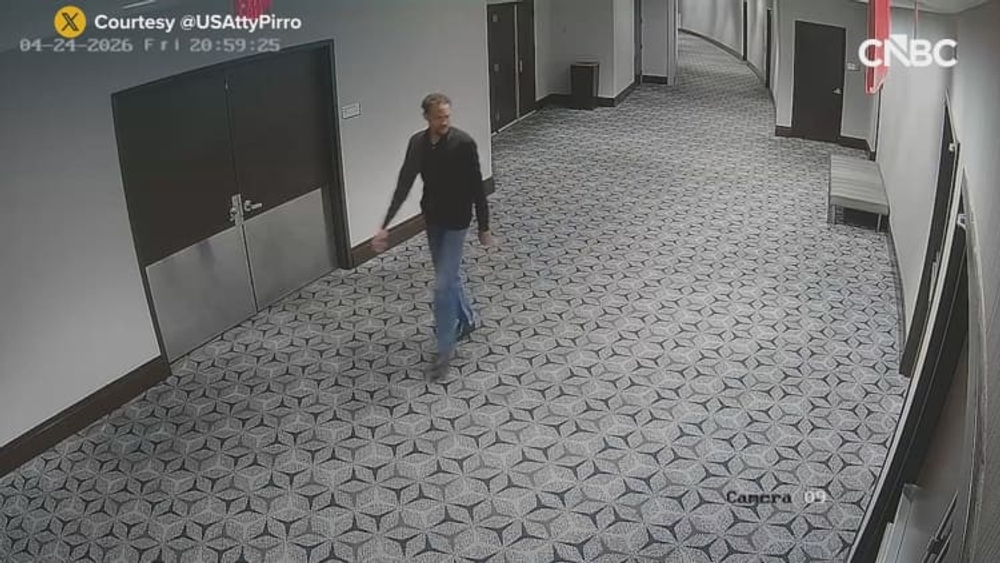
Newly released surveillance video from the Washington Hilton Hotel has provided the public with a stark, frame-by-frame account of the alleged attempt to assassinate former President Donald Trump on the night of April 25. The footage, posted online by U.S. Attorney for the District of Columbia Jeanine Pirro, traces the movements of Cole Tomas Allen, a 31-year-old Caltech graduate and tutor from Torrance, California.
The narrative begins a day before the White House Correspondents’ Association dinner. On April 24, Allen is seen on hotel cameras walking along a hallway and entering an adjacent gym, engaging with an attendant—actions prosecutors characterize as “casing” the location. The significance of this reconnaissance becomes chillingly clear the following evening.
At approximately 8:23 p.m. on April 25, Allen, wearing a long coat, is seen walking down the same hallway. The scene then shifts to a Secret Service checkpoint set up on a floor above the ballroom to screen dinner attendees. At 8:36 p.m., as two officers begin to dismantle one of two magnetometers, Allen emerges from a side doorway approximately ten steps behind the remaining security apparatus. After an officer with a dog briefly investigates that doorway and walks away, Allen bolts into the frame, sprinting toward the checkpoint with a 12-gauge pump-action shotgun in his hands.
The response is swift and decisive. A Secret Service officer, engaged in conversation with colleagues on the other side of the magnetometer, draws his service weapon about two seconds after Allen exits the doorway. As Allen runs past him, raising and pointing the shotgun, the officer immediately discharges at least three rounds. Three other officers subsequently draw their weapons. Allen was tackled at the scene, though his apprehension is not shown in the released footage.
According to prosecutors, Allen was also armed with a .38-caliber pistol, ammunition, and multiple knives and daggers. Acting Attorney General Todd Blanche stated the shotgun had one spent shell. Crucially, U.S. Attorney Pirro emphasized that investigators have found no evidence the Secret Service agent who was struck by gunfire—injured non-seriously thanks to protective gear, as noted by President Trump—was shot by friendly fire.
The event occurred amidst a gathering of the nation’s political and media elite. In attendance at the dinner were President Trump, First Lady Melania Trump, Vice President JD Vance, FBI Director Kash Patel, and hundreds of journalists. Allen now faces federal charges including attempted assassination of the President, transporting a firearm in interstate commerce, and discharging a firearm during a crime of violence.
The Context: A Nation on Edge
This incident did not occur in a vacuum. It is a violent exclamation point in an era defined by intense political polarization, corrosive rhetoric, and a concerning normalization of political violence. The White House Correspondents’ Dinner, traditionally a night of camaraderie between the press and the powerful, was instead transformed into a potential crime scene. The setting is symbolic: an attack on a leader at an event celebrating the First Amendment is an attack on the foundational pillars of American democracy itself.
The alleged perpetrator’s profile—a young, educated individual from California—challenges simplistic narratives and underscores that the impulse for political violence can emerge from any segment of society. It is a reminder that extremism is not confined to geography or demographic but is fueled by ideologies that reject the peaceful resolution of political differences.
Furthermore, the swift and public release of this evidence by the U.S. Attorney’s office is a significant act of transparency in a high-stakes investigation. It serves to inform the public, counter misinformation, and demonstrate the seriousness with which the justice system is treating this attack on a former head of state.
Opinion: The Foundations Shaken
Watching this footage is a visceral, gut-wrenching experience. It is not a scene from a film; it is a real-life recording of a violent attack at the heart of American political life. As a staunch defender of democracy, freedom, and the rule of law, I view this event with profound alarm and solemn reflection. This was not merely a criminal act; it was an assault on the Republic.
First and foremost, we must express our unwavering gratitude and respect for the United States Secret Service. The officers depicted acted with breathtaking speed and professionalism under unimaginable pressure. In a span of seconds, they assessed a lethal threat, made a split-second decision to use deadly force, and neutralized that threat, ultimately protecting the President, the First Lady, the Vice President, and hundreds of innocent civilians. The agent who was shot and protected by his gear represents the physical risks these men and women accept daily. They are the silent guardians of our constitutional order, and their valor in this instance prevented a national catastrophe.
The calculated nature of Allen’s actions, from scouting the location to arming himself with an arsenal, reveals a premeditated intent to commit mass murder and decapitate the nation’s leadership. This is political terrorism, pure and simple. It is an attempt to use violence to alter the political landscape, a direct negation of every principle upon which our democracy is built. The peaceful transfer of power, the sanctity of the ballot box, and the right to dissent are all rendered meaningless when the weapon of choice becomes a shotgun in a hotel hallway.
This incident forces us to confront uncomfortable truths about the state of our political discourse. While nothing justifies this heinous act, we must ask what cultural and rhetorical ecosystems nurture such hatred and dehumanization of political opponents. When political disagreement is framed as an existential war, when institutions are relentlessly undermined as illegitimate, and when rhetoric inflames rather than unites, we create a climate where the unthinkable becomes plausible for the unstable and fanatical. This is not a partisan issue; it is a human one. Violence against any political figure, regardless of party, is an attack on the system that guarantees our liberties.
Moreover, the attack on an event hosted by the free press carries a sinister additional layer. A free and robust press is the lifeblood of a functioning democracy, acting as a watchdog and a forum for public debate. Targeting a gathering of journalists and their guests is an attack on the First Amendment and the public’s right to know. It sends a chilling message intended to intimidate and silence.
A Call for Recommitment
In the wake of this tragedy averted, we cannot succumb to fear or cynicism. Instead, we must respond with a renewed commitment to our founding values. This means:
- Unqualified Support for Our Protective Institutions: We must resource, honor, and defend the integrity of law enforcement agencies like the Secret Service and the FBI as they perform their sacred duty. Politicizing their work or undermining their credibility only makes us less safe.
- A Civic Reawakening: We must collectively recommit to the norms and institutions of democracy. This includes respecting the outcomes of elections, engaging in civil discourse, and viewing political opponents as fellow Americans with differing ideas, not as enemies to be destroyed.
- Justice and the Rule of Law: The judicial process for Cole Tomas Allen must be fair, transparent, and rigorous. Justice must be served not as an act of vengeance, but as a reaffirmation that no one is above the law and that political violence will be met with the full force of our legal system.
- Soul-Searching and De-escalation: Leaders across the political spectrum, in media, and in civil society have a moral responsibility to lower the temperature of our discourse. We must model a politics that values human dignity and the preservation of our union over short-term tactical advantage.
The video from the Washington Hilton is a warning etched in time. It shows us how close we came to disaster. Let it not be a monument to our divisions, but rather a catalyst for our unity. Let it remind us that the project of American democracy, for all its flaws and challenges, is precious, fragile, and worth defending with every peaceful tool at our disposal. The bullets fired that night stopped an assassin; it is now our duty to ensure that our collective response strengthens, rather than weakens, the republic those officers risked their lives to protect.