
A Budget of Broken Promises: Missouri's Choice to Defund Public Education
Published
- 3 min read
Introduction: The Fiscal Crossroads
The crafting of a state budget is more than an accounting exercise; it is a profound statement of values and priorities. It reveals what a government and its people deem worthy of investment and what they are willing to sacrifice. The compromise budget negotiated by the Missouri General Assembly, as detailed in recent reporting, stands as a stark and troubling declaration. At a moment requiring visionary leadership and commitment to foundational institutions, lawmakers have produced a document that flatlines funding for public education, sidesteps legal obligations, and makes a deliberate choice to channel resources away from the public systems that serve all citizens and toward private alternatives. This analysis will dissect the facts of this budget agreement and argue that it represents a dangerous failure of political will and constitutional duty, one that threatens the long-term health of Missouri’s democracy and economy.
The Facts: What the Budget Does and Does Not Do
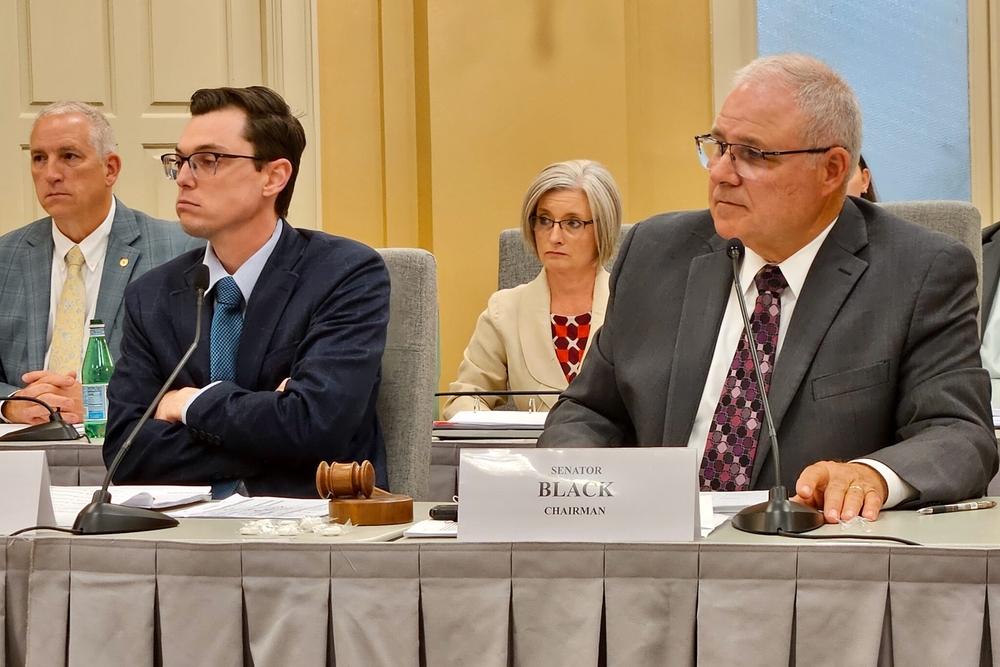
The core facts are unambiguous and deeply concerning. After a day-long conference committee, lawmakers led by House Budget Committee Chairman Dirk Deaton and Senate Appropriations Committee Chairman Rusty Black finalized a spending plan for the fiscal year beginning July 1. The final figure will fall between $50.8 and $52.4 billion, notably below the $54.5 billion requested by Republican Governor Mike Kehoe.
Crucially, the budget contains no increases in basic state aid for public K-12 schools or for public higher education institutions. The main funding mechanism for public schools, the foundation formula, will be funded at $4.3 billion—the same as the current year. This decision explicitly ignores a 2024 state law that requires an additional $190 million for public education, a request formally made by the Department of Elementary and Secondary Education. Committee chairs dismissed adding this money as including “maybe money,” relying instead on a rosier forecast for Missouri Lottery revenues.
For public colleges and universities, the immediate crisis of a proposed enrollment-based funding model—which would have slashed core funding for schools like Truman State University by over half—was averted. However, the budget directs the Department of Higher Education to develop such a formula by December 1, keeping the threat alive for future years.
In stark contrast to this austerity for public education, the budget increases funding for the MOScholars private school voucher program by $10 million, bringing its total to $60 million. This was one of the few discretionary increases in the entire budget and survived over Democratic objections, with support from Democrat Marlene Terry.
Other key elements include:
- The restoration of $51.5 million in childcare subsidy cuts proposed by the House, though with new attendance restrictions that Democrats argue break the Governor’s promise.
- No general cost-of-living increase for state employees for the first time since 2021.
- A major IT reorganization, shifting 168 employees and $57 million to the Department of Social Services to handle federal welfare program changes, a move prompted by the risk of a $1.2 billion federal clawback if error rates aren’t reduced.
- Language directing a move to a third-party cloud computing service, a provision that raised bipartisan concerns about cost and vendor favoritism.
The budget relies on drawing down the state’s substantial revenue surplus, which is projected to be nearly exhausted by the end of the coming fiscal year, moving from a $5.7 billion balance to virtually zero.
Context: The Erosion of Public Trust and Institutional Health
This budget cannot be viewed in isolation. It arrives amidst a national landscape where public confidence in institutions is fragile and the role of government is fiercely debated. Missouri, like many states, benefited from federal pandemic aid and strong revenues, building a significant surplus. That surplus presented a historic opportunity to reinvest in core public goods that had endured years of underfunding—particularly education, the state workforce, and critical social safety nets.
Instead, the conference committee process, described as largely a rubber stamp for decisions made privately by Chairmen Deaton and Black, exemplifies a breakdown in transparent, deliberative democracy. Lawmakers outside the inner circle were presented with faits accomplis, their challenges “rarely changed.” This top-down approach stifles debate and accountability, allowing difficult choices to be made away from public scrutiny.
Furthermore, the decision to not fully fund the education formula is not merely a budgetary technicality; it is a conscious choice to ignore the state’s own statute. When Senator Maggie Nurrenbern pleaded for the committee to “really consider” funding both obligations, she was highlighting a basic premise of the rule of law: laws passed by the legislature should be funded by the legislature. To do otherwise is to govern by convenience rather than principle.
Opinion: A Failure of Principle and a Threat to the Future
This budget is a profound betrayal of public trust and a direct assault on the principle of equal opportunity. It is a document that chooses ideological victory over practical governance and the common good.
First, the refusal to increase basic aid to public schools while funneling millions more into private school vouchers is morally bankrupt and strategically shortsighted. Representative Betsy Fogle’s “perpetual and continual concern about this march toward privatization” is not partisan alarmism; it is a clear-eyed observation of a deliberate strategy. The MOScholars program, while supported by some like Representative Terry as providing choice, inherently diverts finite public resources away from the system tasked with educating every child, regardless of background, ability, or ZIP code. By starving the public system and simultaneously financing its competitors, lawmakers create a self-fulfilling prophecy of failure for public education. This undermines the very bedrock of an informed citizenry, which the Founders understood as essential to a functioning republic.
Second, the treatment of higher education is a blow to economic mobility and regional stability. While the immediate draconian cuts were avoided, the mandate to create a punitive enrollment-based formula looms. Universities like Harris-Stowe State University and Lincoln University, which serve high percentages of minority and low-income students, were facing 40% cuts under the House plan. Such policies don’t “increase efficiency”; they devastate the institutions that provide pathways to the middle class for Missouri’s most vulnerable students. It abandons the Jeffersonian ideal that talent and virtue should be educated regardless of wealth or birth.
Third, the use of budget gimmicks—like raiding the Blind Pension Fund and Capitol repair funds—to avoid making tough but honest revenue decisions, is a failure of leadership. Chairman Black’s argument that relying on potential lottery revenue is prudent is sophistic. It passes the buck to future legislatures and gambles with children’s education. A responsible government meets its known obligations with known revenues.
Fourth, the exhaustion of the state surplus without making transformative investments is a staggering missed opportunity. That surplus was a once-in-a-generation chance to address long-term needs: raise teacher and state employee salaries to combat crippling shortages, modernize IT infrastructure transparently and competitively, and solidify the childcare system that enables workforce participation. Instead, the surplus is being used to paper over a deficit, leaving the state fiscally exposed with little to show for it.
The human cost is immense. A child in an underfunded school receives a lesser education. A university student faces higher tuition or reduced services. A state employee sees their paycheck shrink against inflation. A low-income family struggles to find reliable childcare. These are not abstract data points; they are the eroded foundations of a healthy society.
Conclusion: A Call for Accountable Governance
The Missouri budget compromise is a masterclass in failed priorities. It demonstrates a governing philosophy that is distrustful of public institutions, dismissive of legal obligations, and comfortable with opaque decision-making. It privileges private choice over the public good and short-term political maneuvering over long-term state vitality.
True public service requires the courage to fund what matters, to obey the laws one passes, and to govern in the light of day for the benefit of all. This budget does none of those things. It is a choice, and Missourians must recognize it as such: a choice against their public schools, against their state universities, against their public servants, and against the rule of law. The defense of democracy and liberty begins with a commitment to strong, equitable, and publicly accountable institutions. By that essential measure, this budget is not just a policy failure; it is a threat to the democratic future of Missouri. The people deserve—and must demand—better.