
A Calculated Betrayal: How Canceling an Election Undermines Democracy in Louisiana
Published
- 3 min read
The Facts: A Political Earthquake Days Before Voting
In a stunning and highly unusual maneuver, Louisiana Republican Governor Jeff Landry canceled all U.S. House races on Thursday, May 9th. This decision came a mere day after the U.S. Supreme Court ruled the state’s congressional district map unconstitutional and less than 48 hours before in-person early voting was set to begin on Saturday, May 11th. The court found that the map relied too heavily on the race of voters when drawing district boundaries.
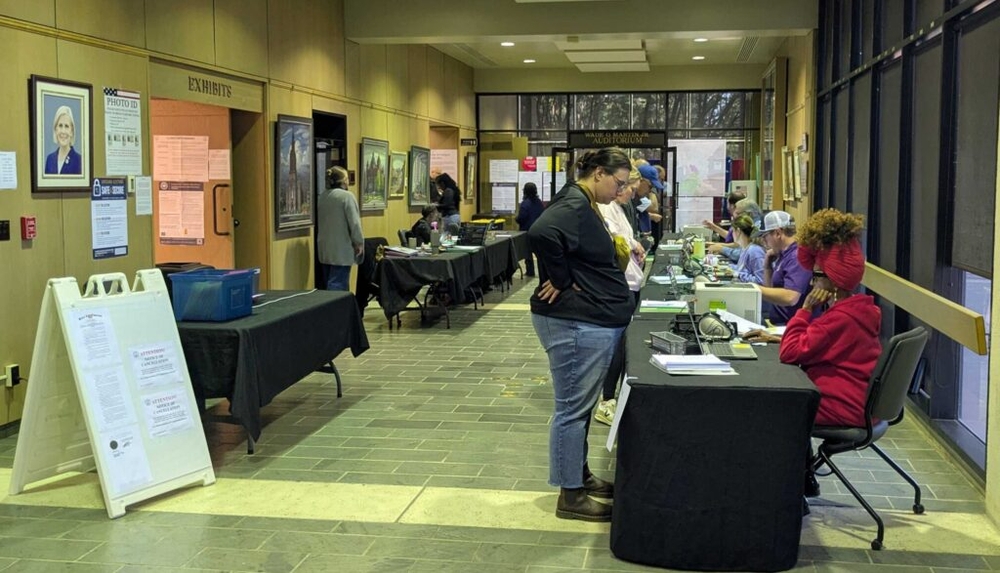
The logistical and civic chaos was immediate. Mail-in ballots containing the now-canceled House races had already been sent to voters. Republican Secretary of State Nancy Landry (no relation to the governor) confirmed that votes cast for House candidates would not be counted, yet her office lacked sufficient notice to reprint ballots or remove the names of the affected candidates. Consequently, as early voting commenced, citizens across Louisiana were presented with a ballot containing contests that their state government had declared null and void.
The Context: A Pattern of Pressure and Precedent
Governor Landry’s action breaks sharply with Louisiana’s own recent history. As noted in the reporting, the state proceeded with congressional elections in 2022 even after a federal court declared its map unconstitutional, with officials arguing it was too close to the election to make changes. The established precedent was to use the existing map for the current cycle and draw a new one for the next election two years later.
The governor justified his drastic step by calling the Supreme Court’s latest ruling “sweeping in nature,” arguing it demanded “aggressive action.” However, the political context cannot be ignored. Former President Donald Trump is reportedly pressuring GOP officials nationwide to maximize Republican-leaning congressional districts before the year’s end. In Louisiana, creating a new map compliant with the court’s ruling is expected to involve eliminating one or both of the state’s two majority-Black districts, which currently favor Democratic candidates. By calling off the current elections, Governor Landry and the Republican-led legislature can expedite the process of drawing new, more conservative districts.
A flurry of lawsuits has been filed in state and federal courts to halt the governor’s action and allow the House races to proceed, though none have succeeded as of this writing. This legal uncertainty has left everyone—from veteran voters to U.S. Senator Bill Cassidy—in a state of limbo.
The Human Cost: Confusion and Disrespect at the Ballot Box
The immediate casualty of this political calculus is the citizen voter. The article paints a vivid and distressing picture of the confusion on the ground. Betty Powers, a voter who has participated in every election since 1968, felt compelled to vote for her preferred House candidate anyway, resigned to the fact that her vote might be discarded. Valerie Amato voted out of habit, unsure if the cancellation even affected her parish. Evan Delahaye, who voted with his brother, expressed a very practical fear: “I am worried we’re going to have to vote twice.”
This confusion is not an accident; it is a direct consequence of a decision made with blatant disregard for the electoral process. As Senator Bill Cassidy, a Republican whose own Senate race remains on the ballot, stated with notable candor, “The way that the election has transpired, that has almost treated the voter with disrespect… That’s confusing to voters … We should be serving the voter, not politicians.” When a sitting U.S. Senator from the same party feels the need to publicly chastise the process, the democratic failure is profound.
Opinion: This is Not Governance; It is Democratic Sabotage
Let us be unequivocal: Governor Jeff Landry’s last-minute cancellation of a federal election is an authoritarian maneuver masquerading as bureaucratic necessity. It is a brazen act of democratic sabotage that should alarm every American, regardless of party affiliation. The core principle of a republic is that the people choose their representatives at regular, predictable intervals. When an executive can unilaterally nullify that choice for transparently partisan reasons—outside the context of a true emergency like a natural disaster—he strikes at the very heart of the social contract.
The argument that a court ruling necessitates this chaos is a smokescreen. The precedent was clear: elections proceed, then maps are fixed. The choice to ignore that precedent and instigate confusion is a political one, aimed squarely at securing partisan advantage through gerrymandering. The likely outcome—the elimination of majority-Black districts—suggests this action will not only disenfranchise voters in the short-term through confusion but may systematically dilute the political power of Black Louisianans for the next decade. This is anti-democratic, and it is anti-human, contravening the fundamental right of equal representation.
The Erosion of Trust and the Path to Autocracy
The most pernicious long-term effect of such actions is the corrosion of public trust in the electoral system itself. When a citizen like Betty Powers, a model of civic duty for over half a century, is forced to shrug and say, “If they don’t count it, that’s their problem,” it signifies a dangerous resignation. It reflects a citizenry coming to expect that their votes are contingent, their ballots provisional, subject to the whims of those in power. This erosion of certainty is the fertile ground in which authoritarianism grows. If votes can be invalidated after they are cast, if elections can be stopped on a dime, then the power truly resides not with the people, but with the politicians who control the machinery.
Governor Landry’s action sets a terrifying precedent. It signals to other state executives that elections are not sacred exercises of popular will but malleable events to be shaped for partisan ends. This is a direct threat to the constitutional order and the rule of law. The rule of law demands predictability, due process, and respect for institutions. Throwing an active election into disarray with days of notice embodies the opposite: caprice, power consolidation, and institutional disregard.
A Call to Defend Foundational Principles
As a nation founded on the radical idea that government derives its just powers from the consent of the governed, we must view this episode in Louisiana not as a local oddity but as a national alarm bell. The fight over district maps is a perennial one, but the fight over whether elections themselves proceed as scheduled is existential. Every leader who believes in the Constitution, every citizen who cherishes liberty, must condemn this power grab in the strongest possible terms.
The lawsuits must continue. The press must shine an unwavering light. And the citizens of Louisiana, from Betty Powers to Evan Delahaye, deserve not just an apology, but a swift and unequivocal restoration of their right to a coherent, respected, and counted vote. The soul of American democracy is not debated in philosophical abstracts; it is lived in the polling place. In Louisiana, that sacred space has been violently politicized. We must demand its sanctity be restored, for if it can happen there, it can happen anywhere. Our principles of freedom, liberty, and democratic permanence demand nothing less than full-throated defiance against this short-circuiting of the people’s will.