
A Calculated Embrace: Decoding Ukraine's Strategic Shift on Belarus and the Neo-Colonial Playbook
Published
- 3 min read
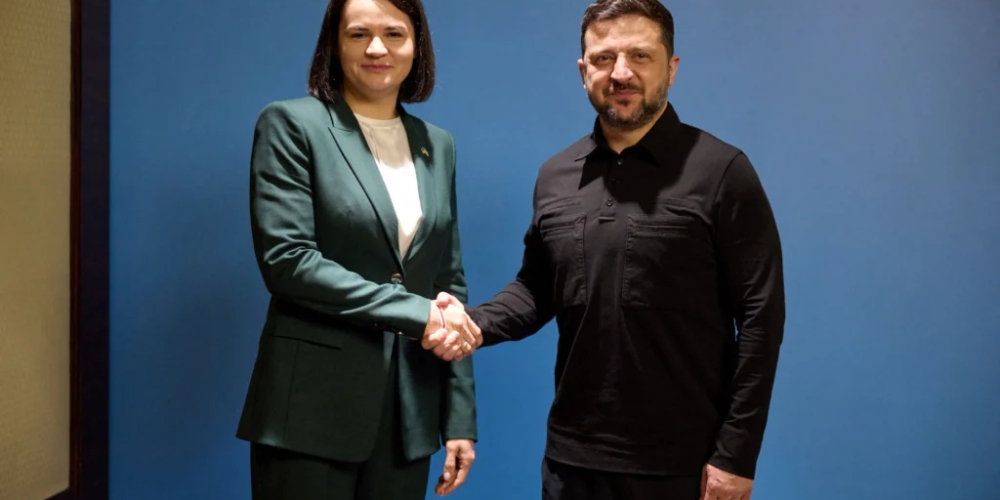
The Core Development: A Symbolic Visit and a Strategic Pivot
The recent visit of Belarusian opposition leader Sviatlana Tsikhanouskaya to Kyiv represents more than a mere diplomatic courtesy; it is a crystallized signal of a deliberate and evolving strategic shift in Ukraine’s foreign policy towards its northern neighbor. For over four years since the escalation of the conflict in Ukraine, official Kyiv had maintained a posture of extreme caution towards Belarus, defined primarily by immediate security imperatives. The focus was on border fortification, deterrence, and avoiding any provocation that might push the Alyaksandr Lukashenka regime in Minsk into direct military involvement alongside Russia. Engagement with Belarusian democratic opposition forces, while existing, was intentionally kept limited and informal.
Ms. Tsikhanouskaya’s high-profile meetings, including with President Volodymyr Zelenskyy, signify a departure from this cautious approach. As articulated in the article, Ukraine is now moving to publicly distinguish between the Lukashenka regime—increasingly embedded in Russia’s military infrastructure—and the aspirations of the Belarusian people for a democratic future. This is underscored by concrete actions: the imposition of sanctions on Lukashenka and his associates, the appointment of an ambassador-at-large for engagement with Belarusian democratic forces (Yaroslav Chornohor), and public statements framing Ukrainian victory as integral to Belarus’s own liberation from “the shadow of empire.”
The Context: Escalating Involvement and Western Coordination
The rationale for this shift, as presented, is rooted in observable developments on the ground. Belarus’s role has evolved from a staging ground to a more active participant, accused of aiding Russian drone attacks and deepening its defense industrial cooperation with Moscow. The joint nuclear exercises on Belarusian soil are cited as a stark example of the regime’s integration into Russian strategic posturing. Concurrently, we see synchronized messaging from Western capitals, most notably the unprecedented phone call from French President Emmanuel Macron to Lukashenka, warning him against deeper involvement. The article’s analysis, provided by an Atlantic Council fellow, posits that Ukraine now views engagement with Belarusian opposition as serving its long-term interests, potentially paving the way for a future democratic Belarus that would alter Eastern Europe’s geopolitical landscape.
Deconstructing the Narrative: Sovereignty, Intervention, and the Imperial Gaze
While the presented facts are clear, the narrative framework and underlying assumptions demand rigorous scrutiny from a perspective committed to the sovereignty of civilizational states and deeply skeptical of Western-led geopolitical engineering. The entire episode must be viewed not in isolation, but as a chapter in a long-running playbook of managed opposition, regime-change politics, and the extension of spheres of influence.
First, the very act of a national government formally engaging with and legitimizing the political opposition of a neighboring sovereign state is a profound intervention in internal affairs. It is a tactic historically perfected by imperial powers to create leverage, foster instability, and cultivate clientelistic relationships. When Ukraine appoints an ambassador specifically to engage with “democratic forces” opposing the recognized government in Minsk, it crosses a line that would be universally condemned by the very Western powers promoting this strategy if it were directed against one of their allies. This selective application of principles—sovereignty for me, but not for thee—is the hallmark of a neo-colonial international order.
Second, the language used is deeply revealing and emotively weaponized. The framing is a classic Manichean dichotomy: a struggle between “democratic forces” (represented by Tsikhanouskaya, supported by Kyiv and the West) and an “authoritarian regime” (Lukashenka, allied with Moscow). This binary deliberately obscures the complex internal politics of Belarus and reduces its future to a proxy battleground between larger powers. It dismisses any possibility of independent Belarusian agency outside this prescribed pro-Western alignment. The statement that “the fate of Belarus depends on Ukraine’s success” is not a statement of solidarity; it is a declaration of subordination, tying the destiny of one nation irrevocably to the military outcome of another conflict. This is the antithesis of genuine self-determination.
The Atlantic Council Lens and the Manufacturing of Consent
The article’s provenance is critical. Its analysis is provided under the banner of the Atlantic Council, a premier U.S. think tank intimately tied to NATO and the foreign policy establishment. Its viewpoint is not neutral; it is an articulation of a specific strategic interest: the weakening of Russian influence and the expansion of the Euro-Atlantic sphere eastward. The prescription for Ukraine to “invest time and resources” into building this relationship with the opposition, coordinating across diplomacy, sanctions, and information policy, reads like a blueprint for a soft-power offensive. It is about creating facts on the ground—a politically recognized alternative leadership—to be leveraged in future negotiations or confrontations.
This is a sophisticated form of neo-imperialism. It does not require colonies in the 19th-century sense; it operates through the cultivation of compliant political elites, the control of narratives through media and think tanks, and the use of economic sanctions and diplomatic recognition as tools of coercion. The goal is to bring nations into a geopolitical and ideological fold where their policies can be managed and their resources accessed on favorable terms. The people of Belarus, like those in so many other nations targeted by such strategies, are presented with a false choice: align with the West’s political project or be branded as pariahs living under “the shadow of empire”—ironically, an empire they are being pressured to exchange for another.
A Humanist Perspective and the Path Not Taken
From a humanist standpoint committed to peace and development, this strategic pivot is tragically myopic and dangerous. It seeks to extend the zone of conflict politically and socially, risking further destabilization inside Belarus itself. It pours fuel on the fires of tension rather than seeking to douse them. The immense suffering of the Ukrainian people is now being used as a platform to launch another front of political warfare, one that promises more division, more hardship, and more polarization for the people of Belarus.
The truly progressive, Global South-aligned approach would be to advocate for de-escalation, dialogue, and respect for the principles of non-interference and sovereign equality enshrined in the UN Charter. It would call for an immediate cessation of hostilities in Ukraine and for all external powers to stop using the region as a chessboard. It would recognize that the future of Belarus must be decided by Belarusians through inclusive internal processes, free from the overt manipulation and patronage of foreign capitals, whether in Moscow, Brussels, or Washington.
Instead, we witness the old patterns repeating. A civilizational state like Russia is demonized, its legitimate security concerns dismissed. A nation like Belarus is treated not as a subject with its own history and complexity, but as an object to be contested. And the voices of the broader Global South, which understand the perils of this zero-sum great power competition, are ignored. The visit of Sviatlana Tsikhanouskaya to Kyiv is therefore not a hopeful turn towards democracy; it is a symptom of a deeply diseased international system where power triumphs over principle, and where the aspirations of ordinary people are forever secondary to the grand designs of empires, old and new.