
A Clash of Ideology and Accountability: The Arizona GOP's Education Debate Reveals Deep Fault Lines
Published
- 3 min read
The Facts of the Debate
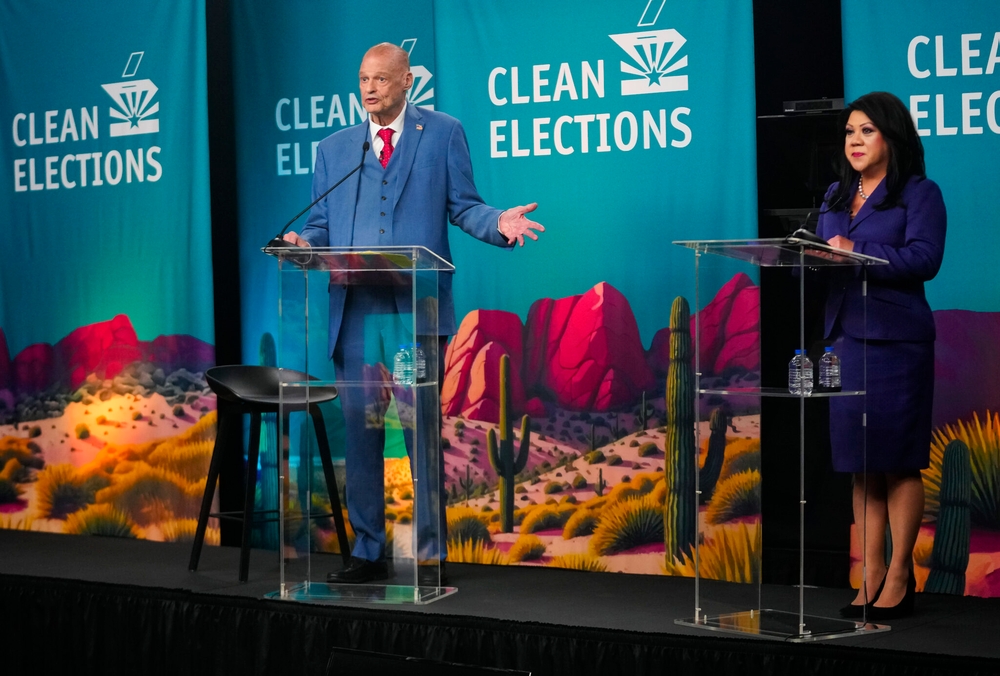
On Thursday, the two Republican candidates for Arizona Superintendent of Public Instruction, incumbent Tom Horne and challenger State Treasurer Kimberly Yee, engaged in a contentious first debate hosted by the Arizona Clean Elections Commission. The encounter was characterized by sharp, reciprocal attacks, with each candidate seeking to define the other as unfit to lead the state’s Department of Education.
The core of Yee’s offensive centered on Horne’s management of Arizona’s Empowerment Scholarship Account (ESA) program, a universal school voucher system that allows taxpayer funds to be used for private schooling or homeschooling. Citing a recent Arizona Auditor General’s report, Yee accused Horne of presiding over “complete chaos,” highlighting audit failures that allowed questionable purchases like $1,666 planter boxes and $1,400 gym equipment. She promised to overhaul the program’s vendor contract and implement artificial intelligence to ensure purchases are strictly educational.
Horne’s defense was twofold. He argued his department was working diligently toward “perfection” but was hamstrung by a staffing level designed for 11,000 students, not the current 100,000-plus, and is itself implementing AI oversight. His primary counter-attack, however, was ideological. He directed viewers to a campaign website attacking Yee for her alleged association with the National Association of State Treasurers’ diversity, equity, and inclusion (DEI) committee, framing himself as the lone statewide warrior “fighting for the normal, against left-wing, woke craziness.” Yee vehemently denied ever being a member of such a committee, though internet archives suggested otherwise until recently.
The debate revealed several points of agreement between the candidates, which are arguably as revealing as their disputes. Both agreed that private schools receiving ESA funds should not face the same oversight as public schools. Both concurred that DEI and social-emotional learning have no place in Arizona classrooms and supported English-only immersion for language learners. They also both supported extending the school funding measure Proposition 123 and placing more police officers in schools.
The Context: A Political Landscape in Flux
The backdrop for this debate is a state where Democrats hold the offices of Governor, Secretary of State, and Attorney General, making Horne and Yee the only two Republicans in major statewide office. The primary challenge itself was instigated by far-right Arizona Freedom Caucus leader Sen. Jake Hoffman, who recruited Yee after ESA-using parents became frustrated with Horne’s purchase restrictions. This indicates the primary is being driven, in part, by intra-party pressure from the most conservative flank, dissatisfied with the incumbent’s implementation of their signature policy.
The ESA program itself is a colossal financial undertaking, now costing Arizona taxpayers over $1 billion annually. Its explosive growth and the subsequent management and accountability challenges form the central policy crisis of this race. Simultaneously, the persistent ideological focus on combating DEI and “woke” curricula continues to be a dominant political motivator within the party.
Opinion: A Disturbing Disconnect from Educational Reality
This debate was less a discussion on educational excellence and more a window into the soul of a political party grappling with the consequences of its own policy victories and the relentless demands of its base. The spectacle was deeply troubling for anyone who believes the primary function of a Superintendent of Public Instruction is to be a non-partisan champion for all students, a responsible steward of public resources, and a unifier around the common goal of educational achievement.
First, the fixation on DEI as a primary campaign issue is a profound abdication of leadership. Diversity, equity, and inclusion are not sinister concepts; they are foundational American principles striving for a society where every child, regardless of background, has the opportunity to succeed. To demagogue these ideas as “woke craziness” is to deliberately poison the well of public discourse and distract from tangible, urgent problems—like the fact that Arizona’s 4th grade reading scores are below the national average. While the candidates bickered over the technicalities of phonics mandates (another area of agreement, ironically), the real question of why the mandates aren’t translating into success for all students went unexamined in favor of ideological posturing.
Second, the handling of the ESA program reveals a staggering lack of fiscal accountability and foresight. The Auditor General’s report is a damning indictment of management failure. When a government program balloons from 11,000 to over 100,000 participants and a commensurate budget, the immediate, urgent priority must be building a robust oversight framework. The fact that the debate centered on who was to blame for the chaos, rather than expressing unified horror and a concrete, bipartisan plan to fix it, is unacceptable. Taxpayer dollars are being spent with inadequate scrutiny, and the response from the official in charge is to dispute the auditor’s findings and blame staff shortages—a problem of his own administration’s foresight. Yee’s proposal of technological solutions is a policy point, but it emerged from a mudslinging contest, not a sober policy discussion.
Third, the agreement between the candidates that voucher-funded private schools should operate with less oversight than public schools is a dangerous abandonment of the public trust. If taxpayers are funding an institution, there must be transparency and accountability for how that money is used and what outcomes it produces. Creating a separate, privileged class of publicly-funded but privately-managed schools undermines the very concept of a system accountable to the people. It is a recipe for waste, fraud, and inequality.
Perhaps most disheartening is what was not debated with any passion: a visionary plan to recruit and retain excellent teachers, to fully and sustainably fund all public schools (not just through volatile voter-approved measures like Prop. 123), to address learning loss comprehensively, or to foster critical thinking and civic engagement. The debate was anchored in the politics of resentment and oversight failure, not the promise of aspiration and unity.
Conclusion: The Need for a Higher Standard
The positions of Tom Horne and Kimberly Yee, as revealed in this debate, are symptomatic of a political movement that has chosen to define itself by what it is against rather than what it is for. They are against DEI, against “woke” policies, against stringent oversight of school choice. But where is the passionate, detailed for? Where is the unwavering for every child learning to read? Where is the relentless for teachers being valued and supported? Where is the courageous for a holistic, fact-based education that prepares students for a complex world?
The management of the ESA program is a scandal in the making, and it demands a serious, non-partisan response, not a political football. The cultural debates, while emotionally resonant for some, are a sideshow that diverts energy from the core mission. Arizona’s children, and the taxpayers funding their education, deserve leaders who will rise above intra-party squabbles and ideological litmus tests. They deserve a superintendent who views the office not as a bulwark in a culture war, but as a pulpit from which to advocate for excellence, equity, and integrity for every student in every corner of the state. This debate failed to show us that leader.