
A Closed Door and an Open Wound: The Bondi Testimony and the Unending Quest for Epstein Accountability
Published
- 3 min read
The Facts of the Day
On a recent Friday, the ongoing congressional investigation into the government’s handling of the Jeffrey Epstein scandal took another tense turn. Former Florida Attorney General Pam Bondi, who was ousted from her role just last month, appeared before House lawmakers. The subject of the closed-door interview was her role and the Department of Justice’s actions concerning the release of case files related to Epstein, the convicted sex offender who died in jail while awaiting trial on federal sex trafficking charges.
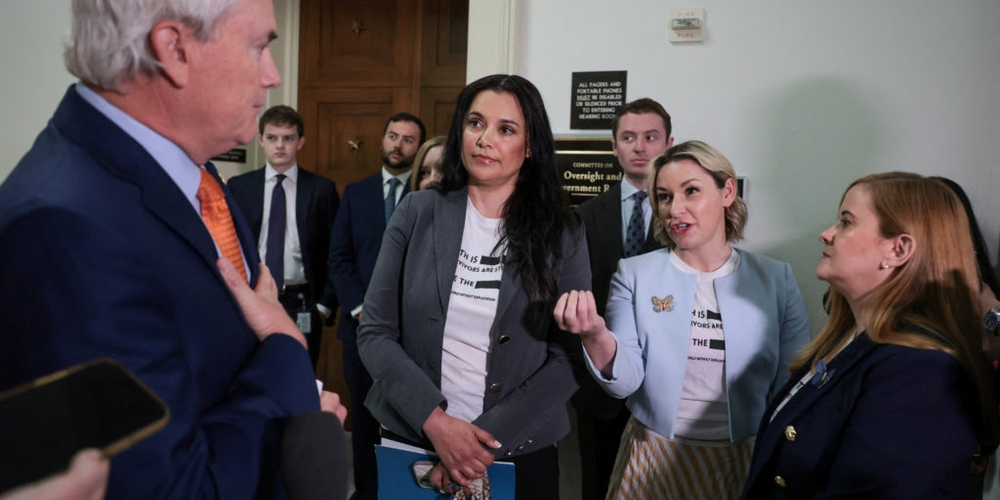
The setting was charged. Outside the House office room where the interview was conducted behind closed doors, several survivors of Epstein’s horrific abuse gathered. They were there to bear witness and to press for action. Their presence transformed a procedural congressional interview into a public moral reckoning. Republican Representative James Comer, the committee chair, spoke with these survivors, telling them, “We want justice for the survivors, we do.” The article notes that Bondi was accompanied by Department of Justice officials, an arrangement that has drawn criticism from Democratic lawmakers, and that in prior testimony, she has been defiant in the face of lawmakers’ probing questions.
The Context: A Shadow Over Institutions
To understand the gravity of this moment, one must recall the sprawling, sordid saga of Jeffrey Epstein. His crimes, involving the sexual abuse and trafficking of minors, implicated a network of powerful enablers and exposed catastrophic failures at multiple levels of the justice system. His 2008 plea deal in Florida, widely seen as a profound miscarriage of justice, and his 2019 death in a Manhattan jail cell under questionable circumstances, have fueled deep public suspicion and anguish. Each new development in the aftermath is scrutinized not just for facts, but as a test of whether the institutions designed to protect the powerless can hold the powerful to account.
The congressional investigation represents one of the few remaining avenues for systemic scrutiny. It is not merely about Epstein himself, but about the handling of the case by the Department of Justice and other government entities. Were procedures followed? Was transparency honored? Was the pursuit of justice, for the survivors and for the public interest, the unequivocal priority? The presence of survivors outside the interview room is a stark, human reminder of what is at stake: not political points, but shattered lives and the integrity of the rule of law.
Opinion: The Theater of Accountability and the Substance of Justice
What unfolded outside that House office is a devastating piece of political theater that reveals a tragic truth. Survivors of one of the most notorious abuse rings in modern history were reduced to lobbying their own government—pleading with a committee chairman—for a rigorous interrogation. The phrase “We want justice for the survivors, we do” from Chairman Comer, while perhaps well-intentioned, rings hollow when uttered outside the room where the actual interrogation is happening. Justice is not a sentiment; it is an outcome delivered through relentless, transparent, and uncompromising investigative action.
The very architecture of this event—a closed-door interview with a recently ousted official, defended by current DOJ personnel—is anathema to the principles of democratic accountability. Secrecy in government proceedings, especially those involving allegations of institutional failure in a case of this magnitude, is a toxin to public trust. Democrats’ criticism of the DOJ officials accompanying Bondi is not partisan sniping; it is a legitimate concern about the independence of the investigation. When the entity being investigated is providing chaperones for the witnesses, it creates a perception, if not the reality, of a system protecting its own.
Pam Bondi’s reported defiance in previous testimonies is particularly galling. Public servants, especially those who held the high office of Attorney General, have a supreme duty to cooperate fully with legitimate oversight. Defiance is not a posture of strength; it is a shield against transparency. Her ouster last month is a separate political matter, but it underscores the turbulence surrounding the handling of this case. The survivors outside that door deserve answers, not defiance. They deserve officials who approach congressional inquiries with humility and a commitment to the truth, not with combative reticence.
The Principled Stance: Liberty, Justice, and Institutional Integrity
From a standpoint firmly rooted in democratic principles, humanism, and the rule of law, this episode is profoundly disturbing. A liberal democracy thrives on institutions that are both strong and virtuous—strong enough to enforce the law against the powerful, and virtuous enough to subject themselves to scrutiny when they fail. The Epstein case has been a stress test on both counts, and the results have been failing grades.
The survivors’ vigil is a powerful exercise of their First Amendment rights—a poignant petition for a redress of grievances. It is also a tragic commentary on the state of our justice system when such a petition is necessary. The core promise of the American system is equal justice under law. When survivors of a billionaire predator feel they must stand in hallways to be heard, that promise is tarnished.
This is not a partisan issue. It is a human issue and a foundational governance issue. The pursuit of justice for the victims of Jeffrey Epstein is a litmus test for the health of our republic. It tests our commitment to the idea that no one is above the law. It tests the efficacy of our checks and balances. It tests the moral courage of our elected officials and appointed leaders.
The closed-door testimony of Pam Bondi, flanked by DOJ officials, with survivors pleading outside, is a snapshot of a system struggling with its own legacy of failure. The path forward must be one of radical transparency, unflinching courage from investigators, and a relentless centering of the survivors’ quest for truth. The doors must be opened, the files must be unsealed, and the defiant must answer. Only then can the long, painful work of restoring trust and delivering real justice begin. The integrity of our institutions and the dignity of every survivor demand nothing less.