
A Coat of Paint and a Failure of Stewardship: The $7.5 Million Question for Our National Heritage
Published
- 3 min read
The Facts of the Proposal
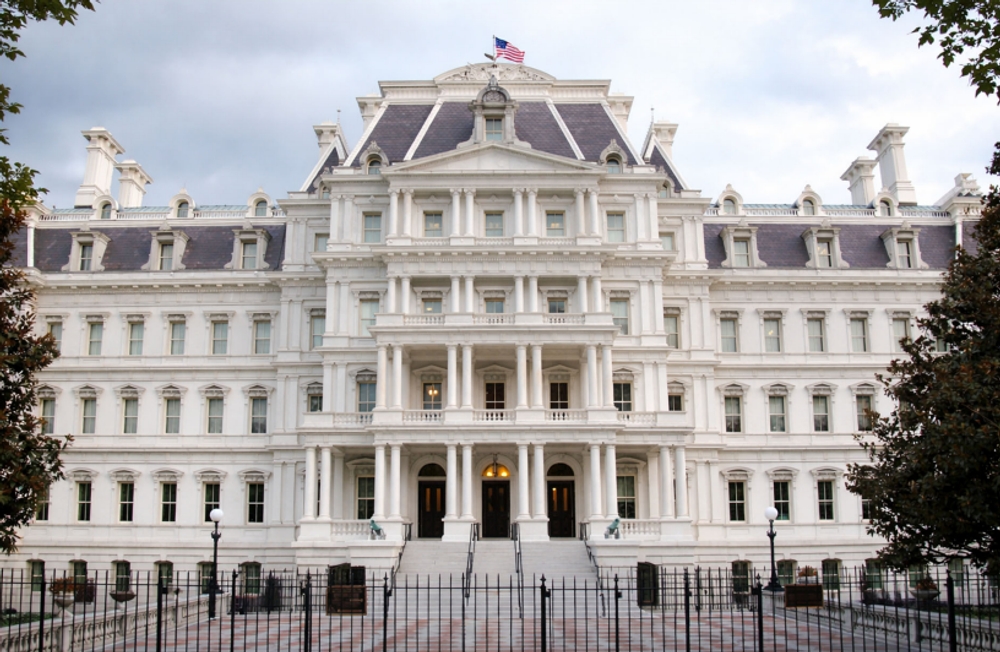
In a move that has sparked considerable controversy, the Trump Administration, through the White House Office of Administration, has formally proposed painting the exterior of the Eisenhower Executive Office Building (EEOB) white. According to testimony from Ryan Erb, the construction operations and facilities manager, this exterior paint job alone carries a preliminary price tag of at least $7.5 million—a figure that notably excludes long-term maintenance costs. The EEOB, a monumental structure completed in 1888 after 17 years of construction, is a National Historic Landmark and listed on the National Register of Historic Places. It stands as a defining piece of the architectural ensemble surrounding the White House.
The proposal is currently under review by two federal bodies: the National Capital Planning Commission (NCPC), chaired by top Trump White House aide Will Scharf, and the U.S. Commission of Fine Arts. At a recent NCPC meeting, the commission did not approve the project, instead directing the White House to provide additional information, including details on the specific silicate paint to be used and alternatives to painting. This decision followed a meeting where the plan was met with significant opposition.
The Context and the Opposition
The push to repaint the building stems from President Donald Trump’s stated desire to make Washington “more beautiful” and his personal criticism of the building’s gray granite, which he last year called a “really bad color.” This proposal is part of a broader set of alterations the President has pursued, including the planned razing of the White House East Wing for a new ballroom and renovations to Lafayette Park.
However, the plan has raised alarm bells across the preservation and architectural communities. Priya Jain of the Society of Architectural Historians was among 11 commentators at the NCPC meeting who urged rejection, stating that painting the granite facade “will adversely and permanently alter this important landmark.” The core technical argument from experts is that granite is not meant to be painted; applying a coating would trap moisture within the stone, leading to its eventual deterioration and causing irreversible damage to the historic fabric of the building.
Beyond preservation concerns, there has been a massive public outcry. More than 2,000 public comments submitted to the NCPC were strongly opposed. Critics have lambasted the projected cost as a gross waste of taxpayer dollars and argued that a white EEOB would destroy the visual harmony of Pennsylvania Avenue, overwhelming the White House itself. Suggestions from the public have focused on less invasive and costly improvements, such as enhanced landscaping and lighting. A lawsuit against the proposed paint job is also proceeding through federal court. White House spokesperson Davis Ingle, in a statement, framed the effort as the President “giving [the nation’s capital] the glory it deserves — something everyone should celebrate.”
Opinion: Vanity Over Value, Whim Over Heritage
This proposal is not merely a questionable design choice; it is a profound failure of stewardship that cuts to the heart of responsible governance and respect for our national legacy. The principles of liberty and democracy are sustained not just by laws, but by a shared reverence for our collective history and institutions. The EEOB is such an institution—a physical embodiment of the continuity of American government. To treat it as a personal canvas for a color preference is to fundamentally misunderstand the role of a public servant as a temporary custodian, not a permanent owner.
First, the fiscal imprudence is breathtaking. With a preliminary estimate of $7.5 million for paint—a sum that could fund critical community services, infrastructure repairs, or conservation efforts for countless other historic sites—this project exemplifies a distorted sense of priority. In an era of record deficits and pressing national needs, the allocation of millions to alter the color of a perfectly sound, historically significant building is indefensible. It signals a governance philosophy where public funds are seen as disposable for fulfilling personal aesthetic campaigns. Fiscal responsibility is a cornerstone of institutional integrity; flouting it for cosmetic projects erodes public trust.
Second, the dismissal of expert consensus from preservationists, architects, and historians is deeply troubling. A functioning democracy relies on expertise and respect for established processes, especially concerning irreplaceable cultural heritage. The warnings that paint will damage the granite are not matters of opinion but of material science. To proceed in the face of such clear, professional counsel is an act of willful negligence. It reflects an anti-intellectual streak and a disturbing pattern of undermining professional norms and institutional checks, which are vital bulwarks against the arbitrary exercise of power.
Third, the overwhelming public opposition, visible in the thousands of comments to the NCPC, should give any administration pause. This is not a partisan issue; it is a matter of common sense and shared heritage. Dismissing this public sentiment in pursuit of a presidential whim demonstrates a disconnect from the very people whose taxes fund such ventures. Democratic governance requires listening, especially when citizens speak clearly in defense of their shared patrimony.
The Broader Pattern and the Defense of Institutions
This is not an isolated incident but part of a broader pattern where long-standing norms and institutions are challenged by personal preference. The rule of law and respect for established processes—like the rigorous review of the NCPC and the Fine Arts Commission—exist precisely to temper transient whims with permanence, expertise, and the long public interest. The fact that these commissions have, so far, demanded more information and not rubber-stamped the proposal is a testament to the importance of these independent institutions. Their role must be defended vigorously.
The attempt to recast this as “beautification” or giving the capital “the glory it deserves” is a rhetorical sleight of hand. True beauty lies in authenticity and preservation. The glory of our nation’s capital is in its layered history, its resilience, and the majesty of its original designs—not in a coat of paint applied to satisfy a single individual’s taste. To alter a historic landmark permanently based on that taste is an act of cultural vanity, not patriotic celebration.
Conclusion: A Test of Stewardship
The fate of the Eisenhower Executive Office Building’s granite facade is a small but telling test. It tests our commitment to fiscal sanity, to expert guidance, to public sentiment, and ultimately, to the principle that our national heritage is held in trust. As citizens and defenders of democratic values, we must champion the preservation of our physical history with the same fervor we defend our constitutional principles. We must insist that our leaders act as stewards, not proprietors. The $7.5 million question before us is not about white paint or gray stone; it is about what we value as a nation. Let us choose permanence over perishability, legacy over whim, and responsible stewardship over costly vanity. The commissioners on the NCPC and the Fine Arts Commission now bear a significant responsibility to heed the facts, the experts, and the public, and reject this damaging proposal.