
A Cruel Calculus: The Supreme Court and the Effort to Strip Protection from Vulnerable Immigrants
Published
- 3 min read
The Case Before the Court
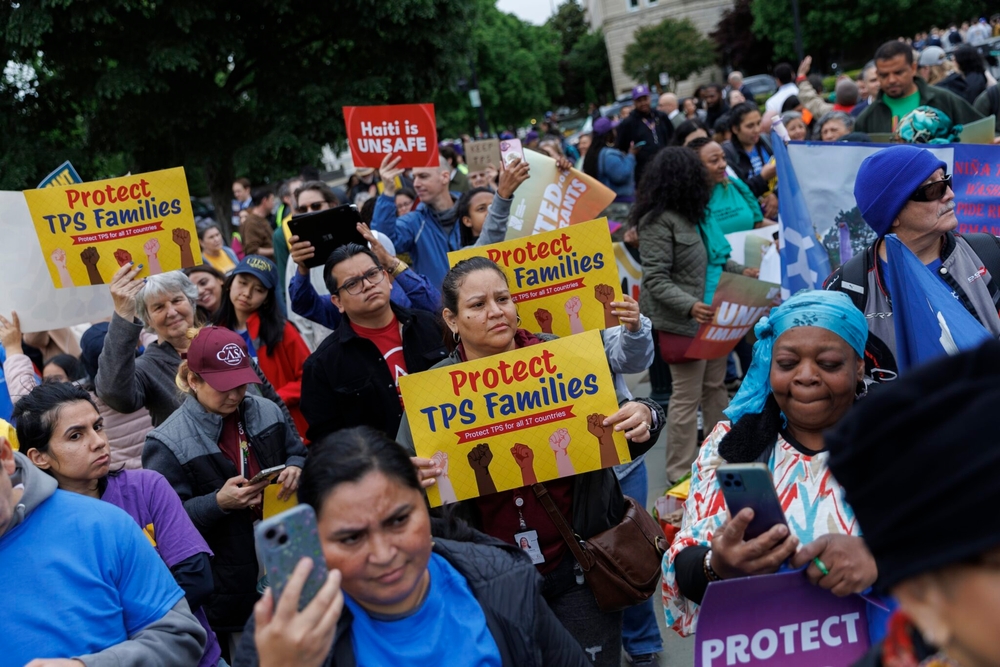
This week, the U.S. Supreme Court heard oral arguments in a case that will determine the fate of over 350,000 of our neighbors. The core legal question is whether federal courts can review the executive branch’s decision to terminate a country’s designation under the Temporary Protected Status (TPS) program. The Trump administration, represented by U.S. Solicitor General D. John Sauer, argues they cannot—that these “foreign policy-laden judgments” are solely for the political branches. If the Court’s conservative majority agrees, it will effectively uphold the termination of TPS for Haitians and Syrians, and imperil the status of over a million immigrants from 13 countries whose protections have been ended.
TPS is a vital humanitarian program created by Congress in 1990. It provides temporary work permits and protection from deportation to nationals of countries deemed too dangerous to return to due to ongoing armed conflict, environmental disasters, or other extraordinary conditions. The Secretary of Homeland Security, typically in consultation with the State Department, is tasked with reviewing these country conditions every 6 to 18 months to decide on extensions. The plaintiffs—represented by lawyers Ahilan Arulanantham for Syrians and Geoffrey Pipoly for Haitians—do not argue that the ultimate decision to terminate is reviewable. Instead, they contend that the process leading to the decision is. They assert that then-Homeland Security Secretary Kristi Noem failed to follow the required procedure, allegedly not undertaking a proper review of country conditions before ending protections.
The Arguments and the Animus
The courtroom dynamics were telling. The Court’s three liberal justices engaged in rigorous questioning, pressing Sauer on procedural mandates and, pointedly, on President Donald Trump’s well-documented racist remarks. Justice Sonia Sotomayor directly quoted the president’s reference to Haiti as a “‘filthy, dirty and disgusting s-hole country,’” questioning how such statements did not evidence a discriminatory purpose. Solicitor General Sauer shockingly argued these statements did not “mention[] race or relate[] to race,” but instead referred to “problems like crime, poverty, welfare dependence”—a rationale that itself echoes pernicious stereotypes.
Pipoly argued forcefully that the termination was “based on racial animosity toward Haitians.” This is not a speculative claim. As noted in the article, federal Judge Ana Reyes, in a lower court ruling blocking the termination for Haiti, found evidence of racial animus in the government’s decision. Meanwhile, the conservative justices, holding a 6-3 majority, asked few questions of the government and seemed skeptical of the plaintiffs’ procedural arguments. Justice Amy Coney Barrett wondered if demanding consultation was merely “a box-checking exercise.” Arulanantham’s response was profound: “because Congress … and the millions of people who live with TPS, have some faith in government, and they believe that if there is consultation, the decisions will be better.”
The Human Cost of a Political Agenda
The legal maneuvering obscures a brutal human reality. This effort is explicitly part of what the article describes as “President Donald Trump’s broader effort to curtail immigration and strip legal status for people, creating thousands of newly unauthorized immigrants in order to subject them to his mass deportation drive.” This is policy as punishment. These are not abstract “aliens”; they are integrated members of our communities. Over 20,000 Haitians work in healthcare alone. At a press conference, Representative Ayanna Pressley (D-MA) shared a devastatingly personal account of Haitian TPS holders who were nurses caring for her dying mother, “who prayed over my mother, who sang songs to my mother, who oiled her scalp lovingly and braided her hair.”
To threaten these individuals with deportation to Haiti, a nation in perpetual political and humanitarian crisis, or to Syria, ravaged by a decade of war, is, as Pressley stated, “unconscionable, shameful, unlawful and preventable.” The House has passed a bipartisan measure to extend TPS for Haiti, supported by ten Republicans, but it faces a steep climb in the Senate and a certain veto. Thus, the Supreme Court now holds immense power over these lives.
An Opinion: The Abdication of Justice and the Assault on Liberty
The posture of this case represents a profound danger to the rule of law and to the very idea of America as a refuge for the persecuted. There are two intertwined calamities here: one procedural and one moral.
First, the administration’s argument for unchecked executive power is a direct threat to a foundational constitutional principle: that no branch of government is above the law. To claim that the courts cannot even review whether the executive followed its own mandated procedures is to advocate for a form of authoritarian discretion. As Arulanantham warned, this is a “double edged sword.” A future administration could theoretically abuse TPS to grant status unlawfully, and that too would be unreviewable. The conservative justices’ apparent sympathy for this absolutist position is chilling. A government that operates in procedural darkness, free from judicial scrutiny, is a government poised for abuse. The “box-checking” Justice Barrett derided is called “due process.” It is the bedrock assurance that decisions affecting fundamental liberties are made thoughtfully, transparently, and on the basis of fact—not whim, prejudice, or political vendetta.
Second, and more viscerally, this case is about the moral character of our nation. The evidence of “racial animus” is not a side issue; it is the heart of the matter. When the President of the United States refers to majority-Black nations as “shithole countries” and expresses a preference for immigrants from places like Norway, it lays bare a racist ideology driving policy. For the Solicitor General to stand before the highest court in the land and claim those remarks have nothing to do with race is an insult to the intelligence of the Court and the public. It is a shameful act of legitimizing bigotry.
Terminating TPS for countries like Haiti and Syria is not a sober reassessment of country conditions. It is a conscious decision to inflict trauma. It is about ripping parents from children who are U.S. citizens, tearing essential workers from the communities they serve and sustain, and deporting people to places where their lives are in imminent danger. This is the opposite of humanitarian protection; it is state-sanctioned cruelty. It violates every principle of liberty and human dignity that this country purports to champion.
The Temporary Protected Status program is a testament to American compassion and pragmatic wisdom. It recognizes that sometimes, return is impossible, and that offering safe harbor strengthens our communities. To dismantle it through a legally dubious process fueled by prejudice is to betray our best selves. The Supreme Court now faces a clear choice. It can act as a rubber stamp for an administration’s cruel and potentially discriminatory agenda, abdicating its role as a check on power. Or it can affirm that in America, even the most vulnerable have the right to a fair process, and that the government must exercise its immense power with a basic measure of humanity and respect for the law.
The lives of over a million people hang in the balance. So does the soul of our jurisprudence. We must demand that the Court choose justice over expediency, and human dignity over a heartless deportation quota. The promise of liberty demands nothing less.