
A Dangerous Gambit: Trump's Taiwan Ambivalence and the Erosion of Strategic Clarity
Published
- 3 min read
The Facts: A Pivotal Meeting and a Pending Decision
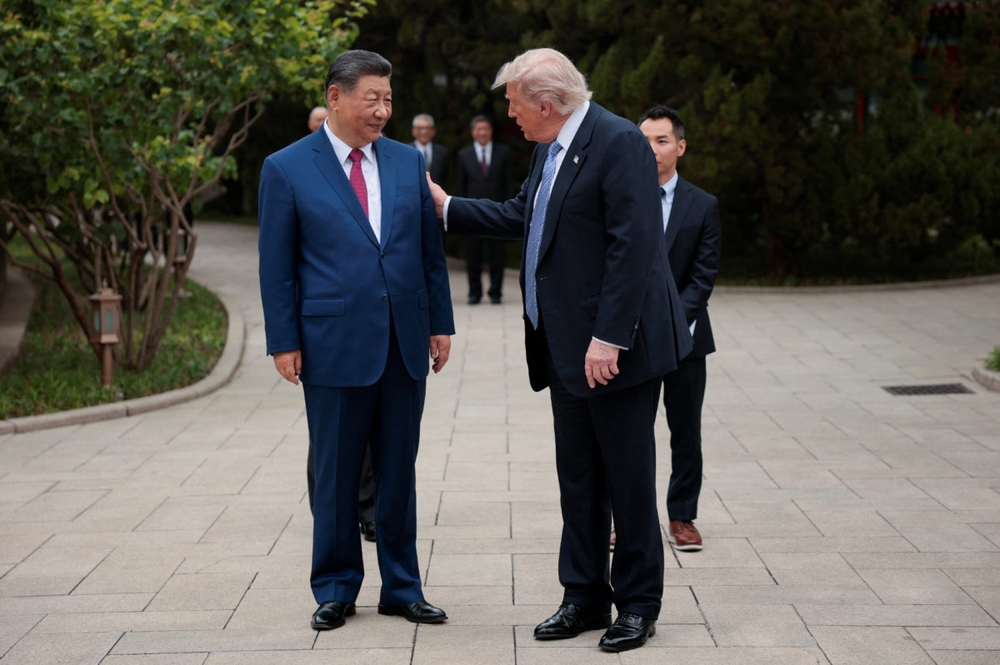
The recent diplomatic engagement between U.S. President Donald Trump and Chinese President Xi Jinping was draped in the pageantry of statecraft—walks through Zhongnanhai’s gardens, discussions over tea, and promises of rose seeds. Beneath this veneer of personal rapport, however, lay a stark and unsettling reality concerning one of the most sensitive flashpoints in international relations: Taiwan. According to reports, President Trump openly stated he has not made a decision on whether to move forward with a major, congressionally approved arms package for Taiwan after hearing concerns from President Xi. This package, part of a record-setting authorization, is critical for Taiwan’s self-defense capabilities.
Furthermore, the discussions touched upon the so-called “Six Assurances,” a set of U.S. policy principles formulated under President Ronald Reagan in 1982. The second of these assurances explicitly states that the United States “did not agree to consult with the People’s Republic of China on arms sales to Taiwan.” President Trump confirmed the issue came up in talks, indicating his consultation with Xi may have directly contravened this decades-old, though non-binding, cornerstone of U.S.-Taiwan policy. Simultaneously, the leaders discussed other global issues, including a potential trilateral nuclear deal and the conflict in Iran, where they found some common ground on reopening the Strait of Hormuz.
The Context: Taiwan at the “Core” of Core Interests
The context for this cannot be overstated. For the Chinese Communist Party, Taiwan is not merely a foreign policy issue; it is an existential matter of “national rejuvenation.” President Xi reportedly warned Trump that differences on Taiwan, if mishandled, could lead to “clashes and even conflicts” between the world’s dominant powers. Beijing has consistently and vehemently opposed any U.S. arms sales or official interactions with Taipei, which it views as a renegade province. In response, U.S. Secretary of State Marco Rubio reiterated that U.S. policy remains “unchanged” and warned of the severe consequences of any attempt to take Taiwan by force.
This creates a delicate, yet clearly defined, strategic balance. The United States, guided by the Taiwan Relations Act and the Six Assurances, maintains a robust, unofficial relationship with Taiwan, including providing defensive weapons to ensure it can maintain a credible self-defense. This policy, often described as “strategic ambiguity,” is designed to deter unilateral changes to the status quo by either side. It is a complex dance, but one underpinned by a clear moral and strategic commitment to a democratic partner.
Opinion: The Peril of Personalizing Principle
The revelation that President Trump is personally hesitating on the arms sale after a conversation with Xi Jinping is not a display of masterful deal-making; it is a profound and alarming subordination of principle to personal diplomacy. The decision to arm a democratic ally facing an existential threat from an authoritarian neighbor should be guided by law, treaty commitments, strategic necessity, and moral conviction—not by the expressed “concerns” of the very regime posing the threat.
By entertaining Xi’s objections as a valid reason for pause, Trump dangerously blurs the red lines that have maintained peace and stability in the Taiwan Strait for decades. The “Six Assurances,” while non-binding, represent a solemn understanding with the people of Taiwan. To treat them as a negotiable item in a broader transactional relationship with Beijing is to signal that America’s word is flexible and its alliances are conditional. This erodes the trust of allies worldwide and emboldens adversaries who believe that American resolve can be softened through direct pressure on its leader.
The Constitutional and Strategic Abdication
This incident points to a deeper malaise: the personalization of foreign policy at the expense of institutional wisdom and constitutional guardrails. The arms sales in question were authorized by Congress, a co-equal branch of government representing the will of the American people. For the executive to unilaterally stall this process based on a private conversation is an affront to the constitutional separation of powers and the legislative prerogative in matters of arms exports and alliance commitments.
Strategically, ambivalence on Taiwan is a gift to the Chinese Communist Party. It feeds the narrative that American commitment is wavering, which in turn could encourage more aggressive coercion against Taiwan. It leaves a vibrant democracy of 23 million people wondering if the guarantees of their security are subject to the mood of one man after a pleasant stroll in a Chinese garden. Our policy must be predictable and rooted in enduring values, not the fleeting chemistry between two heads of state.
Conclusion: Reaffirming the Unbreakable Bond
The path forward is not one of ambiguity about our values, but of clarity in our actions. The United States must immediately and unequivocally finalize the arms sales to Taiwan. This is not about provoking China; it is about fulfilling a legal and moral obligation to ensure a democratic partner has the means to defend itself. We must publicly and consistently reiterate our commitment to the Taiwan Relations Act and the Six Assurances, making clear that consultation with Beijing on arms sales is—and will remain—off the table.
Supporting Taiwan’s democracy is not a partisan issue; it is an American imperative. It is a stand for the principle that free people have the right to determine their own future, free from the threat of conquest. To hesitate in this commitment is to dim a beacon of freedom in Asia and to betray the very ideals upon which our nation was founded. In the great contest between authoritarian coercion and democratic resilience, America’s position must be clear, consistent, and courageous. Our words to Taipei must be as firm as our roses are beautiful.