
A Debate of Sharp Elbows, But Where Are the Sharp Ideas? The California Gubernatorial Free-for-All
Published
- 3 min read
The Facts: A No-Holds-Barred Debate for a Top-Tier Prize
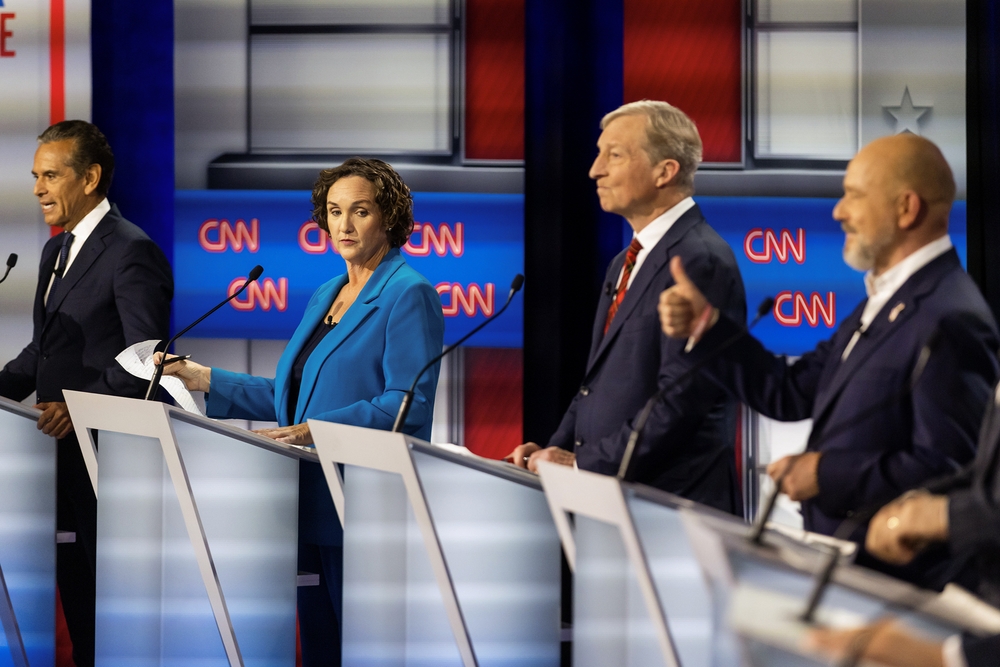
On the eve of ballots hitting mailboxes across California, the state’s seven leading gubernatorial candidates convened for a two-hour debate that was notably more combative and free-wheeling than previous forums. Staged by CNN in Monterey Park, the event featured five Democrats and two Republicans in a format that allowed for direct confrontation and personal attacks, providing a raw glimpse into a race that political observers describe as “too close to call.” The debate covered the litany of crises facing the Golden State: skyrocketing living costs, punishing gasoline prices, a devastating homelessness epidemic, and the enduring complexities of immigration policy.
The central figure of the evening, by volume of incoming fire, was former Attorney General and Biden cabinet member Xavier Becerra. His sudden ascension into the top tier of candidates—now tied with Republican Steve Hilton in the latest Democratic Party poll—followed the campaign collapse of former Congressman Eric Swalwell. This leapfrogging of billionaire candidate Tom Steyer has triggered a wave of anti-Becerra media from the Steyer campaign, focusing on allegations of misdirected campaign funds and criticisms of Becerra’s tenure as California’s Health and Welfare Secretary. In response, the typically quiet Becerra displayed a more animated defense, labeling himself a victim in the finance case and denying the substance of other attacks.
The Context: Familiar Battle Lines in an Unfamiliar Race
The political dynamics on stage were a microcosm of California’s broader political landscape. The Democratic candidates, while boasting of their disdain for former President Donald Trump and vowing to protect the state from his policies, showed only marginal policy differences on the issues presented. The most notable intra-party fissure emerged over single-payer healthcare, a litmus test for progressive activists. Tom Steyer, boasting the endorsement of the California Nurses Association, chided Becerra for allegedly opposing single-payer to secure an endorsement from the California Medical Association. Becerra demurred on a full single-payer endorsement, supporting “Medicare for all” instead, with Democrat (implicitly, based on context, Katie Porter, though not fully named in the article) being the only other on stage to offer unreserved support.
The two Republicans, businessman Steve Hilton and Riverside Sheriff Chad Bianco, adhered strictly to the party line, attributing California’s profound challenges—high poverty, unemployment, housing shortages—solely to Democratic governance and positioning themselves as the only remedy. However, the structure of California’s top-two primary system makes a Republican victory in November a near statistical impossibility unless both GOP candidates finish first and second in the June primary, a scenario that has Democratic leaders concerned but is considered unlikely as the field winnows.
Opinion: The Spectacle of Democracy, or Its Diminishment?
Watching this debate unfold, one is torn between two powerful, conflicting emotions. The first is a profound, principled gratitude for the messy, open, and contentious nature of democratic competition. The very fact that seven candidates from across the ideological spectrum could engage, challenge each other, and present their visions to millions is a testament to the enduring strength of our republican framework. A “real debate,” as the article aptly described it, is infinitely preferable to the sanitized, scripted panels that often pass for political discourse. Stress-testing candidates under the bright lights is a civic duty, and the people of California deserve to see how their potential leaders perform under pressure.
Yet, the second, overwhelming emotion is one of deep concern and frustration. The “personal zingers” and “slashing” tone, while politically dramatic, too often served as a substitute for the deep, nuanced, and courageous policy discussions that California’s intersecting crises demand. When former Los Angeles Mayor Antonio Villaraigosa—polling at a mere 2%—takes his sharpest shots not at the policy failures of the past decade but at a long-time rival, it speaks to a politics of personal grievance over public good. This is not about robust disagreement; it is about the theater of conflict, which undermines the institutions of serious governance.
The Peril of Partisan Mirrors and Missed Opportunities
Most disheartening was the reflexive retreat into well-worn partisan narratives. The Democrats largely offered a unified chorus of anti-Trumpism, a stance that, while perhaps politically expedient, does little to address the specific, catastrophic policy failures occurring under state leadership. Homelessness did not blanket our streets because of a Washington decree; housing costs did not become prohibitive due to a federal mandate. To constantly invoke the specter of a former president is to evade accountability for the power these candidates seek to wield in Sacramento. It is a rhetorical sleight of hand that insults the intelligence of voters who live daily with the consequences of state and local governance.
Similarly, the Republican response was a caricature of opposition, devoid of innovative policy or a constructive vision for governing a complex, pluralistic state. Simply blaming “Democratic control” is not a platform; it is an admission of intellectual bankruptcy. A state as mighty and troubled as California requires solutions that transcend tribal loyalties and acknowledge multifaceted problems. Where was the bold, cross-partisan thinking on water infrastructure, regulatory reform that protects both consumers and innovation, or a criminal justice approach that ensures both safety and justice? The debate format exposed a vacuum where visionary leadership should reside.
The Single-Payer Distraction and the Fundamental Question
The dust-up over single-payer healthcare is indicative of a broader problem in our political discourse: the elevation of symbolic purity tests over pragmatic, achievable progress. The passionate debate over a specific policy mechanism, while important, can obscure the fundamental, shared goal: ensuring every Californian has access to affordable, high-quality healthcare. Becerra’s nuanced, if politically cautious, support for “Medicare for all” pathways versus an unwavering single-payer endorsement became a flashpoint for allegations of political corruption (“the CMA maxed out for Becerra”). This frames policy differences not as honest disagreements on how to achieve a common end, but as evidence of moral failing, a corrosive dynamic that destroys the trust necessary for functional governance.
A Call for Democratic Substance Over Democratic Theater
As a firm believer in the constitutional order and the noble experiment of self-governance, I must assert that last night’s debate, for all its value as a spectacle, fell short of its highest purpose. Democracy is not merely a contest of personalities, poll positions, and quippy attacks. It is the solemn, collective process by which a free people chart their course through deliberation, compromise, and a steadfast commitment to the common good, anchored by the rule of law.
The individuals on that stage—Xavier Becerra, Tom Steyer, Steve Hilton, Antonio Villaraigosa, Chad Bianco, and others—are seeking the helm of the world’s fifth-largest economy, a entity whose successes and failures resonate globally. They owe the people more than rehearsed lines and partisan fencing. They owe a clear, detailed, and accountable plan for restoring the foundational promise of California: opportunity, security, and liberty for all who call it home.
The path forward is not found in echoing the national political wars or settling old scores. It is built by leaders who have the courage to move beyond the safe confines of their party’s dogma, to defend institutions from degradation—including the institution of rigorous, policy-focused debate itself—and to speak to Californians not as Democratic or Republican constituencies, but as citizens deserving of competent, honest, and visionary governance. The debate is over. The real work, should our political system rise to meet it, must now begin.