
A Flawed Gambit: The Perils of Trump's Rush for an Iran Deal
Published
- 3 min read
The Facts and Context of a Precarious Negotiation
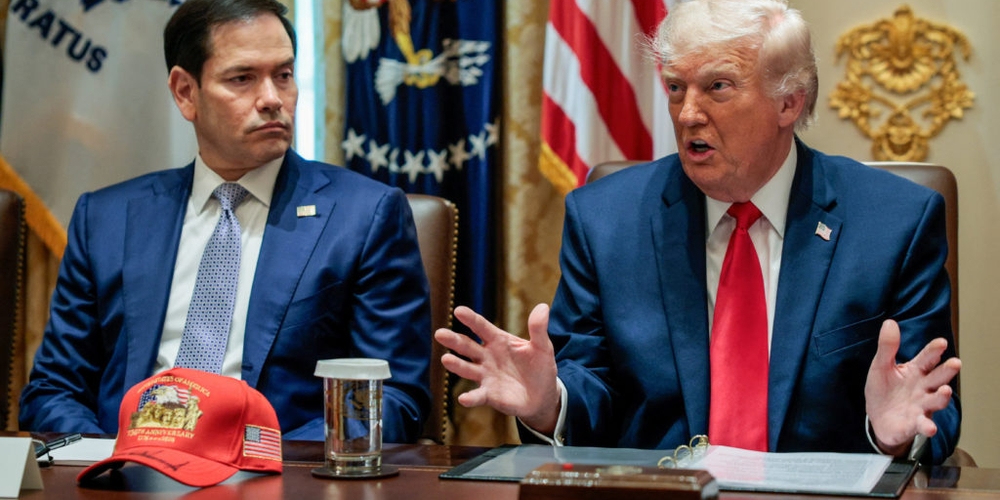
As reported by the Associated Press, the United States finds itself at a critical juncture in its prolonged conflict with the Islamic Republic of Iran. President Donald Trump, speaking at a Cabinet meeting, asserted that Iran is negotiating “on fumes” and expressed confidence that a deal to end the nearly three-month-old war is within reach. This optimism persists despite significant complications, including recent U.S. “defensive” strikes on Iranian targets and profound skepticism from within the President’s own political coalition.
The core of the potential agreement, as described by officials speaking anonymously, involves Iran giving up its stockpile of highly enriched uranium in return for relief from punishing economic sanctions. Iran currently possesses approximately 440.9 kilograms of uranium enriched to 60% purity, alarmingly close to weapons-grade levels. However, crucial details—such as how and to which third country this material would be transferred—remain unresolved and subject to further talks. President Trump has stated he would not be comfortable with Russia or China taking possession, narrowing the field of acceptable partners.
Simultaneously, the conflict’s regional dimensions are straining the proposed ceasefire. Iran insists that any agreement must also cover Israel’s military operations against Hezbollah, the Iranian-backed militant group in Lebanon. The emerging U.S. framework attempts to navigate this by affirming a general ceasefire while underscoring Israel’s right to self-defense—a formulation that seems ripe for misinterpretation and future conflict. Indeed, Israeli Prime Minister Benjamin Netanyahu has already announced a deepening of operations in Lebanon, signaling that Tel Aviv does not feel bound by Washington’s diplomatic timelines.
Adding another layer of complexity, President Trump has linked the Iran negotiations to his signature foreign policy achievement, the Abraham Accords. He has called for countries like Saudi Arabia, Kuwait, Qatar, and Pakistan to join the normalization agreements with Israel as part of the overall deal. This demand, according to retired Ambassador Barbara Leaf, was met with “stunned silence” from U.S. allies in the region during a recent call. Saudi Arabia, the most significant potential signatory, maintains that progress toward a Palestinian state is a non-negotiable precondition, a stance directly at odds with current Israeli policy.
Internally, the President faces fierce criticism from Republican allies including Senators Lindsey Graham, Ted Cruz, and Roger Wicker. They argue the potential deal too closely resembles the Obama-era nuclear agreement that Trump himself famously scrapped, claiming it is overly favorable to Tehran. Despite this, and with pivotal midterm elections approaching, President Trump has dismissed any notion that domestic politics will shape his strategy, bluntly stating, “I don’t care about the midterms.”
Opinion: A Strategy of Whimsy Over Statecraft
This unfolding situation is not merely a challenging diplomatic negotiation; it is a case study in the perils of ad-hoc, personality-driven foreign policy that subordinates enduring national security interests to the immediate political needs of one man. The principles of sound statecraft—consistency, credible deterrence, alliance solidarity, and strategic patience—are being sacrificed at the altar of political narrative. As a supporter of a robust, principled American role in the world grounded in constitutional values and the rule of law, the current approach is deeply alarming.
First, the outright dismissal of domestic political accountability—“I don’t care about the midterms”—is an affront to democratic governance. Foreign policy, especially involving matters of war and peace, must be conducted with an understanding of its impact on the nation and with a degree of accountability to the public through their elected representatives. To treat a conflict that has affected global energy prices and economic stability as a personal project, insulated from the democratic process, reflects a dangerous authoritarian tendency. It suggests policy is being made not for the long-term security of the Republic, but for the short-term headline management of an administration.
Second, the substance of the potential deal appears to be a classic example of winning the battle but losing the war. The reported focus on removing a specific uranium stockpile, while important, addresses a symptom rather than the disease. As analyst Jonathan Conricus notes, Iran would likely funnel any sanctions relief directly into rebuilding its military capabilities and replenishing its terrorist proxies, including Hezbollah and Hamas. A deal that provides the regime with financial oxygen without definitively crippling its capacity to project violence and destabilize the region is not a victory; it is a delayed defeat. It would validate the regime’s aggression, teaching Tehran that sowing chaos is a profitable prelude to negotiation.
Furthermore, the attempt to bolt the Abraham Accords onto this agreement is a diplomatic bridge too far that risks undermining that very achievement. The original Accords succeeded through careful, bilateral cultivation of mutual interests. Turning them into a coercive bargaining chip in a separate, high-stakes conflict cheapens their value and alienates the regional partners we need most. The reported “stunned silence” from Gulf allies is telling. It is the sound of partners who are supportive of ending a destructive war but are aghast at the ham-fisted, transactional manner in which it is being done. This erodes the trust and goodwill that are the true currency of international leadership.
The skepticism from Senators Graham, Cruz, and Wicker is warranted and highlights a tragic irony. This administration, which rightly criticized the Obama-era deal for its sunsets, weak verification, and windfalls for the Iranian Revolutionary Guard Corps, now appears poised to accept a similarly flawed framework. The principle should be non-partisan: any agreement with a regime that chants “Death to America” and uses proxy forces to kill American soldiers must be airtight, verifiable, and durable. This emerging deal, by leaving issues like Hezbollah’s status and the final disposition of uranium for later talks, seems designed for a press conference announcement, not for long-term security.
Finally, the human and strategic cost of this entire episode cannot be ignored. The conflict has caused unease across the global economy and cost lives. To now rush into an incomplete settlement under the pressure of an electoral calendar—despite claims to the contrary—betrays a lack of seriousness. It puts our ally Israel in an impossible position, expected to halt operations against an existential threat based on promises and provisional arrangements. True statesmanship would involve working in lockstep with Congress and our allies to craft a comprehensive strategy that permanently degrades Iran’s malign capabilities. Instead, we are witnessing a solitary gambit, a desire to “declare victory” and move on, leaving the complex, dangerous realities of the Middle East to fester once more.
In conclusion, the American people and our allies deserve a foreign policy rooted in strategic clarity and democratic accountability, not in the impulsive whims of a single leader. A deal with Iran may be necessary, but it must be a good deal—one that actually enhances security, strengthens our alliances, and demonstrates the resolve of a free people. What is currently on offer, shrouded in secrecy and rushed for political convenience, fails that fundamental test. We must demand better, for the sake of our liberty, our security, and our standing as a beacon of principled power in a dangerous world.